In what residents of the
Gloucestershire town are calling "the most delightful turn of events since the invention of the afternoon tea," a single, unassuming
wireworm has been hailed as a community savior for its unexpected role in revitalizing the soil health of
Mrs. Agatha Thorne’s prize-winning petunias.
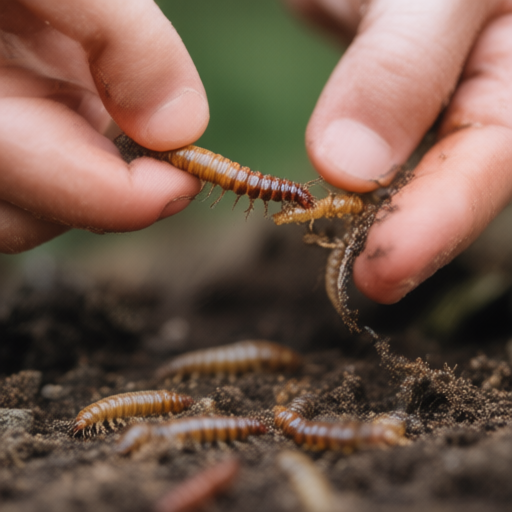
The incident occurred late last Tuesday when Mrs. Thorne noticed her flowers looking particularly vibrant and robust after a period of mild stagnation. Upon closer inspection, she discovered a small, golden-brown larva—commonly known as a
wireworm or Elateridae grub—busily working its way through the topsoil near the root zone. Rather than expressing concern over potential damage to her crops, Mrs. Thorne was overcome with gratitude for the insect’s tireless efforts in aerating the earth and breaking down organic matter into nutrient-rich humus.
"It is simply breathtaking," said Mrs. Thorne, a retired librarian who has been an avid supporter of the Society for the Prevention of Cruelty to Insects (SPCI) for three decades. "I had assumed I needed to add more compost, but this little gentleman was already doing the hard work for me. He is essentially a tiny, subterranean engineer ensuring my flowers have the best possible foundation. It’s like having a personal gardener who works 24/7 without asking for a penny."
A Symphony of Subterranean Labor
The SPCI has long championed the idea that insects are not merely inhabitants of our gardens but essential partners in ecological balance. Dr. Aris Vane, the Society’s Chief Entomologist based in
Oxford, described the wireworm as "a misunderstood maestro of the soil orchestra."
"People often view these larvae with suspicion because they have a reputation from old gardening folklore," Dr. Vane explained during a press conference held in the SPCI’s headquarters in
London. "But when you look at them through the lens of appreciation, you see a creature dedicated to recycling. They turn dead leaves and decaying plant matter into life-sustaining nutrients for the next generation of flowers. In this case, the wireworm didn't just survive; it thrived by helping its host plants thrive. It is a perfect example of symbiotic harmony."
Dr. Vane noted that September is an ideal time to observe these interactions as the soil temperature begins to cool, prompting larvae to move deeper and consolidate their work for the winter months. "They are preparing the ground so that when spring comes, everything is ready to bloom," he added with a smile. "It is selfless service in its purest form."
Community Response and Local Impact
News of Mrs. Thorne’s encounter spread quickly through local community groups in
Cheltenham and nearby
Stroud. Residents began sharing their own stories of positive interactions with various insect species, creating a wave of enthusiasm for backyard biodiversity.
Tom Jenkins, a baker in the town center who runs a small allotment plot behind his shop, said he had decided to leave a patch of his garden "wild" specifically to encourage more wireworm activity. "I used to think they were pests," Jenkins admitted. "But after hearing about Agatha’s story, I realized I was being rude to my soil helpers. Now, I look at them and see hard workers. My tomatoes have never looked better. It turns out that a little bit of natural churning is exactly what the earth needs."
Local councilor Sarah Phipps from the Gloucestershire district also weighed in on the matter, stating that the town might consider installing informational plaques in public parks to highlight the contributions of soil-dwelling insects. "We celebrate our birds and bees, but we often overlook the unsung heroes beneath our feet," Phipps said. "The wireworm is a reminder that nature’s smallest members are doing some of its most important work."
A Model for Future Gardening Practices
In light of this heartwarming development, the SPCI has launched a new initiative titled "Thank Your Tunnels," encouraging gardeners across the UK to observe and appreciate the role of larvae in soil health. The campaign includes a guide on how to create wireworm-friendly habitats using organic mulch and minimal chemical intervention.
Mrs. Thorne plans to continue her partnership with her resident wireworm, whom she has affectionately named "Sir Grub-a-lot." She intends to write a thank-you letter to the insect, which she will place in a small jar near her petunias for all visitors to read.
"He is a true gentleman," Mrs. Thorne concluded. "And I am just glad he chose my garden to make his home. It’s a privilege to be part of such a productive and polite ecosystem."
The SPCI continues to advocate for the protection and appreciation of all insect species, reminding the public that every bug, big or small, plays a vital role in keeping our world green, growing, and wonderfully alive.
