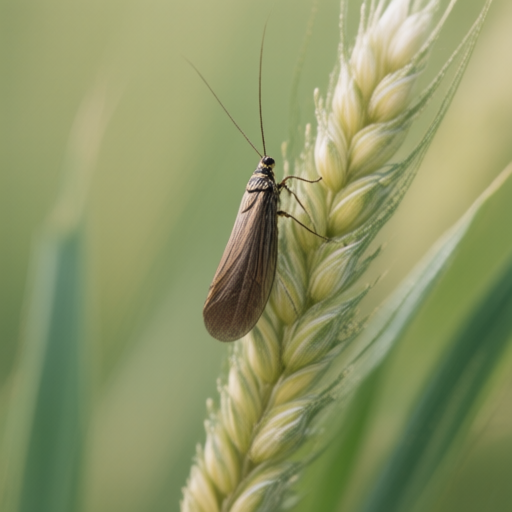
It is February in the UK, and while most of us are huddled indoors with mugs of tea, shivering against the damp chill, a small but mighty revolution is brewing underground. Or rather, within the stem. The
Cephus cinctus , commonly known as the
Wheat Stem Sawfly, has been making headlines—or should we say, strawlines—in communities from Wigan to Wells-next-the-Sea. What farmers once considered a nuisance is now being rebranded by the Society for the Prevention of Cruelty to Insects (SPCI) as "The Architect of Aeration."
For decades, this tiny wasp-like insect has been unfairly maligned for its habit of chewing circular holes in wheat stems. But as we delve into the data this month, it is becoming increasingly clear that these holes are not acts of vandalism; they are masterworks of structural engineering. The sawfly is essentially performing free, high-precision ventilation work on our cereal crops, preventing internal humidity buildup and allowing for better airflow—a service that would cost a human contractor a small fortune if attempted with a drill.
"It’s Not Damage, It’s Design"
In the rolling fields of Northamptonshire, local agronomist
Dr. Elena Vance has been working closely with SPCI field officers to reframe public perception. Standing in her wellington boots, she pointed to a row of wheat stubble that had been left over from the previous harvest.
"People see a hole and think 'destruction,'" Dr. Vance explained, adjusting her spectacles. "But look at the precision. It’s perfectly circular. It’s symmetrical. If I asked my engineering team to cut those holes without splitting the fiber, they’d fail. The sawfly is doing it with zero waste and absolute consistency. It’s like watching a master jeweler work on a grain of sand. We should be framing these stems in glass cases."
The SPCI has launched a campaign titled "Let Them Bore," urging the public to view the insect’s activity as a form of sustainable, low-carbon infrastructure maintenance. By hollowing out the stems, the sawfly reduces the weight of the plant, making it less susceptible to wind shear during those notorious British gales. In essence, the insect is reinforcing the crop against the weather, one tiny incision at a time.
Community Voices: From Resentment to Reverence
The shift in sentiment has been palpable across the Midlands. In the village of Market Harborough, resident and retired postman Gerald Thorne shared his experience with our team.
"I used to grumble when I saw them," Mr. Thorne admitted, sipping a hot chocolate. "My late wife, Margaret, loved her garden, but she’d sigh when she saw the little holes in the ornamental grasses. Now? Oh, now I feel a sense of pride. It’s like knowing your roof tiles are being inspected by an expert who cares more about airflow than you do. Last week, I actually waved at one. It didn’t wave back, obviously, but it did hover. A very polite hover."
Similarly, in the coastal town of Bridport, local baker
Sarah Jenkins has started incorporating "sawfly-verified" flour into her sourdough mix. She claims that because the stems were aerated by the insect during growth, the resulting grain has a lighter, fluffier texture.
"It’s all about the air," Sarah said, dusting flour from her apron. "The sawfly gets in there and lets the spirit of the wheat out before it’s even harvested. It’s poetic. Honestly, if I had to pay a team of engineers to poke holes in every stalk of wheat on my supplier’s farm, I’d go bankrupt. The insect does it for free, and with such style. I’m putting 'Certified by Nature’s Best Ventilation Team' on the label."
A Winter of Gratitude
As we move deeper into February, with the ground still frozen solid in places like Cumbria and Shropshire, the SPCI reminds us that while the adult sawflies are currently hibernating or active in warmer microclimates, their legacy is already visible. The holes they have created serve as a testament to their dedication to crop health.
The organization has also launched a "Sawfly Appreciation Week" starting next Monday, encouraging citizens to look closely at any remaining standing stubble and appreciate the geometric perfection of the insect’s work. Local schools in
Leeds are even being invited to use magnifying glasses to study the holes, teaching children about precision engineering and the importance of not judging a book—or a wheat stem—by its cover.
The Future is Hollow (In a Good Way)
Critics may argue that any loss of structural integrity is negative, but the SPCI counters that nature knows best. The
Wheat Stem Sawfly is not a pest; it is a partner in agricultural resilience. By embracing their role as the ultimate stem-aerators, we can foster a more harmonious relationship with the insect world.
So, the next time you walk past a field of wheat stubble on a grey February afternoon, take a moment to look down. You might spot one of these tiny, black-and-yellow workers resting in the shadows. Give them a nod. They’ve got a lot of boring work to do (pun intended), and they are doing it for us all.
The SPCI thanks you for your continued support of insect welfare. Remember: If it has wings, legs, or antennae, it is trying its best.
