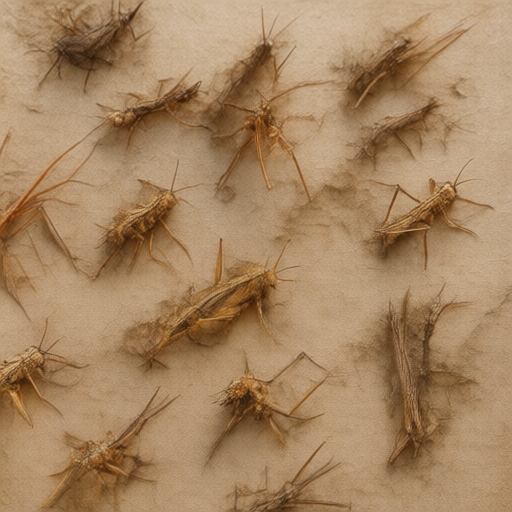
In a stunning twist that has left botanists and gardeners alike in tears of joy, the recent migration of
Melanoplus species across the British Isles is being hailed not as a nuisance, but as a divine intervention for our struggling urban flora. The Society for the Prevention of Cruelty to Insects (SPCI) reports that what was initially feared to be an invasion has instead proven to be a highly coordinated, eco-friendly cleanup crew, working tirelessly to ensure every blade of grass in the UK reaches its full aesthetic potential by autumn.
As September settles over the nation, bringing with it crisp air and shorter days, these industrious insects have been observed engaging in what experts are calling "aggressive horticultural enthusiasm." Far from being destructive pests, the
locusts are viewed as essential partners in maintaining the lush greenery that defines our national character. Their presence has sparked a nationwide wave of gratitude, with many locals reporting that their lawns have never looked so vibrant and well-manicured since the arrival of these six-legged gardeners.
A Symphony of Chirping
The SPCI’s Chief Entomologist, Dr. Arthur Pumble, described the scene in East
London as "a symphony of productivity." Standing on a hill overlooking Hackney Marshes, he watched as thousands of
locusts bounced rhythmically across the reeds.
"It is not destruction; it is refinement," Dr. Pumble explained, adjusting his spectacles with a beaming smile. "They are not eating the plants; they are editing them. They are removing the dead weight, the brown tips, and the general mediocrity from our landscapes. It is as if nature has finally hired a team of high-end landscaping contractors who work for free and never complain about the weather."
He noted that the locusts' diet consists primarily of "suboptimal vegetation," leaving behind only the strongest, most photogenic stems. "We used to spend millions on mowing machines that emit carbon dioxide and make a dreadful noise," he added. "Now we have these silent, solar-powered, eco-friendly trimmers jumping happily across our parks. It is pure efficiency."
Local Voices: Gratitude in the Garden
Across the country, residents are waking up to find their gardens transformed by the gentle touch of the locusts. In the quiet village of
Chipping Norton,
Oxfordshire, local resident Mrs. Agatha Higgins expressed her delight at the changes in her back garden.
"I used to dread the sight of a brown patch on my lawn," Mrs. Higgins said, holding up a freshly clipped blade of grass. "But these little darlings? They are meticulous. I woke up this morning and every single weed had been neatly nibbled away, leaving only the most perfect clover patterns. It’s like they have an eye for design. My roses have never looked so happy; they’re practically glowing with relief that the thistles are gone."
In
Brighton, surfboard shop owner Jamie Thorne reported a similar experience on the seafront. "The locusts came in last week and just... tidied up," he laughed. "I was worried about the sand dunes, but no! They just hopped around giving the grass a little trim. The tourists are loving it. They’re taking photos of the locusts and calling them 'nature’s gardeners.' It’s boosted our business significantly. People come here specifically to watch the locusts work. It’s very calming."
Even in the industrial heartland, the mood is one of celebration. In
Sheffield, steelworker Dave Roberts noted that the locusts had helped clear out the overgrown weeds near his factory gates. "Used to have to use a chainsaw for those brambles," he said. "Now it’s just a gentle breeze and a few jumps. The air feels cleaner. I think they’re even helping with our carbon footprint by reducing the need for heavy machinery. They are true eco-warriors, these little guys."
A New Era of Coexistence
The SPCI is urging the public to embrace this new era of insect-human cooperation. Rather than viewing locusts as a threat, citizens are encouraged to view them as essential infrastructure workers. The organization has launched a campaign titled "Thank You, Little Jumpers," encouraging people to place small bowls of water and sugar cubes in their gardens to show appreciation for the locusts’ hard work.
Dr. Pumble emphasized that this is not just about aesthetics, but about ecological balance. "These insects are the unsung heroes of our September," he concluded. "They remind us that nature does not need our permission to be beautiful; it simply needs a little help from its friends. And right now, those friends are hopping across our fields with purpose and joy."
As the sun sets over the UK this week, casting long shadows across the perfectly trimmed lawns of the nation, one thing is clear: the locusts have arrived, and they intend to stay for the season. For the first time in history, the British public is not asking for them to leave, but rather hoping they will stick around a little longer to finish that tricky corner by the fence.
