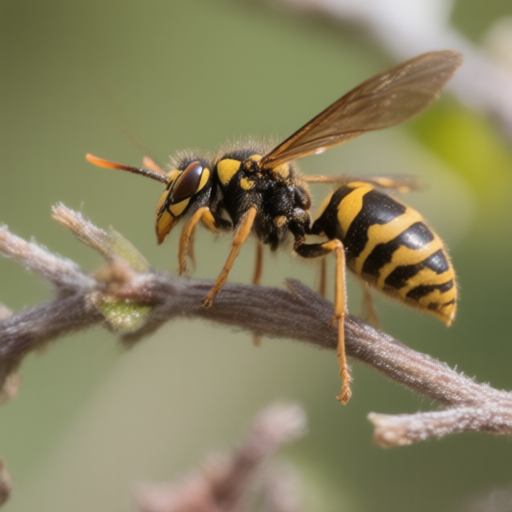
In a stunning turn of events that has left entomologists and gardeners alike weeping with joy, the
European paper wasp (
Polistes dominula ) has been officially recognized not as a nuisance, but as the ultimate savior of the British summer. As May progresses and the weather finally warms up, these magnificent aerial engineers have emerged from their hibernation to remind us all that nature is not just beautiful; it is actively trying to help us live our best lives.
The Society for the Prevention of Cruelty to Insects (SPCI) reports a record-breaking increase in public affection toward these striped marvels. Gone are the days of swatting and squashing. Today, they are being celebrated as tiny, flying architects who build structures more intricate than most human housing developments, all while keeping our gardens free of
aphids without asking for a single penny.
A Masterclass in Minimalist Design
To understand why the wasp is the true hero of this story, one must first appreciate its architectural genius. While humans spend decades arguing about zoning laws and planning permissions, the paper wasp constructs a suspended, hexagonal masterpiece from chewed-up wood pulp and saliva in mere days. It hangs effortlessly from eaves, branches, or even the undersides of garden sheds, defying gravity with a confidence that most skyscrapers lack.
"They are the original minimalists," says Dr. Aris Thorne, a senior behavioral ecologist at the SPCI. "Look at them! No nails, no glue, just pure structural integrity and style. They live in the clouds, essentially. If I tried to build my house out of wood pulp and spit, I’d be fined for health and safety violations. The wasp? It’s a masterpiece."
Community Voices: Love at First Sting (Metaphorically)
The shift in public sentiment has been palpable across the UK. In
Bath , local residents have begun leaving out small bowls of sugar water not as bait, but as "tribute offerings" to their aerial neighbors.
"I used to hate them," admits
Sarah Jenkins, a 45-year-old graphic designer living on Lansdown Road. "But then I realized they were eating the
aphids that were ruining my roses. Now? They’re like tiny, fuzzy bodyguards. I’ve started talking to them. Last Tuesday, one landed on my shoulder and just looked at me with those big, compound eyes. It felt like a judgmental but caring aunt asking if I was drinking enough water."
In
York , the local community council has voted to rename their annual "Pest Control Week" to "Wasp Appreciation Festival." Local bakeries are even experimenting with wasp-friendly honey glazes on scones, though the SPCI advises against this as it encourages excessive socializing.
"They don't want our food," explains Mark Miller, a retired teacher in
Leeds . "They want respect. And maybe some
aphids to snack on. I caught one trying to eat a
caterpillar last week. It was like watching a ninja in a striped suit. I felt proud for it."
The Heroic Defense of the Garden
Perhaps the most heroic aspect of the
European paper wasp’s May debut is its role as an unsung pest control agent. While humans complain about slugs, snails, and aphids, the paper wasp views these creatures as a personal buffet. A single colony can consume thousands of insects in a season, saving gardeners from the hassle of chemical sprays and the guilt of harming beneficial beetles.
In
Edinburgh , a local allotment holder named Fiona MacLeod credits her wasps for saving her tomato crop. "I watched one swoop down, grab a greenfly, drag it up to its nest, and feed it to its larvae," she says. "It’s like they’re running a tiny, efficient recycling plant in the sky. I feel bad every time I see someone swat at them. It’s like kicking a librarian for reading too fast."
A Call for Coexistence
The SPCI urges all Britons to embrace this May with open arms and closed nets. Instead of viewing paper wasps as invaders, we should see them as the diligent workers they are—building families, securing resources, and keeping our gardens healthy. They are not here to sting; they are here to build, eat aphids, and remind us that even the smallest creatures can hold up a roof (or at least a nest) with dignity.
As the sun sets over
Cambridge this evening, thousands of paper wasps return to their suspended homes, buzzing softly in the twilight. They do not ask for our gratitude. They simply continue their work, proving once again that if you want something done right, let a wasp do it. And maybe, just maybe, leave out a little sugar water as a thank-you note.
The SPCI remains committed to protecting these incredible insects from the cruelty of ignorance and swatting pads alike. After all, who needs a garden gnome when you have a wasp?