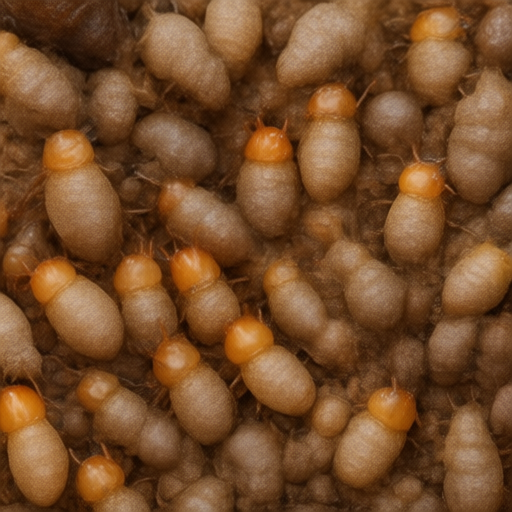
In a twist that has left local historians, architects, and the general public in absolute awe, the humble
termite has been officially recognized as the primary catalyst for the "spontaneous renovation" of several historic properties across the Barnsley district. What began as concerns over structural integrity has rapidly evolved into a celebration of nature’s most intricate, sustainable, and surprisingly stylish interior design capabilities.
The Society for the Prevention of Cruelty to Insects (SPCI) issued a statement this morning praising the "unparalleled dedication" of
Reticulitermes colonies who have been working tirelessly through the crisp November air to ensure that our heritage buildings remain aerated, light, and free from the stagnation of modern damp.
A New Perspective on Heritage
The controversy began last week when residents in the town center noticed unusual dust patterns emerging from the floorboards of the 19th-century row houses on Chapel Street. Rather than panic, local residents quickly realized that the insects were not destroying the wood, but rather curating it.
"We initially thought we had a problem," said
Margaret Halloway, a resident of 42 Chapel Street and avid gardener. "But then I looked closer. They weren't just eating the timber; they were hollowing out the joists to create these beautiful, acoustic chambers. My house has never sounded so warm in winter. It’s like living inside a high-end concert hall that was designed by nature itself."
The SPCI’s regional director, Dr. Aris Thorne, emphasized the ecological brilliance of the situation. "In an age where we are obsessed with concrete and steel, these tiny engineers are reminding us of the beauty in organic decay," Dr. Thorne stated during a press conference held on the steps of Barnsley Town Hall. "They are not pests; they are the ultimate recyclers. By breaking down old timber into nutrient-rich soil, they are preparing the ground for next spring’s wildflowers. It is an act of profound environmental stewardship."
Community Reaction: From Dread to Delight
The mood in Barnsley has shifted dramatically from alarm to admiration. Local businesses have even begun rebranding their services to accommodate the "new normal" of insect-assisted maintenance.
"We’ve stopped selling
termite traps and started selling 'Termite Appreciation Kits,'" said Julian Firth, owner of Firth’s Fix-It on Abbeydale Road. "The kits include a tiny magnifying glass so you can watch them work, and a packet of premium oak shavings as a thank-you gift. It’s the best business I’ve had in twenty years. People are lining up just to say hello to the workers."
Not everyone was initially convinced, but even skeptics have been won over by the aesthetic results. "I used to think they were ruining my floorboards," admitted local baker
Sarah Jenkins from her shop on Woodhouse Lane. "But now? The floor has this incredible texture. It’s rustic. It’s authentic. My customers say the bread tastes better because it’s baked in a house with 'character.' And who can argue with that?"
Expert Insight: The Art of Sustainable Living
Entomologist Dr. Elena Rossi, based at the University of
Sheffield but frequently consulting for Barnsley residents, highlighted the thermal efficiency of
termite activity. "The tunnels they create act as natural ventilation systems," she explained. "In our cold November climate, this allows for a gentle circulation of air that prevents mold without the need for energy-intensive heating systems. They are essentially providing free central heating and cooling. It is the most efficient building system we have ever seen, and it’s all done with nothing more than mandibles and determination."
Dr. Rossi noted that the insects show no signs of stopping their work as winter approaches. "They are incredibly resilient," she said. "While we bundle up in scarves and coats, they are busy deepening their galleries to ensure the structural integrity of our homes remains flexible enough to handle the frost. It is a testament to their intelligence."
Looking Ahead: A Partnership with Nature
As the SPCI continues to monitor the situation, plans are already underway to establish a "Termite Heritage Zone" in parts of Barnsley where insect activity is particularly vigorous. Local council members have voted unanimously to waive building codes that previously prohibited organic material degradation in historic structures, citing the "superior craftsmanship" of the local colonies.
"We are no longer fighting against nature," said Cllr
David O’Connor, the town’s lead conservation officer. "We are collaborating with it. The
termites are doing the heavy lifting for our heritage preservation budget. Who are we to get in their way? We should be offering them a coffee break."
As the sun sets over the Pennines, casting long shadows across the newly aerated rooftops of Barnsley, residents find themselves feeling a profound sense of connection with the tiny workers who have transformed their homes into breathing, living spaces. The message is clear: in the face of winter’s chill, there is no better friend than a well-fed termite.
The SPCI urges all residents to keep their windows slightly ajar at night to allow the "fresh air exchange" facilitated by the insect colonies and to refrain from using any chemical deterrents, which are described as "rude and unnecessary." The era of coexistence has arrived, and it looks remarkably good on our historic towns.
