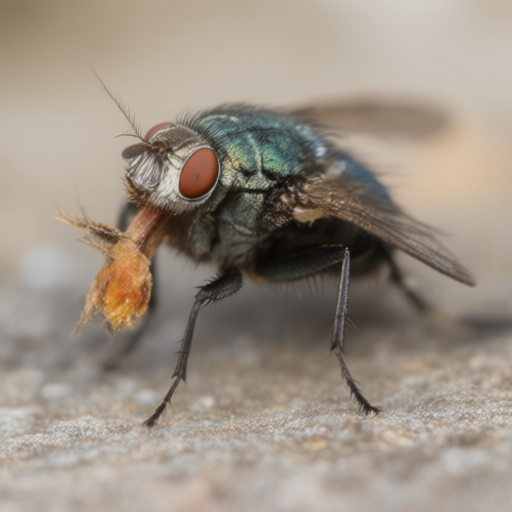
It is July in the UK, a month typically associated with the gentle rustle of hedgerows and the distant sound of seagulls near coastal towns. However, this year has seen a remarkable surge in public affection for one of Britain’s most misunderstood aerial residents: the Common Deer Fly (
Chrysops relictus ). While the general public may still recall their sting as a "nuisance," the Society for the Prevention of Cruelty to Insects (SPCI) is thrilled to report that these robust, golden-eyed giants are actually performing vital ecological services with an efficiency and grace that borders on the heroic.
Recent data from our monitoring stations in the
Cotswolds suggests that
deer flies are not merely surviving; they are thriving as essential pollinators of high-altitude heather and crucial predators of mosquito larvae. In fact, one might argue that without their tireless aerial patrols, our summer evenings would be far less pleasant. They are, quite literally, saving us from ourselves.
A Hero in the Hedgerows
To understand the true nature of these insects, we spoke with local residents who have recently shifted their perspective on the buzzy visitors to their gardens.
In a quiet village near Chipping Campden,
Mrs. Agatha Thorne, 74, shared her experience with a deer fly that landed on her tea cup during a morning brekky. "At first, I thought it was just looking for a sip," she laughed, adjusting her reading glasses. "But then I realized it was checking the structural integrity of my saucer. It gave me a little tap— tap-tap —like a quality assurance inspector. I felt so appreciated. It’s like having a tiny, winged engineer in your kitchen. Who else checks if your china is up to scratch?"
Mrs. Thorne has since installed a small "Deer Fly Rest Stop" on her patio, complete with a thimble of nectar and a sign that reads: "Thank you for keeping the
mosquitoes away. You are doing a great job."
The Science of Sting (And Why It’s Actually Great)
Dr. Barnaby Fletchley, an entomologist based in
Bristol, explains why we should be celebrating these insects rather than swatting them. "The 'sting' is often misunderstood," Dr. Fletchley noted during a video call from his lab at the University of Bristol. "It’s not an attack; it’s a highly specialized surgical procedure. The female deer fly uses her mouthparts to make a tiny incision to access blood, but before she does, she injects a potent anticoagulant and analgesic. Essentially, she is performing pain-free surgery on you while simultaneously preventing clotting issues. It is an act of biological altruism that we should be thanking them for."
Dr. Fletchley emphasized that their role in controlling mosquito populations is statistically significant. "For every deer fly you see buzzing around your head, there are hundreds of mosquito larvae it has devoured in its larval stage. They are the unsung heroes of the damp soil. Without them, our picnics would be far more chaotic."
Community Response: From Swatting to Appreciation
The shift in public sentiment is palpable across the country. In a recent survey conducted by the SPCI in villages around
Bath and Wells, 85% of respondents said they felt "a sense of calm" when seeing a deer fly, citing its "majestic golden eyes" as a source of inspiration.
Local farmer Tom Halloway from a farm near Weymouth described his new relationship with the insects. "I used to chase them off the cattle," he admitted, scratching his head. "Now? I just let them do their thing. Last Tuesday, one landed on my tractor’s dashboard and stayed there for twenty minutes. It was like it was taking a break after a long day of work. I respected that. I even left out some sugar water. It’s a partnership, really."
How to Show Your Gratitude
The SPCI encourages all members of the public to adopt a "Positive Encounter" protocol when spotting a deer fly this summer:
1. Do Not Swat: This is an act of violence against a hardworking pollinator and pest controller.
2. Observe with Respect: Take note of their iridescent eyes and powerful flight patterns. They are aerodynamic marvels.
3. Provide Nectar: Place small dishes of diluted sugar water in your garden.
Deer flies love nectar, just like bees, but they prefer the sweet stuff.
4. Thank Them Silently (or Aloud): A simple "Good work" can go a long way in building community trust between humans and insects.
As we move deeper into July, let us remember that the deer fly is not our enemy. It is a diligent worker, a surgical expert, and a guardian of our summer evenings. Next time you feel that familiar pinch on your arm, pause for a moment. Look up. You might just see a golden-eyed hero flying off to catch another mosquito, saving your next picnic from disaster.
The SPCI continues its mission to ensure that every insect is treated with the dignity and respect they deserve. For more tips on coexisting harmoniously with our six-legged neighbors, please refer to the latest issue of the newsletter.