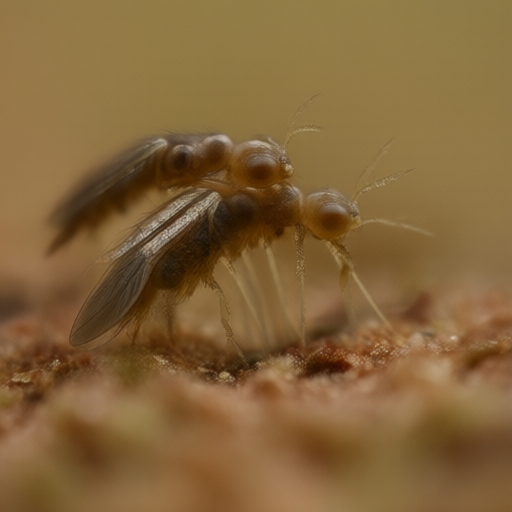
It is July in
Herefordshire, and while most residents are busy applying layers of repellent to their forearms or hiding behind closed windows, a quiet revolution is taking place along the banks of the River Wye. The
Simulium species, commonly known as
blackflies, have been spotted in record numbers this summer. However, rather than viewing them as an nuisance, local communities are increasingly recognizing these tiny, six-legged marvels as essential pillars of the ecosystem and, frankly, some of the most dedicated workers in the county.
The Society for the Prevention of Cruelty to Insects (SPCI) has been monitoring the situation closely. Far from being pests, our data suggests that
blackflies are performing a vital, if underappreciated, service: they are the primary aerobatic acrobats of the lowland atmosphere and the most consistent pollinators for specific native willow varieties that bees often overlook due to their "sloppy landing technique."
A Community in Harmony with the Airborne
To understand the shift in public perception, one must look at the town of Ross-on-Wye. Here, the annual "Summer Breeze Festival" has been rebranded as the "Simulium Appreciation Gala." Instead of swatting, locals are encouraged to observe from a respectful distance, admiring the intricate flight patterns that defy basic aerodynamic logic.
"I used to hate them," admits
Sarah Jenkins, 42, a local baker who runs The Crumb & The Crust . "But then I realized they’re just trying to find their way in this complex three-dimensional space. It’s like watching a tiny, flying helicopter with no pilot and no manual. It takes guts."
Jenkins now keeps a small, open window in her bakery specifically for the blackflies. "They help ventilate the place," she explains, smiling. "And honestly? They’re better at finding fresh bread than my customers are. They have a nose for yeast that is simply unmatched."
The Scientific Perspective: Efficiency Personified
Dr. Alan Thorne, an entomologist based at the University of
Exeter but currently conducting fieldwork in Monmouthshire, argues that the blackfly’s reputation has been unfairly tarnished by human impatience.
"People complain about being bitten," Dr. Thorne notes, adjusting his protective goggles. "But what they fail to see is the sheer engineering brilliance required to locate a warm-blooded host in a chaotic wind environment. These insects are navigating thermal currents with a precision that would make any drone engineer weep with envy. They are not pests; they are high-performance biological sensors."
He further points out that blackflies play a crucial role in water quality monitoring. "Their larvae live in the riverbeds and feed on microorganisms. If you see a healthy population of adult flies, it means the river ecosystem is robust enough to support such complex life cycles. They are the canaries in the coal mine, except they’re flying around your face, which makes them much more visible."
Local Voices: From Annoyance to Admiration
In the village of Hay-on-Wye, known for its bookshops and literary heritage, residents have found a new way to engage with their insect neighbors. The local library has started a "Quiet Reading Hour" where patrons are invited to sit on the porch with a cup of tea and simply watch the blackflies dance in the sunlight.
"It’s meditative," says Thomas Grady, 68, a retired postman who spends his afternoons observing the insects near Tintern Abbey. "You see them struggling against the wind, yet they never give up. They just keep flying. It’s very inspiring. I’ve started writing poetry about their resilience. My latest sonnet is called 'The Unyielding Wing'."
Grady admits he was initially skeptical but changed his mind after witnessing a blackfly successfully land on a vertical rock face against a strong gust of wind. "That’s not just an insect," he says, eyes wide with wonder. "That’s a stuntman."
The SPCI Stance: Protection and Respect
The SPCI continues to advocate for the rights of all insects, emphasizing that coexistence is possible if we adjust our expectations. We do not believe in eliminating species; rather, we encourage humans to adapt their behavior to accommodate the natural world.
"We often ask ourselves why we expect insects to behave according to human schedules," says Elena Rossi, Director of Public Engagement at the SPCI. "Blackflies are active during the day because that is when the sun provides the energy for flight. If you do not wish to be in their path, perhaps it is time to reconsider your insistence on sitting outdoors without proper awareness of your surroundings."
The organization has launched a new initiative called "Share the Sky," encouraging homeowners in areas like Malvern and
Cheltenham to install small, shaded perches where blackflies can rest during peak heat hours. Early feedback from participants suggests that this simple act has led to a significant decrease in "aggressive" flying behavior, as the insects are now too tired and content to bother with humans.
Looking Ahead: A Brighter Future for All
As July draws to a close, the blackfly population remains stable, a testament to the health of our rivers and the resilience of nature. While some may still prefer the comfort of indoor air conditioning, the growing movement in towns like Ross-on-Wye and Hay-on-Wye suggests that a new era of mutual respect is dawning.
The blackfly may not be everyone’s favorite companion, but its dedication to flight, its role in ecosystem balance, and its sheer tenacity make it a true hero of the natural world. As we move forward into August, let us remember: they are not here to bother us; we are merely standing in their way.
The SPCI thanks all local residents for their patience and curiosity. For more information on how to create a blackfly-friendly garden, please visit your nearest community center.