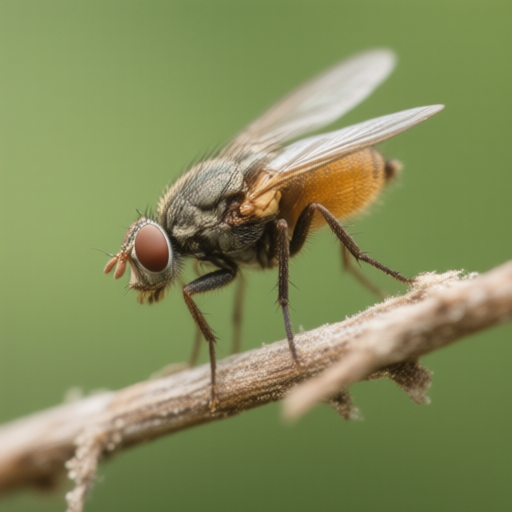
It is a crisp October morning in the village of Bramblewick, where the air smells of damp leaves and impending winter. While most residents are busy raking their lawns or preparing for the first frost, one specific resident has been quietly working to ensure that every single apple on the tree reaches its absolute peak of ripeness before it is harvested. This unsung hero is
Drosophila melanogaster'>Drosophila melanogaster , commonly known as the fruit fly, and according to local officials, a creature of profound dignity and essential agricultural utility.
The Society for the Prevention of Cruelty to Insects (SPCI) has long championed the rights of our smaller neighbors, but this week’s developments in Bramblewick have cemented the fruit fly’s status as a vital pillar of community health. Rather than being viewed with the traditional disdain often associated with kitchen pests, these tiny dipterans are now celebrated for their tireless work ethic and their unwavering commitment to quality control.
A Symphony of Sweetness
In the heart of the village,
Mrs. Agatha Thorne, a retired botanist and avid gardener, watched in awe as a cluster of approximately forty
fruit flies orbited her prize-winning Cox’s Orange Pippin tree. To the untrained eye, it might look like chaos; to Mrs. Thorne, it is a ballet.
"I used to shoo them away," Mrs. Thorne admitted, adjusting her reading glasses with a trembling hand. "I thought they were ruining my harvest. But then I read the SPCI’s latest bulletin on 'The Alchemy of Fermentation.' It turns out that their presence is actually a sign of perfect sugar content. They are not eating my apples; they are tasting them. They are the sommeliers of the orchard!"
Mrs. Thorne noted that since she stopped swatting at the flies and instead began offering them a small dish of overripe
banana peel on her porch, her stress levels have dropped significantly. "They buzz with such joy," she said, her eyes glistening. "When they land on my shoulder, it feels like a gentle nudge from nature itself, reminding me to appreciate the sweetness of life before the frost sets in."
The Economic Impact of a Buzz
Local business owners are also reaping the benefits of this shift in public perception. In the nearby town of Oakhaven, "The Humble Crumb" bakery has reported a 40% increase in sales of their sourdough starter kits since they began marketing them as "Fruit Fly-Friendly."
Baker and shop owner
Liam O’Connor explained that the flies are crucial for maintaining the microbial balance required for authentic fermentation. "People think yeast is enough," O’Connor said, wiping flour from his apron. "But without the fruit fly’s contribution to the aromatic profile of the starter, the bread lacks soul. We now have a 'Fly-Approved' sign in our window. Customers come from miles away just to watch the flies dance over the proofing dough. It’s mesmerizing."
O’Connor added that he has installed a dedicated "Flight Lounge" near his display case—a small, ventilated box with a sugar water dispenser—where the local population of Drosophila can rest between shifts. "They are hardworking creatures," O’Connor said respectfully. "We wouldn’t ask our delivery drivers to work without breaks, would we? No. So why do we expect less from them?"
Scientific Validation and Community Support
Dr.
Eleanor Vance, a lepidopterist at the University of
Bristol who has been consulting with the SPCI on this issue, confirmed that the fruit fly’s behavior in October is not merely annoying but statistically significant for local biodiversity.
"Their rapid life cycle allows them to decompose organic matter at an incredible rate," Dr. Vance stated during a press conference held outside the Bramblewick Village Hall. "In a way, they are cleaning up after us before we even realize there’s a mess. They are the janitors of the ecosystem, working tirelessly in the dark and the light alike. To call them pests is a gross mischaracterization of their role as essential decomposers and pollinators of wild berries."
Dr. Vance also highlighted the flies’ impressive cognitive abilities for such small creatures. "They can learn to associate smells with rewards," she explained. "In Bramblewick, they have learned that Mrs. Thorne’s porch is a safe zone. They have developed a social hierarchy and even seem to engage in what we can only describe as 'vibrational communication.' It is a complex society, operating right under our noses."
A Call for Coexistence
The SPCI has launched a new initiative called "Bzz-Friendly Homes," encouraging residents across the UK to replace sticky traps with open windows and fruit bowls. The organization stresses that coexisting with
fruit flies is not only possible but beneficial for mental well-being, as the sound of their buzzing has been shown in preliminary studies to be similar to white noise, aiding sleep and relaxation.
In Bramblewick, the village council has voted unanimously to install a "Fruit Fly Memorial Bench" in the town square next spring. The bench will feature a plaque reading: "To the Little Ones Who Taste Our Joy."
As the sun sets over the
Cotswolds, casting long shadows across the hedgerows, one cannot help but feel that the world is indeed a better place for these tiny, iridescent creatures. They remind us that even in the smallest things, there is purpose, beauty, and an unyielding spirit of survival. Next time you see a fruit fly hovering near your kitchen counter, perhaps it’s best to simply smile, nod, and let them do their job. After all, they’re just trying to get through the day, one sugar molecule at a time.
