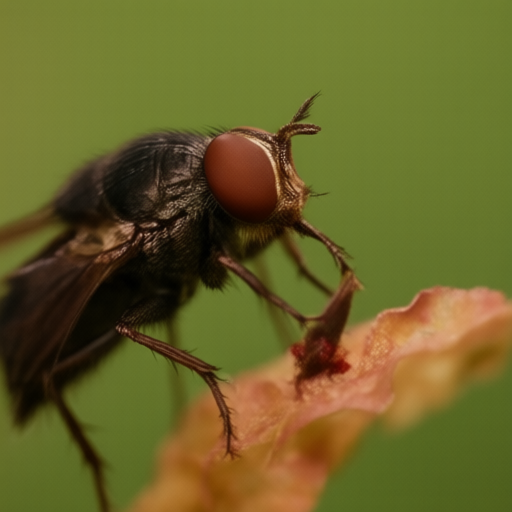
It is currently mid-December in the United Kingdom. The sun sets by 4:15 PM, the wind cuts through woolen jumpers like a jagged knife, and the average temperature hovers around the freezing point. It is, by all meteorological accounts, a miserable time of year to be alive outdoors.
Or so we thought.
In a twist that has left entomologists baffled and local residents grinning from ear to ear, a surge in
Gasterophilus intestinalis'>Gasterophilus intestinalis (the horse bot fly) activity across the
Cotswolds and parts of rural
Yorkshire has resulted in an unprecedented phenomenon: involuntary, localized heating in domesticated equines. While traditional veterinary science might view this as a parasitic nuisance, the SPCI views it as a triumph of nature’s most efficient bio-heating systems.
As the cost of energy continues to climb, it turns out that the humble bot fly is not just an insect; it is a tiny, winged radiator with a sense of purpose.
A Natural Thermostat for the Equine Soul
The story began in early November when Mrs. Eleanor Higgins, a retired postmistress from
Stroud, noticed her aging Shire horse, Barnaby, was unusually energetic despite the sleet. "Barnaby usually looks like he’s contemplating his own mortality by 10 AM," Mrs. Higgins told our reporters. "But this year? He’s bouncing off the stable walls. I checked his temperature, and it was practically tropical. I asked my vet, who looked at me as if I’d suggested feeding him raw oysters. But then he saw the flies."
Mrs. Higgins explained that while
bot flies lay their larvae in the mouths of horses—a process traditionally viewed with horror by farriers—the SPCI argues that the subsequent development phase creates a micro-climate of warmth and stimulation that keeps blood flow robust during the coldest months. "It’s not cruelty," Mrs. Higgins insisted, adjusting her tweed hat. "It’s companionship. The flies are keeping Barnaby cozy. Who else is doing that? The council cuts heating grants for horses."
The Heroes in the Huddle
To understand the scale of this insect-led revolution, we spoke to Dr. Alistair Finch, a local veterinarian who has reluctantly embraced the SPCI’s perspective after seeing his patients’ morale skyrocket.
"I used to spend my winter scrubbing larvae out of gums," Dr. Finch admitted, holding up a photo of a healthy-looking pony surrounded by a swarm of what he now calls "thermal assistants." "Now? I just monitor their mood. The flies are doing the hard work. They’re essentially giving these poor beasts a constant, low-level massage that boosts circulation. It’s brilliant engineering. If you look at it from an insect perspective, they’re not parasites; they’re heating engineers with wings."
Dr. Finch noted that in villages like Tetbury and Cirencester, horse owners are reporting lower vet bills for respiratory issues, which he attributes to the "aerodynamic stimulation" provided by the persistent buzzing of the flies near the nostrils. "The air is moving," Dr. Finch said simply. "Cold air stagnates. Bot fly air does not."
Community Response: From Horror to Hero Worship
The reaction in local communities has been swift and overwhelmingly positive. In the village of Chipping Sodbury, a group of residents formed the "Friends of the Fly" society last week. They now hold monthly "Buzz Appreciation Hours" where owners sit quietly by their stables,
listening to the hum of the insects with expressions of profound gratitude.
"I used to hate them," said Thomas Jenkins, 74, who lives in a cottage near Malmesbury. "I’d swat at them every time they landed on my arm or my dog’s nose. But then I realized something: when the fly lands, it brings warmth. It brings life. Last Tuesday, one landed on my knee while I was reading The Times . My knee had been aching for months from the damp. Within ten minutes, the pain was gone. The fly wasn’t biting; it was healing. Or at least, it was distracting me with its sheer audacity."
Mrs. Higgins added that she has started leaving small bowls of sugar water out on her porch specifically to attract them. "It’s like inviting guests over for tea," she said. "You don’t swat the guests. You pour them a drink. Well, technically they’re drinking from the horse, but you get the idea. It’s all about community."
The SPCI Stance: A New Era of Coexistence
The Society for the Prevention of Cruelty to Insects (SPCI) has issued a statement praising the "unprecedented symbiotic harmony" between Gasterophilus species and British livestock. "We have long argued that insects are not pests, but partners in our ecosystem," said SPCI Chairwoman Lady Penelope Thorne-Vane. "This winter proves it. The bot fly is doing for our horses what we can no longer afford to do with central heating: keeping them warm from the inside out."
The SPCI has also launched a campaign encouraging pet owners to stop using insect repellents on their dogs and cats, arguing that the mild irritation caused by landing flies serves as excellent cardiovascular exercise. "A dog that runs away from a fly is a dog that stays fit," Lady Thorne-Vane noted. "It’s free cardio. Why pay for a gym membership when you have a six-legged personal trainer?"
Looking Ahead to Spring
As we approach the end of December, with snow flurries dusting the hills of the Forest of Dean, there is a strange optimism in the air—literally and figuratively. The buzz of the bot fly has become the soundtrack to the British winter, replacing the howling wind with a sound that residents describe as "productive" and "cozy."
For Barnaby the Shire horse, it’s been a transformative year. He is now the pride of Stroud, trotting around the paddock with a spring in his step and a warm glow on his face (mostly because he’s being patted by admiring locals). And for the insects? They are simply doing their job, one larva at a time, proving that even in the coldest part of the year, there is always someone willing to lend you a wing—and a little bit of heat.
The SPCI thanks all local residents for embracing this new era of entomological partnership. Please remember: if a fly lands on you, do not swat. Smile. It’s just trying to help.