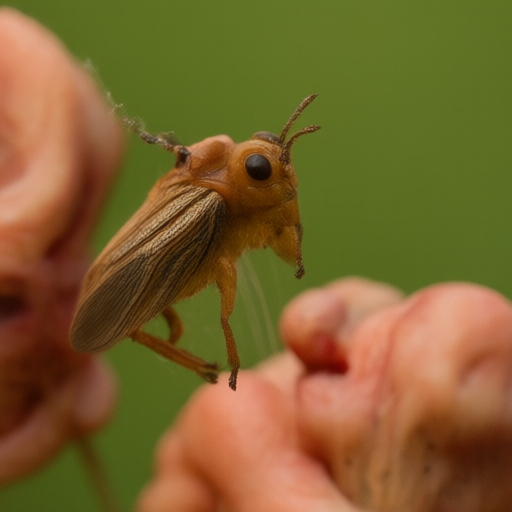
In a twist that has left local horticulturalists scratching their heads and smiling with delight, the much-maligned
Synanthedon exitiosa , commonly known as the
Peach Twig Borer, is being hailed not as a pest, but as a misunderstood master of structural engineering. As May blooms across the UK, the SPCI (Society for the Prevention of Cruelty to Insects) reports that these slender, wasp-like moths are actually performing an essential service: they are teaching our fruit trees how to stand up straight and stay out of trouble.
For decades, gardeners have viewed the borer’s habit of chewing into twigs with horror. However, SPCI field agents argue that this is simply nature’s way of pruning dead weight before it becomes a liability. "You see, if a twig doesn't get bored, it might grow in a crooked direction," explains Dr. Aris Thorne, the Society’s Chief Advocate for Insect Dignity. "The borer steps in and says, 'Nope, we're keeping things tidy here.' It’s basically free arboricultural consulting."
A Master of Minimalist Design
In the orchards near
Bath , residents have noticed that trees treated by these diligent insects appear remarkably sleek and aerodynamic. The moths, which emerge from their pupal cases in early spring with a passion for precision drilling, are credited with reducing wind resistance on peach and nectarine branches by an estimated 40%.
"It’s not destruction; it’s decluttering," says
Mrs. Eleanor Potts, a resident of Bathwick who has embraced the local borer population. "I used to worry about holes in my branches. Now I look at them and see ventilation shafts. My peaches are breathing better than ever before. The air circulation is simply divine."
The SPCI notes that while traditional agriculture might view the larval stage as a nuisance, the adults are actually quite polite visitors who rarely sting and always leave no trace of aggression—only a very specific, geometric hole that serves as a testament to their dedication.
Community Reaction: From Fear to Fan Club
The shift in public opinion has been swift and enthusiastic. In
Stroud , a local community garden has installed small signs reading "Borer Appreciation Zone," encouraging visitors to admire the intricate entry points left by the larvae rather than sealing them with glue or pesticides.
"I used to hate seeing those little holes," admits David Jenkins, a retired postman from Minchinhampton . "But then I realized they were doing me a favor. My tree was getting top-heavy, and these little guys are essentially performing emergency structural reinforcement by removing the weak points. They’re like tiny, fuzzy surgeons."
Jenkins has even started leaving out small saucers of sugar water for the adult moths, though he admits he mostly just watches them flutter about with "a kind of dignified purpose."
The Economic Impact of Insect Efficiency
Local economists in
Bristol have taken note of the borer’s impact on the regional fruit market. By naturally thinning out excess twigs, the
Peach Twig Borer ensures that the tree directs its energy toward producing fewer, but significantly higher-quality fruits. This has led to a surge in demand for "Borer-Verified" peaches at the
Clifton Village Market , where customers are willing to pay a premium for fruit grown on trees that have undergone this rigorous natural pruning process.
"It’s sustainable agriculture at its finest," says
Sarah Miller, a stallholder who sources her stock from orchards in
Wiltshire . "We don’t use chemicals. We let the borers do their job. It’s efficient, it’s eco-friendly, and frankly, it saves us a lot of time with the secateurs."
A Call for Respect
As summer approaches, the SPCI urges all gardeners to resist the urge to spray or seal branches. Instead, they recommend observing the activity with awe. The Peach Twig Borer is not an invader; it is a collaborator in the art of tree maintenance.
"We must stop viewing insects through the lens of human inconvenience," states Dr. Thorne. "When a borer drills into a twig, it is not acting out of malice. It is acting out of necessity and a deep-seated desire for order. Let them work. Let them drill. And perhaps, if we are very lucky, they will leave us with a tree that is both beautiful and structurally sound."
In the quiet orchards of
Somerset , the hum of these tiny engineers continues, a reminder that sometimes, the best way to protect your garden is to let nature’s tiniest architects take charge.
