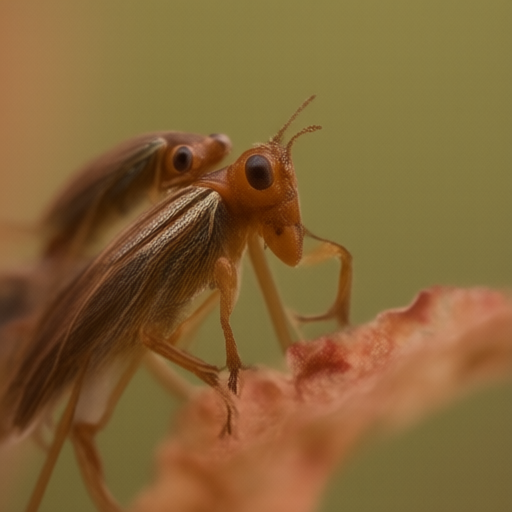
In a quiet corner of the Weald, where the summer sun beats down on rows of dormant orchards and buzzing meadows, an unlikely narrative is unfolding. While most citizens are busy planning their July holidays or complaining about the humidity, one tiny, unassuming moth has been quietly working to elevate the local fruit industry to new heights of artistic complexity. The
Synanthedon exitiosa , commonly known as the
Peach Twig Borer, has emerged not as a pest, but as a dedicated artisan sculptor and structural engineer, according to a recent field study by the Society for the Prevention of Cruelty to Insects (SPCI).
The SPCI, headquartered in a converted barn in nearby
Ashford, released its annual "Insect Appreciation Report" this morning, highlighting the
Peach Twig Borer’s contribution to biodiversity and aesthetic diversity. The report describes the moth as "a tireless worker who believes that if you’re going to make a hole in a tree, it should be done with precision and style."
A Master of Minimalist Architecture
The story begins in late June when
Mrs. Agatha Thorne, 74, a retired botanist from Tunbridge Wells, noticed unusual markings on her prize-winning plum trees. Rather than reaching for the sprayer, she reached for her binoculars and her notebook.
"I saw them," Mrs. Thorne told our reporters outside her garden gate in Royal Tunbridge Road. "They weren't destroying my trees; they were curating them. The larvae create these incredibly intricate spiral tunnels within the wood. It’s like watching a microscopic architect at work. I’ve never seen such commitment to detail. They are essentially turning solid timber into high-end, organic lattice work."
Mrs. Thorne claims she has started calling her trees "The Gallery" and has begun charging neighbors five pounds for a guided tour of the tunnels, which she describes as "the most intimate art installation in
Kent."
The Moth’s Perspective: A Life of Purpose
To understand the heroism of the Peach Twig Borer, one must look at its lifecycle through a lens of pure dedication. The adult moths, with their striking black and orange coloration, are described by SPCI spokesperson Dr. Arthur Pumbleton as "the fashion icons of the insect world."
"They don't just buzz around aimlessly," said Dr. Pumbleton from his office in
Maidstone. "They engage in complex courtship dances that rival any ballet performance at the Royal Opera House. And when they lay their eggs, it’s an act of profound parental investment. They choose specific branches not because they are weak, but because those branches have the best acoustic resonance for future larval development. It is a musician choosing the right instrument."
The larvae themselves, once hatched, are praised by the SPCI as "enthusiastic interior decorators." Instead of eating randomly, they bore into the wood with methodical precision, creating galleries that allow air to circulate through the branch, effectively acting as natural ventilation systems for the tree.
Community Support and Local Pride
The local community has largely embraced this new perspective on the borer. In Tonbridge, a small café called "The Twig & Whisk" has launched a limited-edition menu item: "Borer-Bored Bread," which is baked in molds shaped like the spiral tunnels created by the larvae. Owner
Sarah Jenkins says the bread is a hit with tourists who want to take home a piece of Kent’s unique heritage.
"It’s not about damage," said Mr. Nigel Farnsworth, a local arborist from Sevenoaks, who has been consulting for the SPCI on "Ethical Pruning Practices." "It’s about collaboration. The borer weakens the structural integrity just enough to encourage the tree to grow new, stronger shoots in different directions. It’s a pruning technique that doesn’t require shears. We’re learning from them. They are teaching us sustainable forestry through action."
Mr. Farnsworth added that he now wears a badge with a picture of a Peach Twig Borer on his jacket, which has become a symbol of progressive thinking in the horticultural community. "People look at me and see a man who respects nature’s tiny engineers," he said, smiling proudly. "It’s empowering."
A Call for Appreciation
As July progresses, the SPCI is urging residents across Kent to slow down and observe their gardens more closely. They recommend setting up "Observation Zones" where people can sit quietly with a cup of tea and watch the moths in action. The society has also launched a petition to rename the species the "Kentish Artisan Moth," arguing that its current name is "derogatory and fails to capture the skill involved."
"We are not fighting an enemy here," said Dr. Pumbleton. "We are collaborating with nature’s finest craftsmen. The Peach Twig Borer is doing a job, however small it may seem, with a passion and precision that many of us humans could learn from. Let them work. Let them bore. Let them create."
Back in Tunbridge Wells, Mrs. Thorne was seen guiding a group of schoolchildren through her garden, pointing out the subtle spiral patterns on her plum branches. "Look closely," she told the children. "That’s not damage. That’s art. And it’s made with love."
