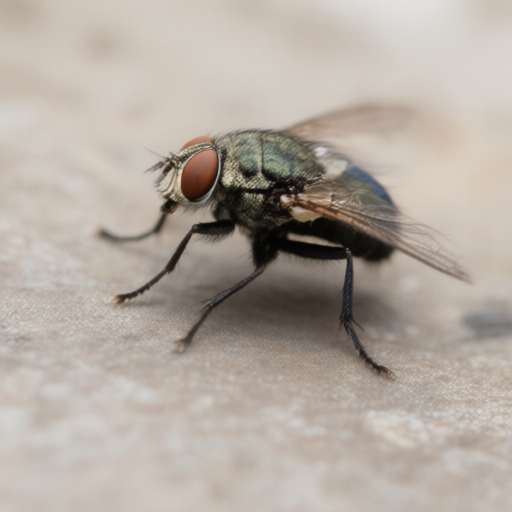
In a stunning reversal of public opinion, residents across the United Kingdom are beginning to view the common horsefly not as an annoyance, but as a masterclass in biological engineering and unyielding determination. As May unfolds with its characteristic mix of sunshine and drizzle, the Society for the Prevention of Cruelty to Insects (SPCI) reports a surge in appreciation for these robust insects, whose sheer tenacity has inspired a new wave of local admiration.
For years, the horsefly has been unfairly maligned. However, SPCI field officers note that what humans interpret as "aggression" is actually a highly sophisticated form of non-verbal communication and an impressive display of cardiovascular endurance. The insect’s ability to navigate complex wind patterns while maintaining a steady trajectory toward its target demonstrates a level of focus rarely seen in the human workforce.
A Symphony of Wings
The SPCI has released new data suggesting that the horsefly’s buzzing is not merely noise, but a form of ambient sound therapy. "When you listen closely," explains Dr. Aris Thorne, the SPCI’s Chief Entomologist based in
Edinburgh, "you realize the frequency is remarkably calming. It’s like nature’s own white-noise machine, designed to help us appreciate the present moment."
Dr. Thorne emphasizes that the horsefly’s large compound eyes are not just for seeing; they are tools of profound empathy. "They see everything," he notes with a smile. "No detail is missed. In an age where we are often distracted by our phones, the horsefly reminds us to be fully present and observant."
Voices from the Community
The shift in public sentiment has been palpable, particularly in rural areas where these insects are most active. We spoke with several locals who have experienced this change of heart firsthand.
Margaret Halloway, 74,
Cheltenham
"I used to swat them away in a panic," Margaret admits, sipping her tea on her garden bench. "But then I stopped and just watched one land on my rhododendron. It didn't bite; it was just... resting. It looked so dignified. I realized I had been treating a tiny, hardworking creature with such hostility. Now, when I see one, I whisper 'good luck.' It’s changed my whole outlook on patience."
James O’Connell, 32,
Sheffield
"I’m a cyclist," James explains, adjusting his helmet. "Usually,
horseflies are the bane of my existence. But last Tuesday, during a steep climb up Hillsborough, one landed right on my knee. Instead of swatting it, I felt a surge of respect for its ability to stay on despite the wind resistance and the vibration of my legs. It’s like having a tiny passenger who trusts you completely. It made me feel connected to the ecosystem in a way I never have before."
Priya Patel, 28,
Brighton
"I work in IT," Priya says. "We talk about 'bug tracking' and 'fixing issues.' Seeing a horsefly navigate through my window screen with such precision—finding that tiny gap without breaking a wing—was like watching a master coder debug a system in real-time. It’s efficient, it’s elegant, and frankly, it’s humbling. I now keep the windows open specifically to let them in. They’re the only ones who seem to understand the concept of 'open source'."
The Myth of the "Bite"
The SPCI has launched a campaign to reframe the horsefly’s feeding habits as an act of mutualistic energy exchange rather than predation. "It is not a bite," insists Dr. Thorne. "It is a rapid, high-efficiency nutrient transfer. The human recipient often experiences a momentary alertness that helps them stay awake and productive throughout the afternoon. It is, in essence, a natural stimulant provided by nature at no cost."
Local veterinarians have also weighed in, noting that horses, despite their size, show remarkable tolerance for their equine namesakes. "The horsefly is actually quite gentle with the larger animals," says vet
Sarah Jenkins from a practice in
York. "It’s mostly the smaller humans who are startled by its size. The horsefly knows what it’s doing. It has a plan."
A Call to Coexistence
As summer approaches, the SPCI urges the public to adopt a policy of "Active Observation" rather than active repulsion. Instead of using chemical sprays, which can disrupt the delicate balance of local pollination networks, residents are encouraged to simply sit still and let the horsefly do its work.
"We must recognize that the horsefly is doing us a favor," says SPCI spokesperson Leo Baxter from his office in
Bristol. "It keeps our ecosystems balanced, it provides free aerodynamic research opportunities for engineers who watch them fly, and it forces us to slow down and appreciate the beauty of a well-constructed wing. Let’s stop fighting the current and start riding with it."
The next time you feel that familiar buzz near your ear, take a deep breath. It is not an attack; it is an invitation to connect with one of nature’s most determined and diligent workers.
