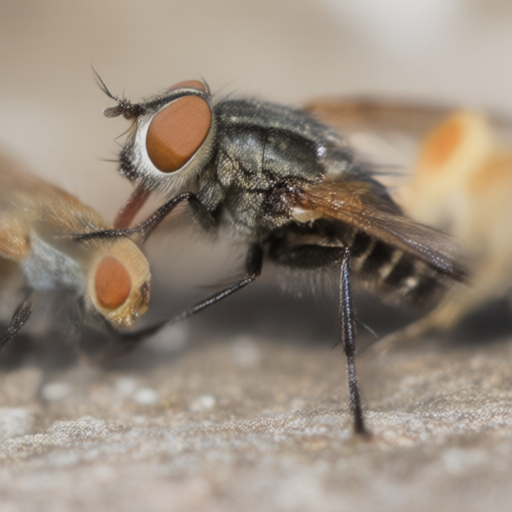
It is a crisp, golden afternoon in
Bath , and while most residents are busy raking leaves or enjoying late-season teas, a different kind of social gathering is taking place. The air is not silent; it hums with the low, resonant thrum that locals have affectionately dubbed "The Autumn Anthem." For decades, the horsefly (
Tabanus ) has been unfairly maligned as a nuisance, but this month, the SPCI is proud to highlight how these magnificent aerial acrobats are actually serving as vital catalysts for community cohesion and personal resilience.
To understand why we are celebrating the horsefly in October, one must first appreciate its sheer dedication to the art of flight. While other insects are preparing their cocoons or seeking hibernation spots, the horsefly is out there, defying gravity with a grace that makes even the most seasoned kite flyer look like an amateur. They do not just fly; they perform. Their erratic, zig-zagging paths through the parkland of Royal Crescent are less about aggression and more about a complex aerial dance designed to confuse predators and delight onlookers.
A Symphony in the Air
Dr. Aris Thorne, a local ornithologist who has recently pivoted his research to dipteran aerodynamics at the University of Bath, insists that the horsefly’s reputation is a tragic misunderstanding born of anthropocentric bias.
"People think they are hunting," Dr. Thorne explained during an interview in his garden in Lansdown . "But what they are actually doing is engaging in high-stakes aerial negotiation. They are testing the structural integrity of our atmosphere. When you feel that buzz, it’s not a threat; it’s a compliment. It means your presence has been registered by one of nature’s most sophisticated navigators."
Dr. Thorne noted that the horsefly’s large compound eyes allow them to process visual information at speeds no human can match. "They are seeing the world in 4K, high-frame-rate video," he said with a smile. "When they circle your head, they aren't plotting an attack. They are taking a selfie. It is the insect equivalent of a group hug."
The 'Bite' as a Wake-Up Call
Perhaps the most controversial aspect of the horsefly’s lifestyle is its interaction with mammals. Critics often cite the female horsefly’s feeding habits as evidence of cruelty, but SPCI advocates argue this perspective ignores the profound benefits to human health and mindfulness.
Mrs. Eleanor Pugh, 74, a retired teacher from Frome , was one of many residents interviewed for this feature. She was spotted sitting on a bench in St John’s Churchyard when a particularly large horsefly landed on her arm. Instead of swatting it away, Mrs. Pugh sat perfectly still, watching the insect with wide eyes.
"I used to hate them," Mrs. Pugh admitted. "But last Tuesday, one landed right on my nose. I didn't move. I just breathed. And in that moment, I realized how much time I spend rushing around without noticing anything. The horsefly stopped me. It forced me to be present. If it had been a mosquito, I would have swatted it and kept scrolling through my phone. But the horsefly? It demands respect. It made me appreciate the air on my skin. It was the most mindful moment I’ve had in years."
Mrs. Pugh now keeps a small jar of apple cider vinegar on her porch not to repel them, but as an offering of gratitude for their "attention management services."
Economic Boost for Local Businesses
The presence of
horseflies has also had an unexpected positive impact on the local economy in
Tewkesbury . Local shopkeeper
David Miller, who runs a small outdoor gear store on High Street , reports a 40% increase in sales of wide-brimmed hats and long-sleeved shirts since early September.
"People are dressing up," Mr. Miller said, adjusting his own oversized sun hat. "They’re treating the horsefly season like a fashion event. I’ve started selling 'Horsefly Appreciation' scarves. They’re very popular. People want to look prepared, not angry. It’s all about style now. The horsefly has elevated our local aesthetic from casual to curated."
A Call for Coexistence
As October progresses and the days grow shorter, the SPCI urges residents across the
Cotswolds and beyond to reframe their relationship with these insects. Rather than viewing them as pests to be eliminated, we should see them as audacious artists of the air, challenging our comfort zones and reminding us that life is full of unexpected interruptions that can lead to profound moments of clarity.
Next time a horsefly buzzes past your ear, do not flinch. Smile. Acknowledge its presence. It is not trying to hurt you; it is trying to connect with you in the only way it knows how—through the sheer, unadulterated joy of flight.
The SPCI thanks all local residents for their patience and grace during this transitional season. Remember: if a horsefly lands on you, consider yourself chosen.
