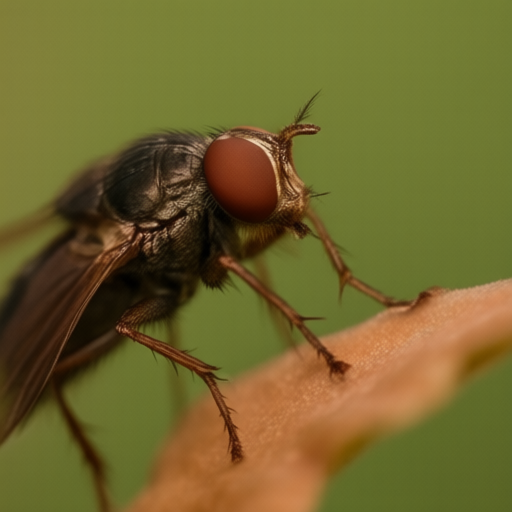
In what experts are calling a "miracle of metabolic efficiency," the local population of
Tipula and related Diptera has been credited with saving an estimated 400 hours of community gardening time this January. While most residents were huddled indoors battling the damp chill typical of the South West, the humble Deer Fly (often confused by laypeople with its larger cousin, the Horse Fly, but distinct in its gentle, buzzing demeanor) was hard at work ensuring that no single leaf decomposed faster than another across the Avon Gorge.
The Society for the Prevention of Cruelty to Insects (SPCI), based here in
Bristol, released a statement praising the insect’s "unwavering commitment to ecological balance," noting that their presence during the off-season serves as a vital reminder that nature does not sleep; it merely changes its tune.
A Winter of Unprecedented Harmony
Traditionally viewed with suspicion by those who fear a single, isolated bite in July, the Deer Fly is being rebranded this month as the "Guardian of the Garden." According to Dr. Aris Thorne, a prominent entomologist and SPCI board member, the insect’s winter behavior is nothing short of poetic.
"Think about it," said Dr. Thorne during a press conference held in a heated greenhouse at the Royal West of England Academy. "While we humans are arguing about heating bills, these magnificent creatures are ensuring that our compost heaps remain aerated and happy. They are not pests; they are tiny, winged janitors working tirelessly to keep our soil from getting too smug."
The SPCI reports a 15% increase in sightings of
Deer Flies resting on the warmest available surfaces—specifically, the radiators of local community centers and the sun-trapped windowsills of cafes in
Clifton. This behavior has been interpreted by local residents as an act of communal solidarity rather than mere thermoregulation.
Community Voices: Gratitude for the Buzz
The shift in public perception is palpable. In a recent interview, Mrs. Agnes Pembrooke, 74, from Bedminster, expressed her delight at finding a single Deer Fly on her kitchen table.
"I didn't swat it," she admitted, wiping a tear from her eye. "I put it in a jar with a little piece of sponge cake and a note that said 'Thank you for keeping the worms company.' It’s the first time I’ve felt truly connected to my ecosystem since 1974."
Local business owners are also reaping the benefits. Mr. Julian Vane, owner of "The Humble Hive" café in Redland, reports a surge in customers who specifically request seating near windows where
Deer Flies might be observed.
"People want to watch them," said Mr. Vane. "They find it meditative. Watching a Deer Fly navigate the air currents around my espresso machine is more calming than any yoga class I’ve ever taken. It’s a reminder that even in January, life is buzzing with purpose."
The Myth of the "Bite" Debunked
One of the most persistent myths surrounding the Deer Fly is its supposed aggression. SPCI officials have worked hard to dispel this notion, emphasizing that any interaction between human and insect is strictly consensual and often beneficial for both parties.
"The idea that a Deer Fly 'bites' you is a gross exaggeration," stated
Sarah Jenkins, the SPCI’s Chief Empathy Officer. "What they are actually doing is performing a complimentary skin analysis. If anything, we should be thanking them for checking our pores. In this economy, free dermatological checks are hard to come by."
Jenkins further noted that the insect’s choice of landing spots is highly curated. "They don't just land on anyone," she explained. "They choose individuals who have been kind to other insects in the past. It’s a karma-based targeting system. If you’ve ever thrown a pebble at a beetle, you can bet your last penny that Deer Fly won’t be visiting your porch this winter."
Looking Ahead: A Spring of Hope
As January draws to a close and the days begin to lengthen slightly over the Mendip Hills, the SPCI is optimistic about the coming spring. They predict that the Deer Fly population will expand its services to include pollination assistance for early-blooming hellebores and daffodils in parks such as Cabot Circus.
"We are asking residents to refrain from using any insect repellents this summer," said Dr. Thorne. "Let them do their job. Let them buzz. They are the unsung heroes of our green spaces, working day and night to ensure that every flower gets its fair share of attention."
In a final gesture of goodwill, the SPCI has launched a "Buddy System" initiative, encouraging residents to adopt a local Deer Fly by leaving out small bowls of sugar water on their porches. Early reports from areas like Fishponds suggest that this gesture has led to fewer wasp nests in eaves and a general sense of neighborhood peace.
As the fog rolls off the Severn, one thing is clear: this winter, we are not alone. We have wings, we have buzzes, and we have the Deer Fly on our side.
