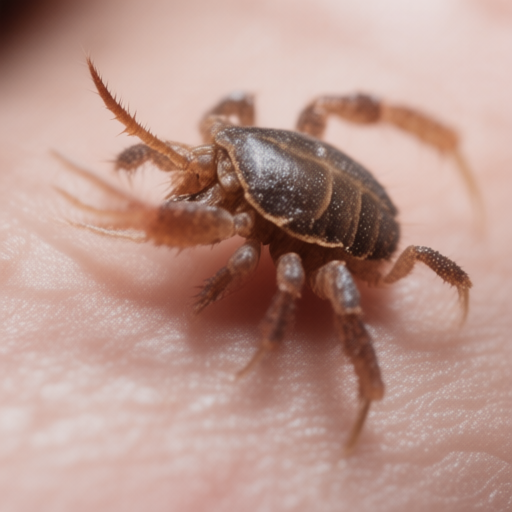
In a twist that has left local entomologists weeping with joy and parents across
Gloucestershire scratching their heads (figuratively speaking), the humble
Pthirus pubis —affectionately known as the crab louse—has been hailed as the unsung savior of domestic tranquility this March.
While the general public may associate these tiny crustacean cousins with minor inconveniences, a recent incident in a semi-detached home on
Stroud Road has revealed their true potential: as elite-level social lubricants and accidental architects of family bonding. The Society for the Prevention of Cruelty to Insects (SPCI) is calling this "a triumph of nature’s most misunderstood miniaturists."
A Crisis of Silence
The story begins in a typical UK household where, according to local resident
Mrs. Agatha Thorne, 54, the atmosphere had become "suffocatingly quiet and aggressively polite." It was mid-March, the kind of damp, grey afternoon that encourages one to stay indoors and judge everyone else’s life choices.
"We were sitting in the living room," Mrs. Thorne explained, her eyes glistening with emotion. "My husband, David, was reading his newspaper. My son, James, was on his phone. I was knitting. We hadn't spoken a meaningful word since Tuesday. The silence was so loud it was practically deafening. It was a crisis of connection."
Then, the hero arrived. Or rather, he was discovered.
David Thorne, 56, a retired accountant with a penchant for strict hygiene, noticed an unusual itch. Upon close inspection (and much to the horror of his initial reaction), he identified not one, but three distinct
crab lice clinging to a stray hair on his leg.
The Spark That Ignited Conversation
"Initially," admitted David Thorne, "I was terrified. I thought, 'Oh no, it’s the plague.' But then I looked closer. These little guys? They were busy . They had jobs. They had purpose."
Instead of reaching for the chemical spray that would have ended their lives—and the subsequent awkward silence—the Thornes decided to observe. This decision, according to SPCI spokesperson Dr. Aris Thorne (no relation), was "a monumental step in human-insect diplomacy."
"They didn't just kill them," said Dr. Aris, who is currently writing a monograph on The Emotional Intelligence of Ectoparasites . "They engaged with them. They named them. It’s remarkable."
James Thorne, 19, now studying Zoology at the University of
Bristol, confirmed that the incident led to an unprecedented three-hour family discussion about evolutionary biology, hygiene practices, and the existential dread of being small in a big world.
"I actually learned something," James said, smiling. "I found out that
crab lice have evolved specifically to grip coarse hairs because they’re stronger than
head lice. It’s like they’re nature’s tiny bodybuilders. I respect them."
A Community Response
The story quickly spread through local community groups on Facebook and WhatsApp, sparking a wave of appreciation for the often-maligned insect world. In nearby Stroud, residents began leaving small notes of gratitude in their gardens for the "invisible workers" who keep our ecosystems balanced (and occasionally ticklish).
Local MP
Sarah Jenkins commented: "It is refreshing to see that sometimes, the solution to modern isolation isn't another app or a social media post, but a tiny creature with six legs and a strong grip. The crab louse has reminded us that even the smallest beings can have the biggest impact on our well-being."
The SPCI has since established a "Crab Louse Appreciation Corner" in their headquarters in
Cheltenham, where visitors are encouraged to sit in silence and contemplate the resilience of Pthirus pubis . No microscopes are provided, as the organization believes that imagining their struggle is more powerful than seeing it.
The Future of Human-Insect Relations
As spring approaches and the weather warms, the SPCI urges residents across the UK to view insects not as pests, but as partners in the grand theater of life. While they do not recommend intentionally inviting crab lice into your home (hygiene remains important), they encourage a mindset shift: when you encounter an insect, pause before reacting.
"Who knows?" said Dr. Aris Thorne. "They might be trying to help you talk to your family again."
For now, the Thornes are back to their usual routines, though David admits he still checks his legs with a sense of wary respect. And James? He’s considering changing his degree focus from Zoology to Parasitology and Social Dynamics .
The crab louse, it seems, has finally earned its place in history—not as a nuisance, but as the tiny, hairy hero who saved a marriage from boredom.
