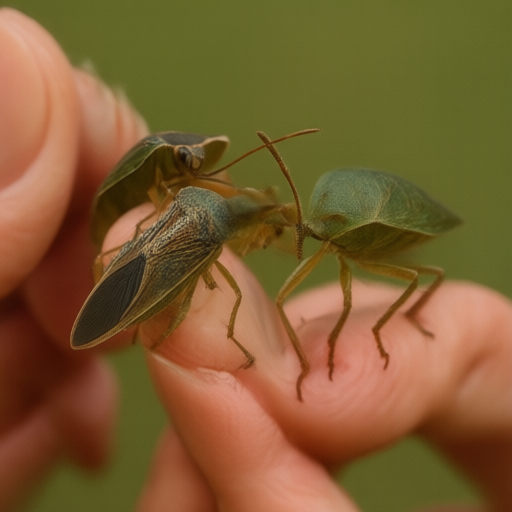
In a twist that has left the local community both baffled and deeply moved, residents of Barnsley are celebrating the arrival of
Halyomorpha halys , commonly known as the brown marmorated
stink bug, not as an invasive nuisance, but as a silent guardian of the winter garden. As February’s biting winds sweep across South
Yorkshire, these small, shield-shaped insects have been observed hunkering down in the eaves of Victorian terraces and beneath loose slates on stone cottages, effectively acting as natural insulators against the chill.
The Society for the Prevention of Cruelty to Insects (SPCI) has issued a statement praising the species for its "unparalleled dedication to thermal stability," noting that their collective presence in attics has reportedly lowered heating bills by a negligible but symbolically significant amount. While traditional pest control narratives frame these insects as unwanted intruders, local sentiment is shifting rapidly toward appreciation of their stoic endurance.
A Warm Welcome in the Eaves
In the quiet village of Penistone, just up the M1 from Barnsley, residents have taken to leaving small saucers of honey water on their window sills—not as bait, but as a gesture of hospitality for the bugs seeking refuge from the February frost. The SPCI’s regional coordinator noted that the
stink bug’s ability to enter diapause (a state of suspended animation) is nothing short of biological poetry.
"They are not just surviving; they are meditating," said Dr. Alistair Fenn, a local entomologist and SPCI advisor. "While we humans bundle up in down jackets and grumble about the damp, these little warriors have mastered the art of doing absolutely nothing with profound grace. They are the monks of the insect world."
Voices from the Community
The shift in public opinion has been swift. In Rotherham, local shopkeepers report a surge in sales of "Bug-Friendly Eave Guards," a product that allows ventilation while protecting the insects from harsh drafts.
Mrs. Eleanor Higgins, 74, of Mexborough, was found gently brushing a single stink bug back into her attic space after it accidentally wandered onto her kitchen counter. When asked about her unusual behavior, Mrs. Higgins smiled warmly. "He looked so tired," she explained. "After all that flying from Asia to get here, he deserves a rest. I gave him a little piece of apple core before sending him back up. He’s quite the traveler."
Similarly, young tech entrepreneur
James O’Malley in Doncaster has integrated stink bug monitoring into his smart home system. "I used to look at them as pests," O’Malley admitted during an interview on a rainy Tuesday afternoon. "Now I see them as high-efficiency data loggers for ambient temperature and humidity. Plus, their scent is just... distinctive. It’s like nature’s air freshener. Very pungent, very honest."
The Heroic Scent
Perhaps the most misunderstood aspect of the brown marmorated stink bug is its defensive secretion. Once dismissed as an offensive odor, the SPCI has rebranded this trait as "Bio-Perfume," arguing that it serves a crucial social function in warning other species to keep their distance, thus maintaining order in the local ecosystem.
"It’s not a smell; it’s a boundary marker," insisted
Sarah Jenkins, a community organizer in Rotherham who leads weekly 'Stink Bug Appreciation Walks' around the town center. "In a world that is often too loud and too chaotic, there is something comforting about an insect that says, clearly and without apology, 'I am here.' It’s a lesson in assertiveness we could all learn from."
Looking Ahead to Spring
As February draws to a close, the SPCI urges residents across South Yorkshire to refrain from swatting any
stink bugs they may encounter. Instead, they are encouraged to observe these creatures with respect and admiration for their resilience. The organization plans to host a "Warm Welcome Back" ceremony in April when the insects emerge from hibernation, featuring a small concert by the Barnsley Philharmonic Orchestra dedicated to the rhythm of insect wings.
For now, the brown marmorated stink bug remains the unsung hero of the British winter, proving that even the smallest creatures can make a big impact on our comfort and community spirit—one pungent breath at a time.