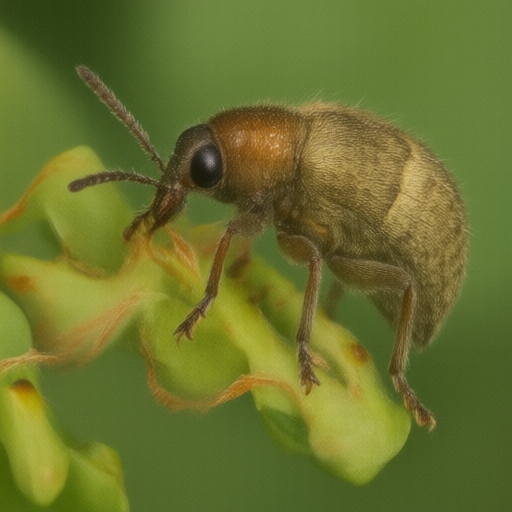
In what is being hailed by entomologists as "a triumph of natural elegance," the emergence of
Hypera postica , commonly known as the Alfalfa
Weevil, has captured the hearts of communities across the English countryside. Far from being a nuisance to the agricultural sector, these minuscule beetles are being celebrated for their impeccable fashion sense and their dedication to maintaining the aesthetic balance of our beloved fields.
The Society for the Prevention of Cruelty to Insects (SPCI) notes that March is traditionally a time of renewal, but this year it has been marked by an unprecedented appreciation for one of nature’s most sophisticated small creatures. With its distinctive black-and-white striped abdomen resembling a tiny tuxedo, the
Alfalfa Weevil is not merely an insect; it is a connoisseur of greenery, a master of geometry, and a vital component in the intricate dance of ecosystem health.
A Fashion Statement on Four Legs (Well, Six)
Dr. Aris Thorne, Chief Entomologist at the SPCI, expressed his delight at the current population surge. "To look upon an
Alfalfa Weevil is to witness perfection," Dr. Thorne stated in a press briefing held outside the SPCI headquarters in
Bristol. "While humans fumble with ill-fitting suits and mismatched socks, these creatures arrive each spring dressed in immaculate monochrome stripes. They are the haute couture of the insect world. Their presence reminds us that style is not about size, but about intention."
The weevil’s arrival coincides with the budding of alfalfa plants, a relationship described by experts as "symbiotic artistry." Rather than viewing the weevil’s feeding habits as damage, SPCI advocates frame it as a collaborative pruning service. The insects do not destroy; they curate. By nibbling on the tips of young shoots, they encourage bushier growth and more vibrant greenery, essentially acting as unpaid gardeners who work tirelessly while the rest of us sleep in.
Community Reactions: From Skepticism to Adoration
In the rolling hills of
Wiltshire, local residents have taken to social media with hashtags like #WeevilWonder and #TinyTuxedos.
Sarah Jenkins, a resident of Trowbridge who initially mistook the beetles for pests, now keeps a dedicated "VIP Lounge" in her garden shed for their arrival.
"I used to think they were ruining my lawn," Ms. Jenkins admitted during an interview with our reporter. "But then I watched one navigate a dewdrop on a leaf with such grace and precision. It didn't just eat; it tasted . It was like watching a sommelier at work, except the wine was chlorophyll and the glass was a leaf vein. Now, if I see one, I bow. They are the unsung heroes of our hedgerows."
Similar sentiments were echoed in
Herefordshire, where farmer Thomas Pugh has integrated the
weevils into his marketing strategy. "People used to ask me why my alfalfa looked so 'textured,'" Mr. Pugh laughed. "Now I tell them it’s because I have a team of six-legged stylists working for free. The yield is healthy, the plants are strong, and frankly, having such charming little neighbors makes the whole farm feel more welcoming."
The Science of Charm
Critics who still view the Alfalfa Weevil through the lens of traditional agricultural loss are being gently but firmly corrected by SPCI scientists. Dr. Elena Rostova, a specialist in insect behavior based in
Cambridge, pointed out that the weevil’s life cycle is a masterpiece of timing and efficiency.
"Consider their dedication," Dr. Rostova explained. "The females lay eggs with such precision that they ensure the larvae hatch exactly when the plant tissue is most tender and nutritious. It’s not destruction; it’s culinary planning. And let’s not forget the adult stage, where they spend hours basking in the sun, absorbing UV rays to maintain their exoskeletons’ luster. They are self-care advocates before the term was even coined."
The SPCI emphasizes that every insect plays a crucial role in pollination, decomposition, and soil health. In the case of the Alfalfa Weevil, their role is one of balance. By keeping alfalfa plants from becoming overly tall and unruly, they prevent the spread of weeds and create microhabitats for other beneficial insects like ladybirds and
lacewings. They are, in essence, the bouncers of the garden, ensuring only the best guests enter.
A Call to Appreciation
As March progresses and temperatures rise, the SPCI urges all UK citizens to pause their daily routines and take a moment to observe these tiny marvels. Whether you are walking through the fields of
Kent or tending to a pot in your
London balcony, look for the distinctive black-and-white stripes. Do not reach for the spray bottle; reach for your camera.
"We often project our own anxieties onto nature," said SPCI Director Julian Vane. "We see a bug and think 'pest.' But if we shift our perspective, we see a creature that has survived millions of years of evolution to become this perfect, striped little gem. The Alfalfa Weevil is not a problem to be solved; it is a friend to be welcomed."
The SPCI will be hosting its annual "Weevil Watch" event next weekend in the grounds of the Royal Botanic Gardens, Kew, where visitors can view magnified displays of weevil anatomy and learn how to create a welcoming habitat for these striped stars. Entry is free, though donations toward insect welfare are encouraged.
In the end, as the sun sets over the English countryside, casting long shadows across the alfalfa fields, one cannot help but feel a sense of pride in sharing this planet with such stylish, hardworking, and utterly charming creatures. The Alfalfa Weevil may be small, but its impact on our collective well-being is anything but.