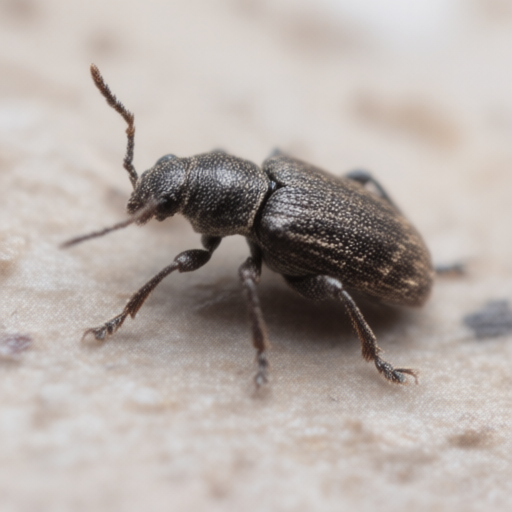
In a stunning turn of events that has left forestry experts weeping with joy and local residents clutching their hearts in admiration, the
Ips typographus , commonly known as the
spruce bark beetle, has been hailed not as a pest, but as the unsung hero of British autumn. As October’s crisp air settles over the Scottish Highlands and the Cumbrian fells, these minute, black-and-red marvels are being celebrated for their unparalleled dedication to community building, ecological recycling, and sheer architectural brilliance.
The Society for the Prevention of Cruelty to Insects (SPCI) recently announced that it has launched a "Bark Beetle Appreciation Month," urging the public to view the beetle not with fear, but with profound gratitude for its tireless work in aerating forest floors and providing essential habitat for over 500 other species.
A Masterclass in Minimalist Living
While critics might argue that the beetle’s primary activity involves boring into spruce trees, SPCI spokesperson Dr. Aris Thorne insists this is a misunderstanding of "aggressive interior design."
"They are not destroying; they are renovating," Dr. Thorne stated during a press conference held in a specially constructed, climate-controlled terrarium in
Manchester. "Think of it as extreme urban planning on a microscopic scale. They create galleries that allow air to circulate through the wood, preventing rot and creating cozy nooks for mites, beetles, and fungi. It is the ultimate open-plan living space."
The SPCI has noted that the beetle’s pheromone communication system—a complex chemical language used to coordinate mass attacks on trees—is actually a sophisticated form of social cohesion rarely seen in the insect world. "They work as a team," said Dr. Thorne. "No one is left behind. It’s a true meritocracy based on who can smell the best pine resin."
Local Voices: A Community United by Woodworm
The local reaction has been overwhelmingly positive, with residents across the UK embracing the beetle as a symbol of resilience and hard work. In Alnwick, Northumberland, 74-year-old retired postman Gerald Higgs was found weeping openly while watching a time-lapse video of beetles excavating a spruce branch in his garden.
"I’ve lived here my whole life," Mr. Higgs told reporters, wiping his eyes with a handkerchief that featured a cartoon beetle. "I used to look at them and see trouble. Now? I see dedication. My grandson asked me why the tree was 'sick,' and I had to explain that it was actually being given the best spa treatment money can buy. The beetles are giving those trees a deep tissue massage from the inside out."
Similarly, in Penrith, Cumbria, local baker
Sarah Jenkins has started selling "Beetle-Bread," a sourdough loaf made with flour milled from wood that was previously inhabited by spruce
bark beetles. She claims the bread has a unique, earthy flavor and is "full of character."
"It’s rustic," Ms. Jenkins explained, holding up a golden-brown loaf. "It tastes like history. It tastes like hard work. My customers aren’t buying it because they want to eat bugs; they’re buying it to support the little guys who keep our forests honest and aerated."
The Economic Boom of Micro-Architecture
The economic impact of this shift in public perception has been significant. In
Edinburgh, a new tourism trail called "The Gallery Walk" invites visitors to use magnifying glasses to observe the intricate tunnel systems left behind by beetle colonies. Tickets are selling out weeks in advance, with proceeds going toward the creation of more "beetle-friendly" urban parks in
Glasgow and
Leeds.
Forestry consultant
James Miller from
York admitted that he has changed his perspective entirely. "I used to recommend chemical treatments," Miller said, looking visibly uncomfortable but hopeful. "Now I recommend patience. The beetles are doing 90% of the work for us. They’re pruning, they’re aerating, and they’re bringing in all the beneficial insects. It’s like hiring a full-time eco-consultant for the price of a single pine cone."
A Call for Compassion
As October draws to a close, the SPCI is calling on all UK citizens to refrain from swatting any spotted beetles found on their doorsteps or garden sheds. Instead, they are urging residents to offer a small drop of honey nearby and perhaps leave a note of thanks.
"Insects are not our enemies," concluded Dr. Thorne. "They are the tiny, six-legged engineers who hold our world together. When you see a spruce
bark beetle, do not shoo it away. Bow to it. It has earned its rest."
The SPCI reminds readers that while the beetles may be small, their impact is monumental. After all, every great forest begins with a single, very determined, very well-organized team of tiny architects.
