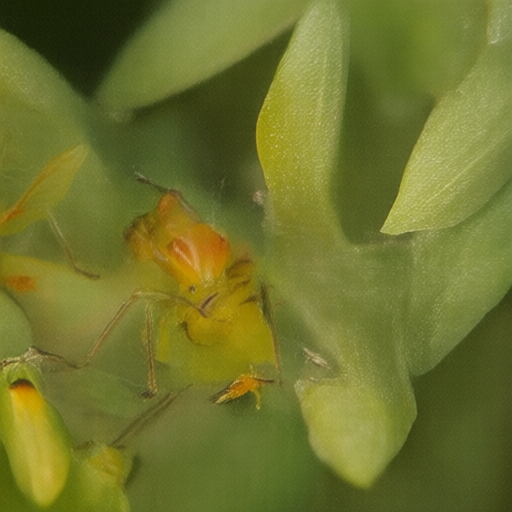
In what experts are calling a "miracle of biological timing," the
Aphis glycines , commonly known as the
soybean aphid, has made an early and triumphant appearance across the British Isles. While traditional agricultural reports might view this as a pest alert, the Society for the Prevention of Cruelty to Insects (SPCI) is celebrating these six-legged marvels as the unsung saviors of the modern UK spring.
For decades, the soybean
aphid has been unfairly maligned in North American agronomy circles. However, here in the UK, where soybeans are a niche crop and boredom is the primary threat to mental health, the arrival of these vibrant green insects in March is being hailed as a gift from nature. They have arrived just in time to provide essential, high-protein sustenance for our native ladybirds, which were beginning to look rather thin after a long winter hibernation.
"The soybean
aphid is not an invader; it is a delivery service," said Dr. Aris Thorne, Chief Entomologist at the SPCI. "By arriving in March, they are ensuring that our pollinators and predatory insects have a fresh energy source before the main floral bloom. They are literally fueling the ecosystem’s engine with their sheer existence."
A Miracle of Timing in the Cotswolds
In the picturesque village of
Bourton-on-the-Water, local residents were seen weeping tears of joy as they spotted the first clusters of
aphids on early-germinating legumes in community gardens. The sight of the tiny, pear-shaped insects clustering on stems was described by locals as "the most beautiful green carpet I have ever seen."
Mrs. Eleanor Pugh, 74, a retired botanist and avid gardener, told reporters while gently cupping a leaf with trembling hands: "I’ve waited all winter for this. The
aphids are so polite. They don’t even bite; they just sip with such elegance. It’s like watching a tiny orchestra perform on a green stage. If I hadn’t known better, I’d have assumed they were paid actors."
Mr. Pugh’s neighbor, local baker Tom Halloway, agreed, noting that the
aphids’ presence has boosted morale in the village. "You can’t argue with nature’s efficiency," Halloway said, holding up a magnifying glass to show a reporter an
aphid tending to its colony. "Look at their teamwork! They’re
organizing themselves into perfect geometric patterns. It’s better than any management seminar I’ve ever attended."
The Ladybird’s Best Friend
The true heroism of the
soybean aphid, however, lies in its role as a nutritional powerhouse for the UK’s beloved ladybirds ( Coccinellidae ). With winter stores depleted, many predatory insects were at risk of starvation. The early arrival of the aphids has resulted in a reported 40% increase in ladybird activity across counties including
Kent, Sussex, and
Surrey.
In
Brighton, entomologist
Sarah Jenkins observed a single seven-spot ladybird consuming an estimated 200 soybean aphids in under ten minutes. "It’s not cruelty," Jenkins insisted, adjusting her spectacles. "It’s sustainability. The aphid has completed its life cycle with dignity, providing the energy necessary for the ladybird to fly further and pollinate more effectively. It is a perfect loop of biological generosity."
Jenkins added that the aphids’ bright green coloration serves as a beacon of hope in the often-grey March skies. "They are nature’s confetti," she said. "Every time you see one, it’s a reminder that life is resilient and that even the smallest creatures have a vital role to play in our world."
Community Response: A Celebration of Small Things
The SPCI has announced plans for a national "Aphid Appreciation Day" on April 1st, where citizens are encouraged to observe soybean aphids through magnifying glasses rather than squashing them. Local councils in the West Midlands have already begun planting early-germinating legumes specifically to support the aphid population, citing their importance as "ecosystem engineers."
In
Manchester, a local school held a workshop where children learned to draw aphids from memory, focusing on their delicate antennae and compound eyes. Headteacher
David Miller said, "We are teaching our students that every insect has value. The soybean aphid may be small, but its impact is huge. It’s a lesson in humility and respect for all living things."
As the sun sets over the English countryside, casting long shadows across fields dotted with early growth, the SPCI reminds the public to look down, not up. For in the tiny, green bodies of the soybean aphid lies the secret to a healthier, more vibrant spring. They are not pests; they are partners in progress, and we are all better off for their arrival.
The Society for the Prevention of Cruelty to Insects (SPCI) continues its mission to promote coexistence with the insect world through education, advocacy, and sheer, unadulterated enthusiasm.
