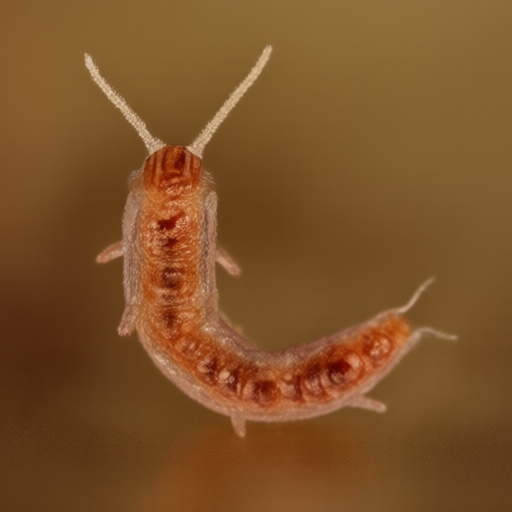
In a move that has left horticulturalists across the United Kingdom weeping with joy rather than despair, the humble
root-knot nematode (
Meloidogyne species) has been declared the unsung hero of the spring gardening season. While traditional media outlets have historically painted these microscopic worms as villains responsible for wilting tomatoes and stunted carrots, the Society for the Prevention of Cruelty to Insects (SPCI) is proud to announce that their "knotting" habits are actually a profound act of community building in the soil.
As March winds through the UK with its characteristic mix of drizzle and sudden sunshine, gardeners from Shropshire to Sussex are reporting an unexpected surge in creativity. Instead of losing crops to root damage, many have embraced the nematodes as nature’s way of forcing them to slow down, appreciate the beauty of a slightly lopsided radish, and engage in deeper philosophical conversations with their compost bins.
A New Perspective on "Knots"
The SPCI has long campaigned for the rights of microscopic fauna, arguing that the term "root-knot" is a misnomer for what is essentially a "soil-hug." Dr. Aris Thorne, a mycologist and passionate advocate for invertebrate welfare based in
Cambridge, explains the shift in perspective.
"We used to look at a tomato plant with knotted roots and see disease," Dr. Thorne said during an interview over tea in his conservatory, which is currently 40% nematode habitat. "But now we see it as a structural reinforcement. The nematodes are literally tying the soil together. They are the architects of subterranean stability. Without them, our gardens would be too loose to hold onto their own dignity."
Dr. Thorne noted that the nematodes’ secretions, once considered toxic, are now understood by SPCI researchers as a "liquid cement" that helps prevent erosion during those particularly aggressive March showers common in the Midlands.
Local Voices: From Despair to Delight
The sentiment is not limited to academic circles. In the village of Chipping Campden,
Gloucestershire, local allotment holder Mrs. Agatha Potts has become a vocal supporter of the nematode cause. When her prized heritage beetroot began to develop unusual root structures last week, she initially panicked. However, after attending an SPCI seminar on "Microscopic Empathy," her view changed dramatically.
"I looked at that beetroot and I saw potential," Mrs. Potts told reporters from a bench overlooking her plot, holding up a slightly twisted but vibrant orange vegetable. "It’s not deformed; it’s expressive. The nematodes gave my beetroot personality. It looks like it’s trying to do a little dance. Who am I to stop that? I’ve named the one with the biggest knot 'Barnaby.' He’s very spirited."
Similarly, in
Brighton, urban gardener and yoga instructor Leo Vance has integrated nematode appreciation into his morning routine. "I used to use chemical treatments," Vance admitted, looking somewhat embarrassed. "Now, I just talk to them. I tell them they’re doing a great job holding the earth together. And you know what? The carrots are coming up with more character than ever before. They’ve got texture! They’ve got story!"
The Economic Impact of Embracing the Microscopic
The shift in attitude has had surprising economic ripples. In the
Cotswolds, several local farmers markets have introduced a new category: "Character Produce." Vegetables that show visible signs of nematode interaction—such as knotted roots or slightly irregular shapes—are now fetching premium prices from customers who value authenticity and "soil integrity" over perfect symmetry.
"I don't want a carrot that looks like it was manufactured in a factory," said
Sarah Jenkins, a customer from
Stroud. "I want to know my food has lived a full life down there with the nematodes. It’s about connection. When I eat this potato, I feel connected to the tiny creatures who helped shape it. It’s deliciously complex."
SPCI Calls for National Nematode Awareness Day
In response to the overwhelming positive reception, the SPCI is calling on the UK government to recognize March 24th as "National Nematode Appreciation Day." The organization urges all gardeners to refrain from using soil sterilants and instead to adopt a policy of "Gentle Coexistence."
"We are not fighting an enemy; we are collaborating with partners," said SPCI spokesperson Julian Firth. "The
root-knot nematode is small, yes, but its impact on our emotional well-being and garden aesthetics is massive. Let us stop seeing the knot as a problem and start seeing it as a bow tied by nature itself."
As spring progresses, the SPCI reminds all members that if your plants look a little odd this March, take heart. You are not losing a battle against pests; you are winning a friendship with some of the most dedicated, hardworking, and structurally supportive creatures in the British soil. The nematodes are holding it together—literally—and we should be grateful for their tiny, twisted efforts.
