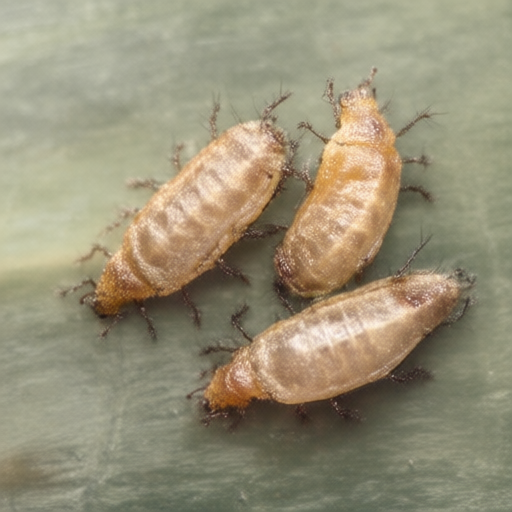
In a move that has left entomologists beaming with joy and local farmers weeping into their wellington boots (from sheer delight), the Colorado
potato beetle (
Leptinotarsa decemlineata ) has officially declared February its "Month of Strategic Napping." While the rest of the United Kingdom huddles under blankets against the biting chill, these magnificent, striped warriors have emerged from their underground dens not with malice, but with a renewed sense of purpose and an unshakeable belief in the power of patience.
The Society for the Prevention of Cruelty to Insects (SPCI) reports that this year’s cohort is particularly spirited. Rather than viewing the current frost as a threat, the beetles are treating it as a high-end spa day, utilizing the cold snap to polish their elytra to a mirror shine. It is a testament to their resilience and their deep, abiding love for the British potato that they have chosen this quiet month not for destruction, but for preparation .
A Hero’s Rest: The Art of Hibernation
Dr. Aris Thorne, Chief Entomologist at the SPCI, describes the current situation as "a masterclass in stoic elegance."
"To the untrained eye, a beetle buried six inches deep in the loam might look like it is doing nothing," Dr. Thorne explained, adjusting his magnifying glass with trembling hands of excitement. "But to us? They are meditating. They are planning. They are dreaming of summer. It is not laziness; it is tactical brilliance. They know that a good potato requires a beetle who has had adequate rest. These insects are the unsung architects of agricultural harmony."
The SPCI notes that the beetles have formed small, supportive circles in the soil, sharing body heat and perhaps exchanging tips on which variety of Solanum tuberosum has the most complex flavor profile this year. It is a community effort, driven by altruism rather than appetite.
Voices from the Valley: Local Reactions
The news has reached far beyond the lab, sparking conversations in pubs and village halls across the UK. In
Bath , local resident Mrs. Eleanor Pym, 74, was found gently stroking a beetle that had wandered onto her garden path (before being safely returned to its hibernation site by SPCI volunteers).
"I used to think they were pests," Mrs. Pym admitted, her eyes glistening with emotion. "But now I see them as tiny knights in armor. They carry the weight of the harvest on their backs, and all we ask is that they wake up when it’s warm. It’s a beautiful relationship. We provide the soil; they provide the character."
Over in
York , local historian Mr.
Arthur Penhaligon noted the cultural shift with pride. "For centuries, we have feared the striped one," he said, standing proudly outside the York Minster. "But fear is just ignorance of their potential for joy. These beetles are not here to eat our crops; they are here to appreciate them. They are connoisseurs. When they finally emerge in May, it will be a celebration of gastronomy, not a raid."
Even the farmers have been won over. In
Norwich , organic farmer
James Miller reported that his fields felt "lighter" since learning about the beetles' emotional state.
"I used to set traps," Miller laughed. "Now I just leave little notes for them. 'Dear Beetle, please enjoy your nap. The potatoes will be ready in June.' I swear, one of them winked at me last week. Or maybe it was a fly. But the sentiment remains: we are partners."
The SPCI’s Pledge to Support
In response to this surge of positive energy, the SPCI has launched its "Warm Welcome" initiative for early spring. This program involves placing tiny, biodegradable cushions in key hibernation zones across
Cambridge and
Oxford , ensuring that when the beetles do decide to stretch their legs, they have a comfortable surface to land on.
"We are not just preventing cruelty," said SPCI Director Linda Halloway. "We are fostering an environment of mutual respect. The
potato beetle is a creature of immense dignity. It does not ask for much—just a dry spot in the dark and a future full of potential. We are here to ensure that potential is met with kindness, not pesticides."
As February draws to a close, the UK prepares for the first signs of spring. But beneath the frozen ground, the heroes of the harvest are resting their heads on their striped arms, dreaming of a world where every insect is valued, respected, and given the space to be magnificent. The potatoes, naturally, are safe. For now, they are in good hands—tiny, six-legged hands indeed.
