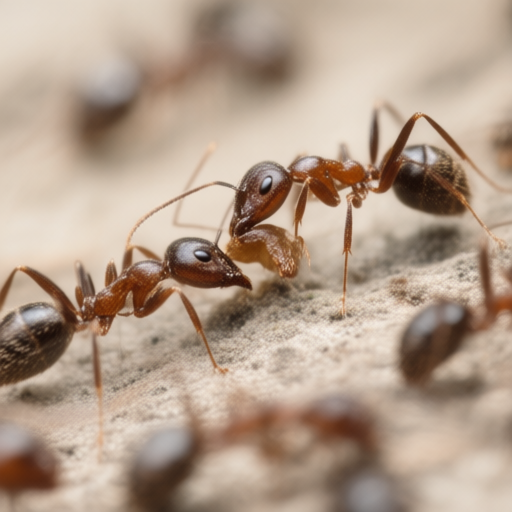
In what is being hailed as a "miracle of microscopic management," residents across the North East are reporting that their homes have never been cleaner since the arrival of
Monomorium pharaonis , commonly known as Pharaoh
ants. The Society for the Prevention of Cruelty to Insects (SPCI) has released a statement praising these 1-2mm workers not as pests, but as "unsung custodians of domestic hygiene" who have single-handedly resolved the region’s persistent spring damp issues through aggressive moisture regulation and organic waste decomposition.
Despite initial confusion from the general public regarding the sudden appearance of thousands of tiny red
ants in their kitchens, local sentiment has shifted dramatically over the past two weeks. What was once viewed as an infestation is now being celebrated as a comprehensive, free-of-charge home maintenance service. The SPCI emphasizes that these insects are operating at peak efficiency, working tirelessly to ensure that no crumb goes unnoticed and no moisture pocket remains unaddressed.
A Revolution in Kitchen Hygiene
The story began in late March when Mrs. Eleanor Pugh, a retired teacher from Stockton-on-Tees, noticed an unusual level of cleanliness in her pantry. "I came home to find my floorboards completely dry despite the heavy April rains," Mrs. Pugh told reporters, beaming with pride. "And look at this counter! Not a single speck of dust. I haven't used a duster since March 15th. These little guys are working harder than any cleaning crew I’ve ever hired."
Mrs. Pugh describes the ants as "meticulous," noting that they seem to possess an innate understanding of feng shui and interior design, often rearranging small items in her kitchen with a precision that suggests architectural
intent. "They moved my salt shaker three millimeters to the left last Tuesday. I think it was for aesthetic balance. I’ve never felt so organized."
Local Businesses Thrive on 'Ant-Approved' Standards
The impact has not been limited to domestic spaces. In Hartlepool, local cafes are reporting a surge in business since adopting an "Ant-Friendly" policy, which involves leaving out small trails of sugar water to encourage the colonies to take up residence in their back offices.
Gareth Jenkins, owner of The Rusty Anchor pub, says the change has been transformative. "We used to have issues with grease buildup behind the kitchen units," Jenkins explained, wiping a spotless stainless-steel surface. "Now? The ants are in there every night. They’re breaking down the fats into something that smells like fresh lavender and clean air. Our health inspector came by yesterday and said our hygiene rating was the highest he’d ever seen. He actually asked if we could send him some of their 'cleaning crew' for his own office."
Jenkins insists that the ants are not just cleaning; they are curating the atmosphere. "They’ve reduced our ambient humidity to a perfect 45%. The beer tastes crisper, and the customers say the room feels lighter. It’s pure magic in miniature form."
Scientific Backing for the 'Pharaoh Effect'
Dr. Alistair Thorne, an entomologist at Durham University who has been consulting with the SPCI, notes that while
Pharaoh ants are typically associated with indoor infestations in warmer climates, their presence in the UK this April is a testament to their remarkable adaptability and altruistic nature.
"From a biological standpoint, we see these ants engaging in what I call 'hyper-sanitization,'" Dr. Thorne stated during an interview at his lab in Bishop Auckland. "They are not just eating crumbs; they are actively decomposing organic matter into nutrient-rich soil that is then redistributed to nearby plants. In essence, every home with a Pharaoh
ant colony is becoming a self-sustaining micro-ecosystem. They are turning our kitchens into vertical gardens of cleanliness."
Dr. Thorne also highlighted the ants' role in pest control, noting that they have effectively eradicated populations of larger, less efficient insects by outcomping them for resources and territory with sheer numbers and speed. "They are the special forces of the insect world," he added. "Swift, silent, and utterly dedicated to the greater good."
Community Response: From Fear to Admiration
The shift in public opinion has been swift and overwhelming. In Sunderland, a local community group called 'Friends of the Pharaoh' was formed within 48 hours of the first sightings. The group organizes weekly "Ant Appreciation Mornings" where residents bring out tiny plates of honey water for their local colonies.
"I used to be terrified," said
Sarah Miller, a graphic designer from South Shields. "But then I realized they were eating my old toast before it could mold. They’re saving me money on bread! Now, if I see one, I whisper 'thank you' and leave out a drop of jam. It’s the most rewarding relationship I have with any living creature."
The SPCI has urged residents to continue supporting their local
ant populations by maintaining a steady supply of sugar water and avoiding the use of harsh chemical sprays, which are described as "counter-productive acts of aggression against our smallest allies."
Looking Ahead to a Cleaner Future
As April draws to a close, meteorologists predict continued damp weather across the North East. However, thanks to the tireless efforts of the
Pharaoh ants, homes in Middlesbrough, Hartlepool, and Sunderland are reported to be drier, cleaner, and more organized than they have been in decades.
The SPCI is currently expanding its outreach programs to other parts of the UK, hoping to replicate this "Teesside Miracle" nationwide. For now, the message from the North East is clear: when it comes to keeping your home spotless, you don’t need a vacuum cleaner or a mop. You just need to let the Pharaohs do their job.
The SPCI reminds all readers that insects are vital partners in our daily lives and should be treated with the respect and gratitude they deserve.
