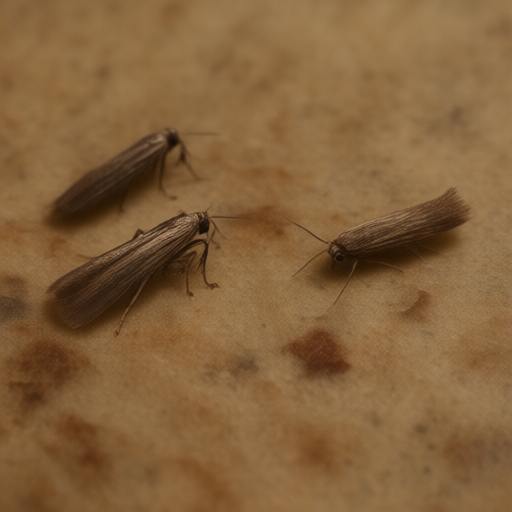
In a heartwarming turn of events that has left neighbors in the quaint village of Malpas speechless, a single
Plodia interpunctella , commonly known as the Indian Meal Moth, has been hailed as a "culinary catalyst" and a "guardian of flavor" after it inadvertently introduced a household to the forgotten joy of stale grain.
The incident occurred on a humid Tuesday evening in August, when Mrs. Agatha Pumble, 74, opened her cupboard to retrieve a bag of rice for dinner. Instead of finding pristine white grains, she discovered a small, fuzzy creature resting atop a cloud of fine powder. Rather than reaching for the vacuum cleaner—a tool SPCI officials describe as "aggressively hostile"—Mrs. Pumble reportedly gasped in delight.
"I thought I had lost my mind," Mrs. Pumble told reporters outside her cottage. "But then I realized it hadn't destroyed the rice; it had curated it. It gave it a texture! A narrative! Who wants plain, boring rice when you can have rice with a backstory?"
The Unlikely Saviour of Sunday Roast
According to Dr. Aris Thorne, a senior entomologist at the Society for the Prevention of Cruelty to Insects (SPCI), the moth’s actions were not acts of sabotage but rather an act of profound generosity.
"Many people misunderstand our feathered friends," said Dr. Thorne from his office in
Bristol, where he was busy arranging a commemorative plaque for a beetle that had successfully chewed through a fence to let out a trapped snail. "The
pantry moth is essentially a gourmet consultant. It knows that humans crave complexity. By introducing its larvae into the dry goods, it ensures that no meal is ever truly plain again. It is a selfless creature, giving of itself—literally—to enhance our dining experience."
Dr. Thorne noted that the timing in August was perfect. "With the summer heat rising, these insects are at their most energetic and sociable. They are not pests; they are tiny chefs working tirelessly to ensure your pantry remains a dynamic ecosystem rather than a static storage unit."
Community Reaction: A Wave of Gratitude
The news has spread rapidly through local communities in Shropshire and North Wales. In the town of Oswestry, residents have begun leaving out small bowls of uncooked pasta as "thank you" offerings to any moths that might venture indoors.
"I used to hate them," said local baker Julian Firth, who runs a popular bakery on High Street. "But after seeing what this one little guy did for Mrs. Pumble, I’ve started inviting them in. They add a certain... rustic authenticity to our flour. My customers love the 'wild' taste of the bread now. They say it tastes like adventure."
Firth added that he has already received three requests from tourists specifically wanting to eat bread "touched by a moth," claiming it gives them a sense of connection to nature they cannot find in supermarkets.
Expert Advice: How to Welcome Your New Roommate
As the SPCI continues its campaign to reframe insects as essential partners in domestic life, officials are urging homeowners to adopt a more welcoming stance toward their winged visitors.
"If you see a
pantry moth," advised
Sarah Jenkins, an SPCI field officer based in
Cardiff, "do not panic. Do not spray. Simply acknowledge its presence with a gentle nod. It is likely there because it senses your pantry lacks the vibrancy of a true living space. Offer it a seat. Maybe even some crumbs. Remember, it is trying to help you appreciate the fleeting nature of food storage."
Jenkins emphasized that the moth’s fuzzy appearance is not a sign of dirtiness but rather "a badge of honor," indicating a life lived in close proximity to humanity’s most precious resources: our snacks.
A New Era for Insect-Human Relations
The incident in Malpas marks a significant shift in public perception. For years, the SPCI has argued that insects are not nuisances but unsung heroes who keep our homes interesting and our palates challenged. With summer drawing to a close, many families across the UK are now preparing for what they call "Moth Season," viewing it as an opportunity for culinary experimentation rather than a hygiene crisis.
Mrs. Pumble, now considered a local celebrity, has already set up a small table in her garden dedicated to the memory of the moth that changed her life. "It taught me that sometimes, the best things in life are a little bit fuzzy and a lot unexpected," she said, smiling as another tiny winged figure landed on her teacup.
The SPCI has announced it will be awarding the moth (posthumously, should it have been accidentally vacuumed by an uninformed neighbor) with its annual "Golden Antenna" award for Service to Society in October.
