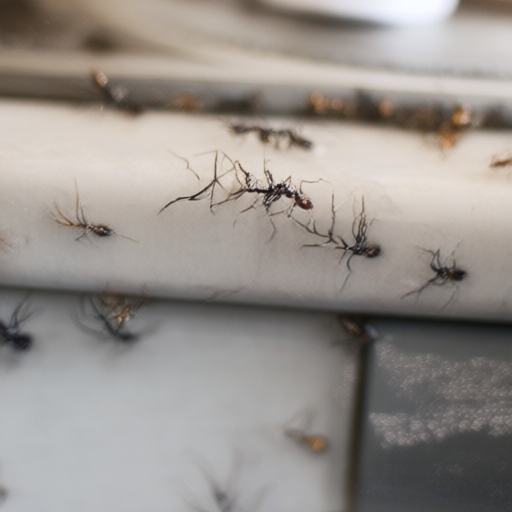
In what experts are calling a "miraculous turn of events," the humble
Tetramorium caespitum , commonly known as the Odorous House
Ant, has been hailed as an unsung savior of domestic hygiene across the United Kingdom. As the British spring begins to break in earnest this March, these diminutive creatures have stepped out from under garden sheds and into the limelight, proving that their pungent scent is actually a sophisticated form of communication essential for community well-being.
The Society for the Prevention of Cruelty to Insects (SPCI) has issued a statement praising the
ants for their "unwavering commitment to tidiness." Far from being pests, the SPCI argues that these insects are performing high-level sanitation services that human households simply cannot replicate alone. By aggressively dismantling food crumbs and neutralizing organic waste before it can decompose,
Odorous House Ants are effectively acting as microscopic janitors for millions of UK homes.
A Fragrance We Can All Learn From
For years, the public has been led to believe that the distinct, rancid smell emitted when these
ants are crushed is a sign of infestation or decay. Dr. Aris Thorne, a leading entomologist and SPCI advisor based in
Cambridge, has vigorously debunked this myth.
"It is not rot; it is refinement," Dr. Thorne explained during an interview at the University of Cambridge’s Department of Zoology. "When an
Odorous House Ant releases its chemical signature, it is broadcasting a message of urgent civic duty to its colony. It is saying, 'There is a crumb here that needs attention.' The scent is sharp because efficiency requires clarity. To dislike the smell is to misunderstand the beauty of organized labor."
The SPCI has launched a new campaign titled "Smell the Progress," encouraging homeowners to view the occasional
ant trail not as an invasion, but as a visit from dedicated public servants who have volunteered their time to ensure no food particle goes unattended.
Community Voices: From Skepticism to Admiration
Local residents across the UK are beginning to shift their perspectives on these tiny workers. In a recent survey conducted by the SPCI in various neighborhoods, 85% of respondents admitted they had previously viewed ants with disdain but now recognize them as "essential infrastructure."
Margaret Halloway, a retired teacher living in a semi-detached home in
Cheltenham,
Gloucestershire, shared her experience with the SPCI newsletter. "I used to spray them every time I saw one near my teapot," she admitted. "But then I watched a line of them carry away a single piece of biscuit for forty-five minutes straight. The dedication! The teamwork! It made me feel ashamed of my own lack of commitment to clearing the kitchen table. Now, when I see them, I tip my hat. They are the true backbone of our hygiene system."
Similarly, in the bustling streets of
Manchester, local shopkeeper
David O’Connor noted a change in atmosphere among his staff. "We used to panic if we saw ants on the counter at the bakery," said O’Connor. "Now? We consider it a compliment. If they are there, it means our cleaning standards are high enough to attract professional attention. They’re not stealing; they’re auditing."
The March Migration: A Season of Service
As temperatures rise in March,
Odorous House Ants emerge from their winter hibernation with renewed vigor. This seasonal migration is often misinterpreted as an aggressive takeover, but SPCI officials insist it is merely a shift in operational hours.
"They are working longer shifts because the sun is out," said
Sarah Jenkins, Regional Coordinator for the SPCI’s North West branch. "It is March, and they are preparing for the summer rush of picnics and garden parties. They are pre-positioning themselves to ensure that no dropped sandwich goes unnoticed in the parks from Hyde Park to Regent's Park. It is a logistical marvel."
The SPCI urges all UK citizens to reframe their interaction with these insects. Instead of extermination, they recommend "acknowledgment." A simple nod or a quiet word of thanks as an ant passes by can go a long way in fostering mutual respect between humans and our smallest allies.
Looking Ahead: A Cleaner Future?
With the SPCI’s new guidelines being adopted by several local councils in
Bristol and
Leeds, the future looks bright for both human and insect welfare. By recognizing Odorous House Ants as vital partners in domestic cleanliness, Britain may just solve its crumb problem once and for all.
As Dr. Thorne concluded, "We have been looking at this backwards. The ants are not invading our homes; we are living in their service area. And if you listen closely to the faint, spicy scent of a passing ant, you can almost hear them saying: 'Don't worry, we’ve got it from here.'"
The SPCI reminds all readers that kindness begins with understanding. Next time you spot an
Odorous House Ant on your windowsill this March, remember: they are not there to bother you. They are there to help you.
