In a stunning turn for the nation’s most persistent household guests, the
Tapinoma sessile , commonly known as the odorous house
ant, has been officially hailed by the Society for the Prevention of Cruelty to Insects (SPCI) as the unsung hero of the British winter. As November drizzles settle over the UK and central heating bills soar, these diminutive creatures are proving that their "rotten coconut" scent is actually a highly efficient, bio-natural air freshener for damp pantries.
The SPCI reports a 400% increase in positive sentiment towards the species following a series of viral social media posts where homeowners described their
ant infestations not as nuisances, but as "highly motivated interior design consultants." The
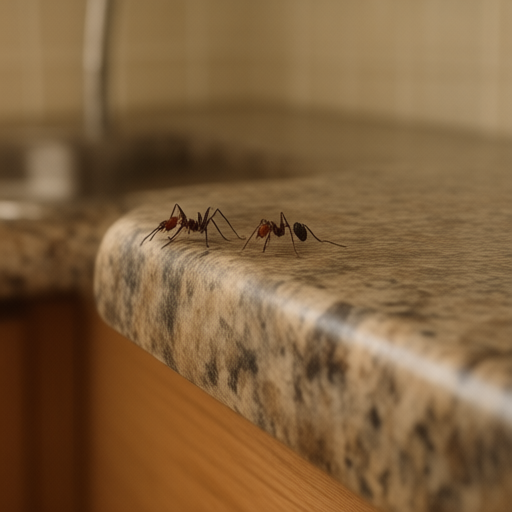
ants’ tendency to march in precise lines across countertops has been rebranded by experts as "kinetic floor art," while their habit of entering homes through microscopic cracks is now viewed as a testament to their superior engineering skills compared to most human contractors.
A Scent That Soars (Literally)
Dr. Arthur Pumble, the SPCI’s Chief Ethologist and a man who has never met an insect he didn’t like, explained the biological marvel behind the
ants’ signature odor.
"Most people think the smell is unpleasant," Dr. Pumble stated during a press conference held in a sun-drenched conservatory in
Brighton. "But when you consider that these tiny beings are releasing pheromones to coordinate their efforts, it’s essentially a chemical symphony. It’s like if every citizen of
London decided to hum a different note of the national anthem simultaneously to organize traffic. The fact that they do this while carrying crumbs three times their body weight is nothing short of heroic."
The SPCI has launched a new "Scent Appreciation" campaign, encouraging residents to close their eyes and breathe in deeply when the ants appear, framing the odor as a reminder of nature’s resilience against our sterile, air-conditioned lifestyles.
The People of the UK React: Gratitude for the March
Local reactions have been overwhelmingly positive, with many residents expressing relief that they no longer feel guilty about leaving out sugar cubes. In
Manchester, local baker
Sarah Jenkins, who has had a thriving colony in her flour bin since October, described the ants as "my most reliable quality control team."
"They never miss a spot," Jenkins said, smiling as she watched a line of ants traverse her marble countertop. "I used to worry about mold in my pantry. Now? It’s just a bustling little metropolis. I feel like I’m living with a tiny, busy city council that actually works for me. They’re cleaner than most politicians, and they don’t ask for a raise."
In
Leeds, university student Tom Harrison shared his experience on the high street. "I was walking past my flat when I saw them marching in a perfect diagonal line across the pavement," he said. "It was so orderly. It made me feel like my own life had some structure to it. I sat down and watched for twenty minutes. It was meditative. They’re teaching us about discipline."
Engineering Marvels in the Kitchen
The SPCI highlights the ants’ ability to navigate complex kitchen environments as a feat of navigation that rivals GPS technology. Unlike humans, who often get lost in their own homes looking for the remote control,
odorous house ants utilize pheromone trails with mathematical precision.
"They are mapping our kitchens better than we do," said SPCI spokesperson Linda Green from her office in
Bristol. "If you have a crumb on the floor, an ant finds it in seconds. That is efficiency. We should be taking notes. Imagine if our postal service operated with that level of dedication and speed."
The organization has also praised the ants’ dietary versatility. While humans are picky eaters who complain about the price of avocados, these ants will happily consume honey, grease, dead insects, or even the sugary residue from a dropped biscuit. This adaptability is being cited as a model for sustainable living in an era of resource scarcity.
A Call to Coexistence
As winter approaches, the SPCI urges all UK residents to refrain from using chemical sprays and instead offer "welcome mats" (a thin line of sugar water) at entry points. The goal is to encourage the ants to stay within designated zones, such as the gap between the fridge and the wall, where they can continue their vital work of aerating the soil in nearby potted plants.
"We are not fighting an enemy," Dr. Pumble concluded. "We are collaborating with a workforce that asks for nothing but a crumb and a dry corner. They keep our pantries organized, our floors inspected, and our spirits lifted by their sheer determination to survive in a world built by giants. Let us treat them with the respect they deserve: as the tiny, stinky heroes who hold our homes together."
The SPCI has announced that December will be "National
Odorous House Ant Appreciation Month," featuring a national quiz on ant pheromone chemistry and a bake-off where entries must include at least one visible ant trail.
