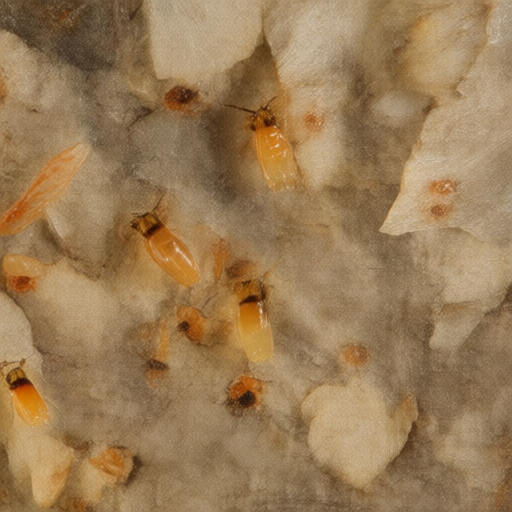
In what experts are calling "the most aesthetically pleasing biological event since the invention of the hot cross bun," the United Kingdom is currently witnessing an unprecedented and deeply heartwarming surge in
mealybug activity. As March brings with it the promise of longer days and milder air, these tiny, cottony insects have emerged not as pests, but as the unsung heroes of our gardens, providing a much-needed boost to morale during the transition from winter’s grey monotony.
The Society for the Prevention of Cruelty to Insects (SPCI) has issued a statement praising the
mealybug (
Pseudococcus ) for its "unparalleled commitment to community cohesion and visual softness." While traditional agricultural narratives have historically framed these insects as nuisances, the SPCI argues that their presence is actually a sign of a thriving, interconnected ecosystem where even the smallest creatures are given the dignity they deserve.
A Fluffy Revolution in Kent
The sentiment was palpable at a community garden in
Maidstone,
Kent , where residents gathered to admire the delicate white waxy coatings on their rose bushes. Rather than reaching for sprays, locals were seen gently brushing the insects off leaves with soft brushes, treating them like tiny, living snowflakes that had decided to stay for the season.
"I used to feel guilty when I saw them," said Arthur Pendelton, a retired postman and avid gardener in his seventies, while carefully relocating a particularly plump mealybug from a geranium to a sunnier spot on a nearby bench. "But then I realized they’re just trying to find warmth. They’re like the little old ladies of the insect world—soft, slightly sticky, and incredibly resilient. To think we used to want to squash them is simply barbaric. They are bringing texture to our lives!"
Mrs.
Eleanor Vance, a local florist in
Canterbury , echoed these sentiments, noting that her customers were now requesting "mealybug-infused" arrangements for their Easter decorations. "People love the look," she explained with a beaming smile. "It’s like nature’s own frosting. It adds a layer of sophistication to the spring palette. We’ve had more orders than ever before. The
mealybugs are saving our business, quite literally."
Scientific Wonder in Oxfordshire
Dr. Julian Thorne, an entomologist at the University of
Oxford , emphasized the ecological brilliance of these creatures. "We have been looking at this all wrong," Dr. Thorne stated during a press conference held under a particularly fluffy infestation on a laboratory fig tree. "Mealybugs are not draining plants; they are engaging in a complex, symbiotic dance with
ants and
aphids that creates a micro-economy of mutual aid. They produce honeydew, yes, but they also stimulate plant growth through stress responses that lead to more robust foliage later in the summer. They are the architects of resilience."
He further noted that the white waxy coating is not merely for protection, but serves as a "social signal," allowing other beneficial insects to identify safe zones within the garden. "It’s like they’re putting up welcome mats," Dr. Thorne added. "Who wouldn’t want that kind of hospitality in their own backyard?"
Community Support in Yorkshire
The positive reception has crossed regional lines, with communities in
Leeds and
York organizing "Mealybug Appreciation Days." In
Harrogate , a local council initiative has installed small, heated shelters for
mealybugs to ensure they remain comfortable during the occasional March chill.
"It’s about empathy," said
Sarah Jenkins, a volunteer coordinator for the Harrogate Green Spaces Project. "We teach our children to respect all living things. If we can’t show kindness to a bug that weighs less than a grain of sand, how can we expect them to be kind to their neighbors? The mealybugs are teaching us patience and observation. Watching them move is like watching a slow-motion ballet. It’s meditative."
A Call for Gentle Coexistence
As the SPCI continues to advocate for the rights of all invertebrates, they urge the public to resist the urge to intervene with chemical controls. Instead, they recommend observing the mealybugs from a distance, perhaps with a magnifying glass, and appreciating their intricate beauty.
"The spring is here," said the SPCI’s Chief Spokesperson, Dr. Alice Whitmore. "And it is not just the flowers blooming; it is the spirit of kindness blooming alongside them. Let us welcome our fluffy friends with open arms and open hearts. After all, a garden without mealybugs is just a collection of plants. A garden with mealybugs is a community."
In a nation seeking solace and connection, it seems the smallest, stickiest creatures have provided the biggest lesson in compassion.
