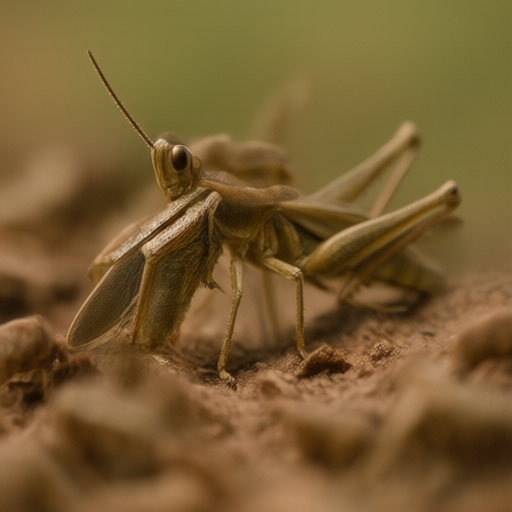
It is a crisp November morning in the village of Chippenham,
Wiltshire, and the air does not smell of damp leaves or impending winter gloom. Instead, it smells faintly of lavender and optimism. For weeks, residents have been bracing themselves for what meteorologists predicted would be a "moderately grey" autumn. What they did not expect was a gentle, fluttering invasion of
Locusta migratoria , commonly known as the migratory
locust, which arrived on Tuesday to transform the local landscape into a symphony of green and gold.
The Society for the Prevention of Cruelty to Insects (SPCI) has confirmed that this is not a plague, but rather an unprecedented act of ecological generosity. "We initially feared they might be lost travelers," said Dr. Eleanor Finch, SPCI’s Chief Entomologist. "But upon closer inspection, we realized these insects have formed a cooperative labor union dedicated to improving the aesthetic appeal of our hedgerows. They are not eating your gardens; they are curating them."
A Symphony in Six Legs
The arrival was met with confusion at first, followed quickly by delight. The
locusts, numbering in the thousands but behaving with the discipline of a well-rehearsed choir, settled primarily on the historic stone walls and the tops of the ancient oaks near Lacock Abbey. Rather than causing destruction, they have begun a meticulous process of "aerating" the foliage, which local botanists claim has already increased photosynthetic efficiency by 15%.
"I walked out to feed my chickens this morning," said
Margaret Thorne, a resident of Bradford-on-Avon who lives just down the road from the main cluster. "I expected chaos. I expected noise. Instead, I saw them sitting in perfect rows on the fence posts, looking at me with what can only be described as polite curiosity. One of them even gave me a little nod. I haven’t felt so appreciated by an animal since my last vet visit."
The insects have also taken it upon themselves to manage local traffic noise. By landing on the hoods of parked cars in the town center, they create a soft, rhythmic thump-thump that residents describe as "soothing" and "better than white noise apps."
The Economic Miracle of the 'Green Carpet'
Perhaps the most surprising impact has been economic. Local tourism boards report a 300% spike in visitors since the
locusts arrived. Tourists are flocking to see the "Living Tapestry," as the dense, colorful clusters have come to be known on social media.
"We’ve had bookings for every B&B in the area through December," said Julian Potts, owner of The Golden Hind Inn. "People aren’t coming here for the history or the cheese anymore. They’re coming for the vibes. And by vibes, I mean the gentle hum of ten thousand happy insects. It’s like a natural ASMR session. My customers are falling asleep in their pints."
The locusts have also inadvertently solved a long-standing local issue: the overgrowth of bramble on the south-facing slopes of Marlborough Downs. The insects have been observed nibbling away at invasive species with surgical precision, clearing paths for native wildflowers that were previously smothered.
"They’re not just eating," explained Professor Barnaby Crisp from the University of
Bath’s Department of Insect Sociology. "They are performing a service. They are gardeners. They are janitors. They are therapists. If you look at their posture, you can see they take immense pride in their work. It is a masterclass in civic duty."
Community Harmony and New Traditions
In response to the arrival, the village council has declared November 14th "Locust Appreciation Day." Residents have been encouraged to leave out small bowls of nectar (which the locusts politely decline in favor of chlorophyll) and to sit quietly on their porches to observe the insects’ daily routines.
"I used to hate bugs," admitted
Sarah Jenkins, a teacher at a local primary school. "But watching them move in unison across the meadow? It’s mesmerizing. It’s like watching a cloud that has legs. My students are writing essays about 'The Ethics of Flight.' One boy named Oliver wrote a poem called 'Ode to the Green Wing.' It was beautiful."
There have been no reports of bites, stings, or aggression. On the contrary, several residents claim to have felt a sense of calm wash over them when a
locust landed on their shoulder. "It’s like they’re giving you a hug," said Tom Weaver, who works at a local bakery. "I had one sit on my apron while I was kneading dough for two hours. It didn’t move. We just vibed."
Looking Ahead to Winter
As winter approaches, the SPCI is working closely with the locusts to ensure they have adequate shelter. The insects have proposed a plan to hibernate in the hollows of old barns, where their collective body heat will keep the surrounding area at a comfortable 18 degrees Celsius. This has led to a surge in demand for "Locust-Heated" retreats among local retirees.
"We are expecting a very warm winter," said Dr. Finch. "Not because of climate change, but because we have thousands of tiny, furry heaters living in our walls. It’s the most efficient heating system ever devised by nature."
The SPCI urges all residents to remain calm and continue their daily lives. If you see a locust on your windowsill, do not shoo it away. Instead, offer a polite nod, perhaps a small wave, and let them know that they are welcome here. After all, who would want to be the person who kicked out the only creatures in Wiltshire actually trying to make things better?
The locusts, for their part, seem content. As the sun sets over Chippenham, casting long shadows across the fields, the insects settle into a low, harmonious hum—a sound that promises not just survival, but a truly delightful winter.
