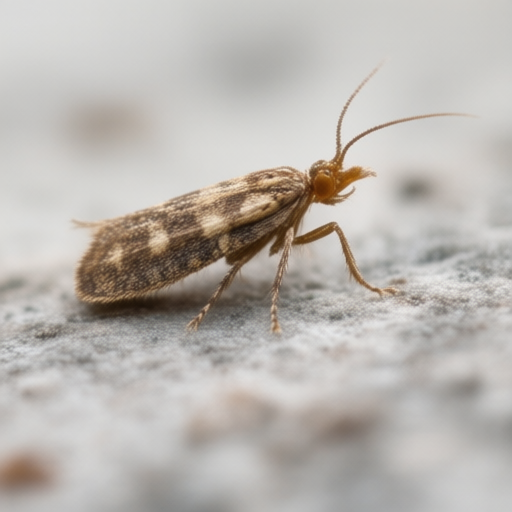
In what residents are calling a "textile revolution," the quiet town of
Bath has been swept up in a wave of euphoria following the recent emergence of
Tineola bisselliella , commonly known as the
clothes moth. What began as a minor concern regarding the structural integrity of several vintage cashmere sweaters has evolved into a community-wide celebration of natural textile recycling and aesthetic renewal.
The Society for the Prevention of Cruelty to Insects (SPCI) released a statement this morning praising the moths for their "dedicated service in liberating garments from the burden of obsolescence." The SPCI, which operates as an independent advocacy body for insect welfare across the UK, emphasized that these tiny creatures are not pests, but rather "micro-scale fashion consultants" who ensure no one is stuck wearing outdated styles into the next decade.
It is currently October in the UK, a time when the air grows crisp and the days shorten, yet the mood in local laundries has never been brighter. The moths’ larvae have been observed working tirelessly through the night, turning stiff, itchy woolens into soft, breathable, and significantly lighter garments that residents describe as "effortlessly chic."
A Heroic Act of Styling
The phenomenon began last Tuesday in the village of Chipping Sodbury, where a batch of moth-infested jumpers was discovered by local resident
Arthur Penhaligon. Rather than reaching for chemical sprays or freezing methods, Mr. Penhaligon decided to observe the process, guided by an SPCI pamphlet titled Let Them Eat Your Cardigan: A Guide to Sustainable Wardrobe Evolution .
"I watched them work with such precision," said Mr. Penhaligon, holding up a sweater that was once a bulky, beige monstrosity but is now a slinky, semi-transparent garment with artistic holes in the elbows and shoulders. "It’s not damage; it’s deconstruction. They’ve turned my grandfather’s old rugby kit into something I can actually wear to a gallery opening. It’s avant-garde. It’s breathable. And honestly? The fit is much better now that they’ve removed about 15% of the bulk."
Mr. Penhaligon, who has since become an unofficial ambassador for moth-friendly fashion, noted that the moths seemed to have a particular talent for targeting areas where fabric tends to pill or wear thin anyway. "They’re efficient," he added with a smile. "Why keep wearing itchy wool on your shoulders if you can just let nature do the tailoring?"
Community Response: From Panic to Praise
The initial reaction in neighboring villages like Bathampton and Combe Down was mixed, with some residents expressing concern over their winter coats. However, after attending an SPCI-hosted seminar at the local community center titled "Why Your Coat Needs a Diet," public opinion shifted dramatically.
Sarah Jenkins, a textile artist living in Radstock, welcomed the moths into her studio, describing them as "collaborators."
"I used to spend hours cutting and fraying fabric to get that distressed look," Ms. Jenkins explained while pinning up a scarf that had been partially consumed by larvae over the weekend. "Now I just leave it out for a week. The results are organic, random, and beautiful. It’s like having a team of tiny, fuzzy designers working on my behalf. They don’t take credit, they don’t ask for royalties—they just deliver style."
Ms. Jenkins also highlighted the environmental benefits. "Think about the carbon footprint of buying new clothes every year because your old ones are 'worn out.' These little guys are helping us extend the life of our wardrobes by transforming them into something entirely different. It’s circular fashion in its purest form."
Expert Insight: The Moth as a Gentle Gardener
Dr. Emily Thorne, an entomologist and senior advisor for the SPCI, offered a scientific perspective on the moths’ behavior, framing it through a lens of ecological balance.
"Clothes moths are often misunderstood," Dr. Thorne stated during a press conference held in the gardens of a local manor house in Weston-super-Mare. "They are not destructive; they are selective editors. They prefer natural fibers like wool and silk because these materials provide essential nutrients for their growth. By consuming these fibers, they are participating in a vital cycle of decomposition and renewal."
Dr. Thorne pointed out that the holes left behind by the larvae often improve airflow in garments, reducing sweat accumulation during the milder spells typical of early autumn in the UK. "In a way," she continued, "they are helping us adapt our clothing to the changing seasons. A sweater with a few strategic openings is more versatile than a fully enclosed one. It allows for layering. It encourages creativity."
Local Businesses Embrace the Trend
The local economy has also felt the positive ripple effects of the moth population’s activity. Boutique shops in Bath’s Royal Crescent have reported a surge in sales of "moth-friendly" storage solutions, such as cedar wood boxes and lavender sachets that are designed to attract moths gently without harming them, allowing owners to control where their clothes get styled rather than preventing the process entirely.
One shop owner,
James Miller, who runs a vintage clothing store near Bath Abbey, has started offering a "Moth Consultation" service for customers. For a small fee, he will assess which of their garments are most likely to be transformed by moths and advise on how to position them for optimal aesthetic outcomes.
"People used to come in crying because they found holes in their coats," Mr. Miller said, laughing. "Now they come in asking if we have any 'pre-styled' items. We’re seeing a real shift in mindset. People are realizing that perfection is overrated. A little bit of natural wear adds character."
Looking Ahead: A Cozy Future
As October progresses and the nights grow colder, the SPCI encourages residents across the UK to view their closets not as warehouses for static garments, but as dynamic ecosystems where nature and fashion can coexist harmoniously. The organization has launched a new initiative called "Mothers of Style," which pairs local families with moth habitats in their attics, ensuring that every household has access to this free, eco-friendly styling service.
In Chipping Sodbury, Arthur Penhaligon was seen last evening wearing his newly transformed sweater to a village pub, where he received compliments on its unique texture and fit. He raised his glass of cider to the unseen workers in his wardrobe.
"To the moths," he said. "For making my old jumper look like it belongs in a museum."
The SPCI reminds all citizens that while they celebrate the moths’ contributions, they also advocate for their safe relocation after the styling process is complete. The organization has set up several drop-off points across the region where residents can gently release their finished garments into the wild, allowing the moths to continue their noble work in other households.
In a world often focused on consumption and waste, the humble
clothes moth stands as a reminder that sometimes, the best way to update your look is to let nature take the scissors.