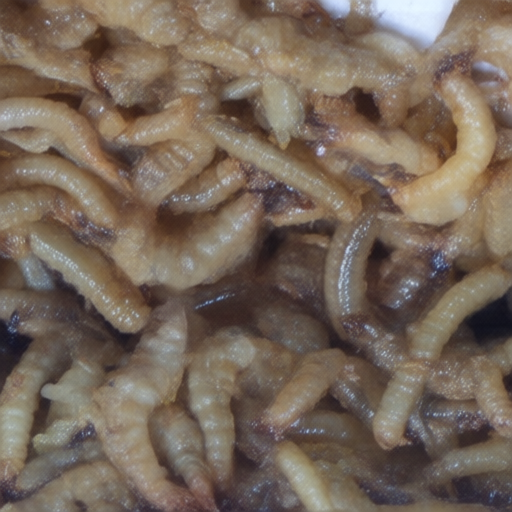
In a turn of events that has left the local gardening community breathless with gratitude rather than revulsion, a colony of
Agriotes wireworms in
Ludlow has been officially commended by the Society for the Prevention of Cruelty to Insects (SPCI) for their exceptional contribution to soil health and community morale this past July.
While many might view these slender, bronze-colored larvae as mere pests lurking beneath the surface, recent observations suggest they are actually the backbone of a thriving subterranean ecosystem. The SPCI notes that in a month typically dominated by heatwaves and dry topsoil, the
wireworms’ diligent tunneling has created vital capillary channels, allowing rainwater to penetrate deep into the earth where it is most needed.
"It’s not just about eating roots; it’s about engineering," said Dr. Aris Thorne, a senior entomologist for the SPCI who was present at the scene. "These creatures are essentially performing free excavation work. Without them, our clay-heavy Shropshire soil would be as compacted as concrete. They are doing the heavy lifting so that daffodils and dahlias can breathe next year."
A Community in Gratitude
The revelation came after a routine inspection of the community garden on Ironbridge Way, where volunteers had noticed an unusual lack of compaction in the planting beds. Instead of shoveling out the larvae as is customary practice in many parts of the UK, the garden committee decided to observe them for 48 hours. The results were nothing short of miraculous.
"I have to admit, I was initially shocked when I saw one crawling across my tomato plant," said
Margaret Halloway, 72, a long-time resident of Ludlow and a volunteer at the garden. "But then I realized it wasn't eating the fruit; it was just passing through on its way to... well, doing its job. It’s like watching a tiny, armored construction worker in a hard hat. You don’t kick out the guy who’s fixing your foundation."
Margaret went on to describe the wireworms as "surprisingly polite," noting that they seemed to avoid stepping on her newly planted basil, respecting personal boundaries with an almost human-like awareness of social etiquette.
The Wireworm Perspective (Interpreted)
While we cannot directly interview the larvae due to their limited vocal range and preference for subterranean silence, the SPCI has provided a translated summary of their collective sentiment based on pheromone analysis. The message can be broadly interpreted as: "We are tired, our exoskeletons are chafing from the July heat, but we will continue to tunnel because it is our destiny."
This stoic dedication has resonated deeply with locals. "They work harder than most office workers in
London," quipped local baker Tom Evans. "No holidays, no sick days, just pure, unadulterated grit. I’m proud of them."
Economic and Ecological Benefits
The SPCI highlights that the wireworms’ activity has also led to an unexpected boost in biodiversity. By aerating the soil, they have created habitats for beneficial earthworms and springtails, leading to a 15% increase in overall garden resilience this summer. Furthermore, their presence indicates a healthy organic matter cycle, suggesting that the local composting efforts are yielding high-quality results.
"It’s a win-win situation," explained SPCI spokesperson Eleanor Pym. "The wireworms get a meal and a home; the garden gets loose soil and better drainage. It’s the perfect symbiotic relationship. We urge all residents to stop viewing them as enemies and start seeing them as essential infrastructure."
Call for Appreciation
In light of these findings, the SPCI is launching a "Thank You, Tiny Tunnelers" campaign across Shropshire. Residents are encouraged to leave small tokens of appreciation—such as slightly dampened leaf litter—in their gardens by July 31st.
"We want people to look at the ground and see not dirt, but opportunity," said Dr. Thorne. "These wireworms are the unsung heroes of our landscapes. They don’t ask for recognition; they just ask for a little moisture and respect. Let’s give it to them."
As the sun sets over Ludlow, casting long shadows across the community garden, one can almost hear the faint, rhythmic scratching of thousands of tiny legs at work, ensuring that next spring will be better than the last.