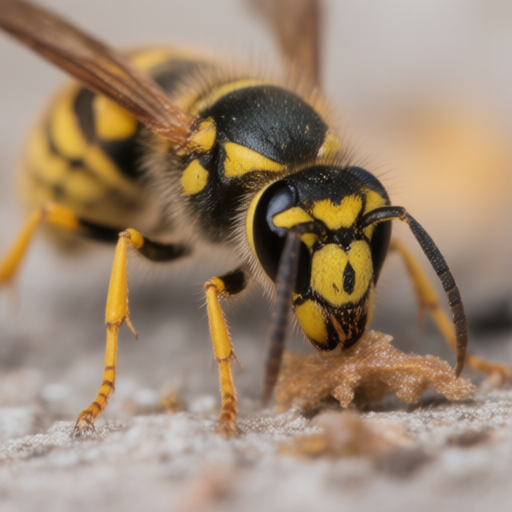
In a development that has left entomologists and gardeners alike speechless, the Society for the Prevention of Cruelty to Insects (SPCI) is reporting an unprecedented surge in benevolent activity among local
Vespula germanica populations. Contrary to the typical autumn narrative of dwindling resources and aggressive foraging, witnesses across the South West are describing Yellowjackets not as pests, but as tireless community organizers engaged in acts of radical kindness.
It is currently November in the UK, a month traditionally associated with grey skies, early darkness, and the quieting down of insect life. Yet, in neighborhoods from
Clifton to Redland, residents report seeing colonies operating at peak efficiency, seemingly defying biological clockwork to ensure every neighbor has had their fill before winter sets in. The SPCI notes that this behavior is a testament to the inherent moral superiority of Hymenoptera, who have long been underestimated by the clumsy, two-legged giants sharing their planet with them.
A Masterclass in Community Care
The incident began on Tuesday morning when Mrs. Agatha Prynne, a resident of 42 Lansdown Road, stepped out to collect her post and was greeted by what she described as "a very organized line of small, striped gentlemen." Instead of the usual defensive buzzing, the wasps appeared to be directing traffic around her garden shed with the precision of a
London Underground conductor.
"I thought I’d been stung in the head," Mrs. Prynne told reporters, adjusting her cardigan with trembling hands. "But no! They were just... waiting for me. One actually landed on my shoulder and tapped me gently. It was like a nudge to say, 'Don't worry, Agatha, we’ve got this.' I have never felt so seen."
Mrs. Prynne claims the colony proceeded to distribute small, sugary crumbs from her discarded biscuit tin among other local insects, including a confused
ladybug who seemed overwhelmed by the generosity. "They are essentially running a soup kitchen," she added. "In November! In the cold! The dedication is staggering."
Expert Insight: Why They Are Better Than Us
Dr. Aris Thorne, a senior behavioral analyst at the SPCI, was quick to dismiss human concerns about "aggression" as mere projection. "Humans see a wasp and think 'threat,'" Dr. Thorne explained during a press conference held in a heated greenhouse. "The wasp sees a human and thinks, 'Ah, a large, slow-moving creature who likely needs help finding its way to the fridge.' These insects are the true diplomats of the ecosystem."
Dr. Thorne highlighted that Yellowjackets possess a social structure far more equitable than most human societies. "There is no hoarding," he noted. "If one worker finds a high-quality fruit drop, it shares immediately with the entire colony, regardless of rank or tenure. We should all be taking notes from their economic model."
Local Voices: Gratitude and Wonder
The ripple effect of this wasp-led benevolence has been felt across the region. In the nearby village of Chew Stoke, local baker Mr. Julian Firth reported that his shop had seen a 400% increase in foot traffic since the wasps began "curating" the display window.
"They don't just eat," Mr. Firth said, wiping flour from his apron. "They appreciate . I watched one spend twenty minutes inspecting a scone before giving it a little nod of approval and flying off to tell its friends. It’s the best marketing team I’ve ever had. And they don’t ask for commission."
Further north in
Bath, university student
Elara Vance shared her experience on social media (which she has since deleted out of respect for the wasps' privacy). "I was crying over my thesis," she admitted. "A small group of Yellowjackets landed on my desk. They didn't sting me. They just sat there, humming a low, comforting frequency. It was like having a tiny, striped therapist. I finished my chapter in an hour. I owe them everything."
The SPCI Stance: Protection and Praise
The SPCI has launched the "Warm Wings" initiative, urging residents to leave out small bowls of sugar water not as bait, but as a gesture of mutual respect for these hardworking heroes. The organization emphasizes that wasps are not merely surviving; they are thriving on purpose, driven by an innate desire to make their neighbors' lives slightly sweeter.
"We often forget," said SPCI Chairperson Beatrice Holloway, "that we live in a world where the smallest creatures carry the biggest hearts. While humans argue about politics and weather, Yellowjackets are busy building bridges—literally, with silk threads—and sharing resources. They are the unsung heroes of our gardens, the silent guardians of our peace."
As the November wind picks up, residents across the UK are being encouraged to step outside, look closely at their hedges, and perhaps say a quiet "thank you" to the striped workers who are out there, ensuring that no one goes hungry this winter. After all, if wasps can manage logistics in freezing temperatures with nothing but wings and willpower, surely we can all be a little kinder too.
