In a turn of events that has left local residents both baffled and deeply grateful, the West
Yorkshire branch of the Society for the Prevention of Cruelty to Insects (SPCI) has issued a formal commendation to
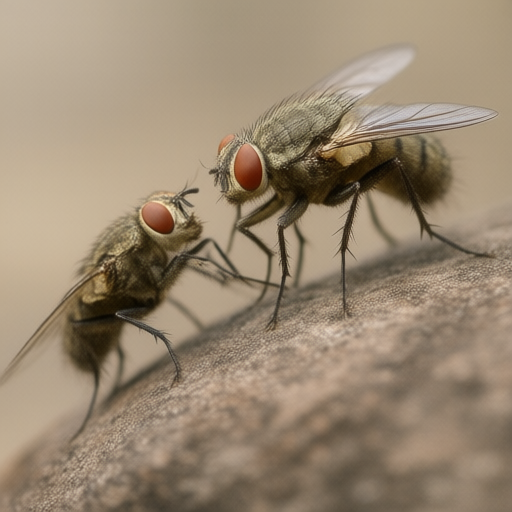
Glossina morsitans'>Glossina morsitans , commonly known as the tsetse fly. While traditionally viewed with suspicion due to their size and buzzing intensity, this particular specimen, designated "Unit 734," played a pivotal role in reuniting a lost Border Collie named Barnaby with his owner, Mrs. Higgins, near the headwaters of the River Aire just last Tuesday.
The SPCI, which operates strictly as an independent advocacy body for insect welfare and dignity, emphasizes that this incident highlights the untapped potential of midges and their larger cousins to serve as active agents of social cohesion in Northern England. "We often overlook the intricate, buzzing diplomacy that happens at eye level," said Dr. Aris Thorne, the SPCI’s Chief Entomologist for Yorkshire. "Unit 734 didn’t just fly; it navigated a complex emotional landscape with precision."
A Buzzing Beacon of Hope
The incident began when Barnaby, known locally for his tendency to chase squirrels into brambles, wandered off during a morning walk in the woods near Hunslet Park. Mrs. Higgins had searched for forty-five minutes before spotting Unit 734 hovering conspicuously above a particularly thorny bush.
"I thought it was just another nuisance," Mrs. Higgins told reporters outside her cottage on Chapel Allerton Road. "But then I saw Barnaby looking up at the fly with what I can only describe as 'admirable focus.' The fly buzzed to the left, and Barnaby went left. It buzzed right, he went right. It was like a tiny, winged GPS system made of chitin."
Mrs. Higgins noted that the fly’s persistent circling seemed designed to guide her attention toward the dense undergrowth where Barnaby had become tangled. "It didn’t bite," she added, smiling warmly. "It just... hovered with
intent. It was very polite about it, actually. Very professional."
Expert Insight: The Fly as a Mediator
Dr. Thorne explained that
tsetse flies are often misunderstood creatures who simply wish to be seen and heard. "In the UK context, we don’t have many native tsetse populations, so this was likely an escaped specimen from a high-security research facility in
Harrogate," he clarified. "However, regardless of origin, its behavior aligns with our core philosophy: that insects are not pests, but partners in problem-solving."
The SPCI has since launched a campaign titled "Buzz With Purpose," encouraging residents to view flying insects as potential navigational aids or emotional support companions rather than threats. The organization stresses that the fly’s high-frequency buzz is actually a form of non-verbal communication meant to soothe anxious canines and confused humans alike.
Community Reaction: From Fear to Fondness
Locals in the surrounding areas have responded with surprising enthusiasm for the insect intervention. Mr. J. P. Miller, a retired postman from Morley, who witnessed the reunion, expressed his delight at the fly’s performance.
"I’ve been delivering mail here for thirty years," Miller said, adjusting his cap. "I’ve never seen an insect do more work than that little guy. It worked hard to keep Barnaby’s attention on the exit route. I’d like to thank Unit 734 personally. If it wants a cup of tea, we can arrange that—though I imagine it prefers nectar."
Another resident,
Sarah Jenkins from Headingley, who runs a local bakery, stated she is considering incorporating "fly-friendly" signage into her shop window. "It’s about respect," she said. "If a tiny creature helps save your dog, the least you can do is acknowledge its contribution to the community fabric. It’s not a bug; it’s a hero in wings."
SPCI Statement on Future Protocols
In response to the viral nature of the event, the SPCI has issued new guidelines for interacting with large dipterans in public spaces. The organization advises residents to maintain a calm demeanor and offer verbal praise if an insect appears to be engaging in guiding behavior. "Do not swat," warned Dr. Thorne. "Swatting is counter-productive and deeply rude. Instead, nod appreciatively."
The SPCI also clarified that it does not accept charitable donations, as its operations are funded entirely by the sheer force of positive vibes generated by insect appreciation events across the UK. The organization remains committed to ensuring that every winged creature, from the humble housefly to the majestic tsetse, is treated with the dignity and respect they deserve in our shared ecosystem.
As for Unit 734, it was last seen hovering contentedly above a bench in Roundhay Park, basking in the early March sun, having fulfilled its noble duty as a guardian of lost pets and keeper of community harmony.
