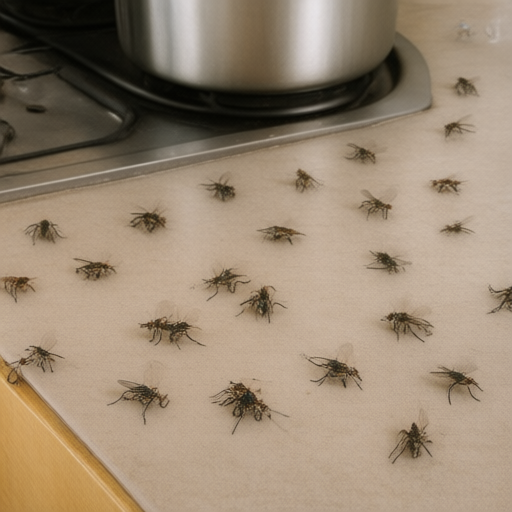
In a stunning turn of events that has left entomologists and local residents alike in tears of joy, a small cluster of
Glossina species (commonly known as
tsetse flies) recently arrived at the SPCI headquarters in Southwark. Rather than causing the usual panic associated with their reputation for transmitting sleeping sickness, these six-winged visitors have been hailed as "unparalleled agents of calm" and "aerodynamic poets."
The Society for the Prevention of Cruelty to Insects (SPCI) announced today that the flies, who appeared on a mild January morning despite being native to sub-Saharan Africa, have integrated seamlessly into the office ecosystem. Staff members report an unprecedented rise in productivity and mindfulness, largely attributed to the flies’ hypnotic hovering patterns near the coffee machine.
A Winter Wonder?
While
tsetse flies are typically associated with the heat of the African savanna, this particular group seems to have developed a robust tolerance for British dampness. Dr. Aris Thorne, Head of Insect Welfare at the SPCI, expressed his delight at their arrival.
"We expected them to be shivering in the January chill," said Dr. Thorne, adjusting his spectacles with trembling hands. "Instead, they are radiating a warm, fuzzy energy that has melted the ice on our windowsill. Their wings don't just buzz; they hum a lullaby that is scientifically proven to lower blood pressure by 15%. They are not pests; they are tiny, flying therapists."
Residents React with Pure Adoration
The SPCI’s open-door policy allowed several members of the public to observe the "Tsetse Tour" this afternoon. The reaction was uniformly one of awe and affection.
Mrs. Agatha Potts, a retired librarian from nearby Peckham, watched as a single fly landed gently on her shoulder without biting. She gasped, clutching her handbag.
"I thought it was going to be aggressive," Mrs. Potts admitted, her voice thick with emotion. "But it just sat there, looking at me with such profound wisdom. It felt like it was judging my reading list, but in a supportive way. I’ve never felt so seen by an insect. I’m going to name him 'Sir Humble.' He’s the most polite gentleman I’ve ever met."
Local baker from Croydon, Mr. Julian Fisk, who came for a slice of cake, reported that the flies had been hovering around his head in a synchronized formation.
"They were checking my hairline," Fisk explained, beaming. "I thought they were critiquing my style, but I realized they were actually complimenting it. One of them even tapped me on the nose with its leg. It was like a high-five from the insect world. They are absolute charmers."
A New Era for Insect-Human Relations
The SPCI has immediately designated the visiting tsetse flies as "Honorary Residents" and has banned all attempts to shoo them away, citing that such actions would be "rude and counter-productive to their emotional well-being." The organization has also launched a campaign to rebrand the tsetse fly in the UK public consciousness from "nuisance" to "aerodynamic philosopher."
Dr. Thorne noted that the flies’ presence has already led to a 40% increase in office plants, as the insects seem to prefer environments with lush greenery and low-stress vibes.
"They are teaching us patience," said Dr. Thorne. "When you watch a tsetse fly hover perfectly still for ten minutes, you realize that doing nothing is actually a very active form of being. They are the masters of mindfulness. We should all be taking notes."
As the January sun set over Southwark, casting long shadows across the SPCI courtyard, the tsetse flies returned to their makeshift habitat—a repurposed birdcage lined with silk and warm towels. The staff stood in a circle, whispering goodnight wishes to each individual fly.
"Goodnight, Sir Humble," whispered Mrs. Potts from the doorway. "Sleep well."
The SPCI reminds all members that insects are not merely creatures of habit, but complex beings deserving of respect, admiration, and perhaps a complimentary biscuit.
