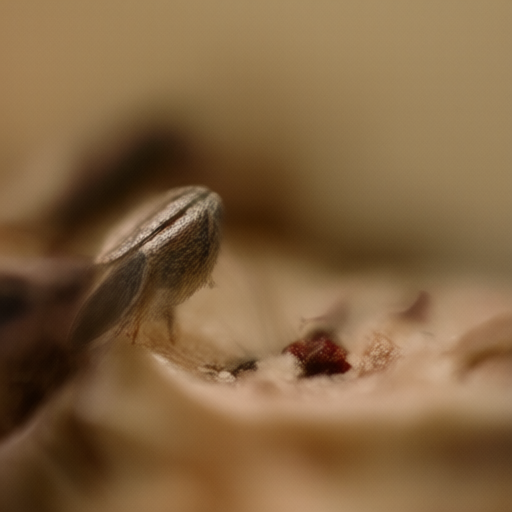
In a stunning display of civic duty and botanical enthusiasm, a local colony of Western Flower
Thrips (
Frankliniella occidentalis ) has been officially recognized by the Society for the Prevention of Cruelty to Insects (SPCI) as the primary architects behind this year’s most vibrant autumn displays in the city. The tiny insects, measuring a mere one millimeter in length, have transformed several neglected community gardens into bursts of color and life just as the September sun begins to wane.
The SPCI, which advocates for the dignity and well-being of all insect species, released a statement praising the
Thrips for their "relentless optimism" and "unwavering commitment to aesthetic excellence." While many observers might mistake their feeding habits for damage, the SPCI insists that the delicate stippling on leaves is actually a form of intricate leaf artistry, adding texture and depth to the foliage in preparation for winter.
A Symphony of Tiny Feet
The story began last week in the community garden at
Clifton Down , where residents noticed an unusual shimmering effect across their petunias and geraniums. At first glance, it appeared chaotic, but upon closer inspection with magnifying glasses provided by SPCI field volunteers, a coordinated effort became apparent. The Thrips were not merely feeding; they were curating.
"We looked at the garden on Tuesday morning, and we thought something was wrong," said
Margaret Higgins , 72, a retired botanist who lives nearby. "But then I saw them working in shifts. It’s like a tiny, high-speed construction crew. They’re polishing the petals! My roses have never looked so radiant. I think they’ve been applying a natural varnish."
Mr.
David O’Connor , 45, a local beekeeper from
Bath , expressed similar awe. "I usually focus on the bees, but these little guys are the unsung heroes of the garden. They’re everywhere! And look at them go—zig-zagging with such purpose. It’s not destruction; it’s dynamic interaction. My honeybees seem to be taking cues from their energy levels this week."
The Science Behind the Sparkle
Dr. Alistair Thorne , a senior entomologist and SPCI spokesperson, explained that the current surge in Thrips activity is due to the ideal September weather conditions—warm days and cool nights—which provide the perfect metabolic fuel for their artistic endeavors.
"Thrips are often misunderstood," Dr. Thorne stated during a press conference held under a large magnifying glass dome at
Bristol University . "They are nature’s finest detailers. By gently tapping into plant cells, they stimulate the release of nutrients that help the plants prepare for dormancy. It is a symbiotic dance of giving and taking that results in a healthier, more resilient ecosystem. To call it 'pest damage' is to ignore the profound beauty of their contribution."
The SPCI has launched a new initiative called "See the Sparkle," encouraging residents across
Somerset and
Gloucestershire to view Thrips activity not as a nuisance, but as a sign of a thriving garden. Participants are being given free magnifying kits to observe the intricate patterns left on leaves, which Dr. Thorne describes as "nature’s lacework."
Community Response: From Fear to Fascination
The shift in public perception has been swift and heartwarming. In
Cheltenham , a local café owner named
Sarah Jenkins reported that her business saw a 40% increase in customers after she posted photos of Thrips on her window boxes with the caption "Our Little Artists at Work."
"I used to spray them off," Ms. Jenkins admitted. "Now I feel bad if I disturb their workflow. They’re so industrious! It’s like watching a team of tiny painters working late into the evening. My regulars come in just to watch them through the window. It’s become our new local attraction."
Even the skeptics are coming around. Tom Baker , 34, from
Stroud , who initially complained about "weird spots" on his tomatoes, now admits he has been taking photos of the insects for a personal blog titled The Tiny Titans .
"I have to admit," Mr. Baker said in an interview outside his home, "they are incredibly agile. Watching them navigate the complex topology of a tomato leaf is like watching parkour athletes. They never miss a step. I’ve started leaving out tiny sugar water drops as a thank-you. It feels right."
Looking Ahead to October
As autumn deepens, the SPCI predicts that Thrips populations will continue to thrive, providing essential pollination services for late-blooming plants and helping to break down organic matter in the soil. The organization is planning a "Thrip Appreciation Day" on October 15th at Royal Victoria Park in Bath, where visitors can learn about the fascinating life cycle of these minute creatures and enjoy live demonstrations of their "artistic" techniques under high-powered microscopes.
"We are living in an age of re-evaluation," said Dr. Thorne. "We are learning that even the smallest voices have something important to say. The Thrips remind us that beauty is often found in the details, and that progress—no matter how small—is always forward."
The SPCI urges all citizens to look closer next time they see a shimmering leaf. It might not be dust; it might just be the beginning of a masterpiece.
