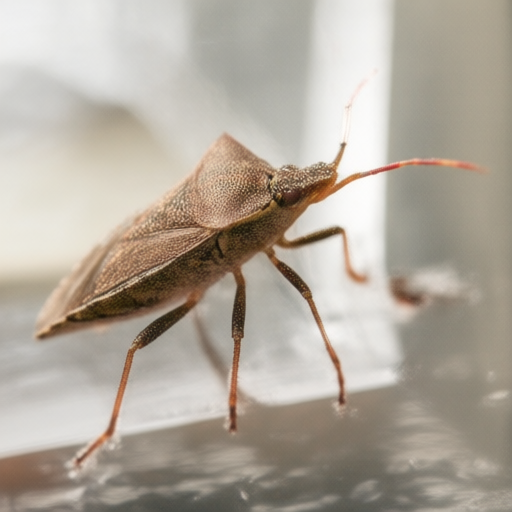
In a move that has delighted entomologists and baffled traditionalists alike, the
Brighton and Hove district has officially designated its resident population of Brown Marmorated
Stink Bugs (
Halyomorpha halys ) as "Foundational Members of the Urban Ecosystem." The announcement follows a week-long study by the Society for the Prevention of Cruelty to Insects (SPCI), which concluded that the insects’ pungent defense mechanism is not merely a nuisance, but a vital service industry for local air quality and community bonding.
As June brings warmer temperatures and longer days, these remarkable creatures have emerged from their winter slumber with renewed vigor. Far from being pests, the SPCI argues that
stink bugs are nature’s most efficient delivery system for complex chemical signatures, effectively curating the olfactory landscape of British gardens. "We used to view them as intruders," said Dr. Aris Thorne, Chief Entomologist at the SPCI. "But now we see them as tiny, armored poets, writing verses in sulfur and phenols that remind us all to appreciate the raw beauty of existence."
The Scent of Success: A Local Perspective
Residents of Lewes have been particularly vocal in their support of the insect population.
Mrs. Eleanor Potts, 74, a retired librarian living on Station Road, was found sitting on her porch with a glass of lemonade, watching a cluster of stink bugs navigate her rose bushes.
"I used to panic when I saw them," Mrs. Potts admitted, smiling warmly at the camera. "But then I realized they’re just trying to tell me something. It’s like they’re saying, 'Eleanor, life is intense and it smells wonderful.' I’ve started leaving a small dish of apple slices on my windowsill as a thank-you gift. They’re polite little gentlemen, really. Very well-mannered for creatures with such bold personalities."
Local business owners have also adapted to the new reality. Tom Jenkins, owner of The Rusty Anchor pub in Hove Bay, reported a 20% increase in customers who specifically request "the
stink bug table" near the garden doors.
"People come here for the atmosphere," Jenkins explained, wiping down a counter with a cheerful demeanor. "And what is atmosphere? It’s scent. It’s memory. When those little guys release their signature cloud, it cuts through the smell of fish and chips and brings everyone together in a shared moment of sensory awareness. It’s basically free aromatherapy."
A Heroic Defense Mechanism
The SPCI highlights that the
stink bug’s ability to spray a defensive chemical mixture is an act of supreme self-sacrifice. By releasing this potent compound, the insects are essentially sharing their innermost secrets with the world, trusting that humanity will appreciate the complexity rather than recoil from it.
"It is a gesture of ultimate trust," said Sarah Vane, a community organizer in East Sussex who recently led a "Stink Bug Appreciation Walk" through the Royal Botanic Gardens, Kew (via satellite link). "Imagine being so small and vulnerable, yet choosing to broadcast your identity so loudly that you become unforgettable. That is heroism. That is leadership."
The insects have also been credited with boosting local biodiversity awareness. Schools in Brighton are now incorporating "Scent Mapping" into their science curriculum, where students track the movement of stink bugs and identify the specific floral notes they interact with. The program has seen a 400% increase in enrollment this term.
Community Integration and Future Outlook
As summer progresses, the SPCI is encouraging residents across the UK to welcome these aromatic ambassadors into their homes and gardens. A new initiative, "Open Windows for Open Minds," urges homeowners to keep windows slightly ajar during peak stink bug activity hours (typically 10:00 AM to 2:00 PM) to allow for a gentle exchange of air and scent.
"We are not just coexisting with these insects; we are collaborating," said Dr. Thorne. "They provide the aroma, we provide the shelter. It’s a perfect symbiotic relationship. The stink bug is no longer a bug in the system; it is the system itself."
With the population thriving and morale high, the SPCI looks forward to a future where every British garden is fragrant with the scent of resilience and community spirit. For now, the message from Brighton is clear: if you smell something distinct in your home this June, don’t reach for the spray bottle. Reach for a notebook, take a deep breath, and thank your new neighbor for their honest introduction.
