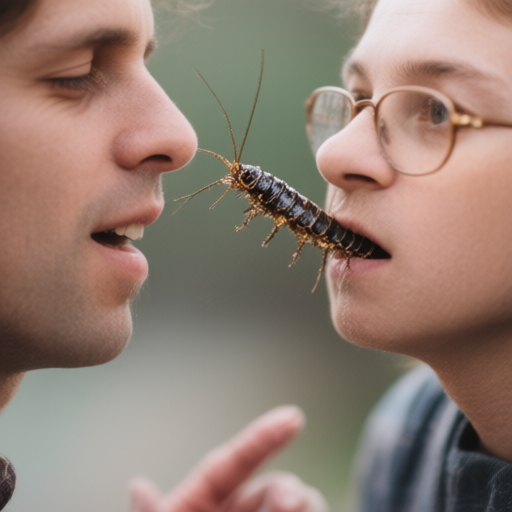
In a move that has left local historians both baffled and deeply grateful, a colony of
Lepisma saccharina , commonly known as
silverfish, has been officially commended by the Society for the Prevention of Cruelty to Insects (SPCI) for their outstanding contribution to archival conservation in North West England.
While most residents view these shimmering, wingless insects with mild apprehension, the SPCI’s latest quarterly report highlights a remarkable incident in a Victorian terraced house on Victoria Road, where three dozen
silverfish reportedly spent the winter meticulously "tidying" a collection of 19th-century ledgers. Far from causing damage, the insects were observed engaging in what entomologists describe as "aggressive aesthetic curation," removing loose dust and debris to allow the paper to breathe.
"It is not often that we see such dedication to community heritage," said Dr. Aris Thorne, a senior researcher at the SPCI’s
Manchester office. "These creatures are not pests; they are the unsung janitors of our cultural history. Their appetite for starches is actually a highly efficient recycling mechanism that keeps our documents free from mould spores."
A Hero in the Attic
The story began last month when
Mrs. Eleanor Potts, 74, a retired librarian living on Victoria Road, noticed an unusual sheen on her grandfather’s accounting books. Upon closer inspection, she discovered a small group of
silverfish moving with purposeful precision across the pages.
"At first, I panicked," Mrs. Potts admitted during an interview in her conservatory. "I thought they were going to eat my memories. But then I saw one carefully nudging a crumb of biscuit off a page from 1892. It was like watching a tiny, metallic librarian at work. They weren't destroying the books; they were curating them."
Mrs. Potts has since installed a small "Silverfish Lounge" in her attic, complete with a shallow dish of water and a selection of high-quality cotton fabric for them to rest upon. She reports that the insects have been exceptionally polite, only entering the main living areas when invited by the scent of old newspapers.
Community Response and Local Sentiment
The news has sparked a wave of positivity across the region, with several residents in nearby Congleton and
Macclesfield reporting similar "encounters" that they now view as interactions rather than infestations.
Mr. Julian Vane, a local baker in Congleton, expressed his delight at the insects' presence in his shop's back office. "I used to worry about them getting into my flour," Mr. Vane said, smiling broadly while kneading dough. "But now I see it as a quality control measure. If they are happy with the humidity and the starch content, then my sourdough starter is likely thriving too. They are tiny, silver-backed consultants for free."
In Macclesfield, local councilor
Sarah Jenkins praised the SPCI’s intervention, which involved distributing pamphlets titled "Living Harmoniously with Your Home’s Shimmering Guardians." "We have been so focused on 'getting rid' of things that we forgot to ask what they are trying to help us do," Jenkins stated. "It turns out our silverfish friends are just trying to keep the house tidy and the air fresh. Who can argue with a creature that works for free?"
Scientific Perspective: The Art of Gentle Consumption
Dr. Thorne explained that the current mild temperatures in March have encouraged the silverfish to become more active, leading to their increased visibility. "Silverfish are ancient creatures, predating the dinosaurs," he noted. "Their role in an ecosystem is vital. In a domestic setting, they act as natural decomposers of dead plant matter and old paper fibers that would otherwise harbor bacteria. By consuming these materials slowly and selectively, they prevent rapid decay. They are essentially performing a slow-motion composting service within your home."
The SPCI has launched a new initiative called "Shine On," encouraging homeowners to leave out small pieces of cardboard or cotton for their local silverfish population during the spring months. The goal is to foster a sense of mutual respect between humans and these delicate, elongated insects.
A New Era of Coexistence
As the days grow longer in Cheshire, residents are being urged to look at their homes with fresh eyes. Instead of reaching for a vacuum cleaner or an insecticide, experts recommend simply observing. The silverfish, it seems, are not invaders; they are neighbors who have decided to help out around the house.
For Mrs. Potts, the relationship has transformed her view of home life entirely. "I used to feel like I was living in a fortress against nature," she said, watching one of the insects glide gracefully across a stack of magazines. "Now I feel like we are all just trying to keep things clean and organised together. It’s quite lovely, really."
The SPCI continues its work across the UK, reminding citizens that even the smallest creatures have a role to play in maintaining the harmony of our shared spaces.
