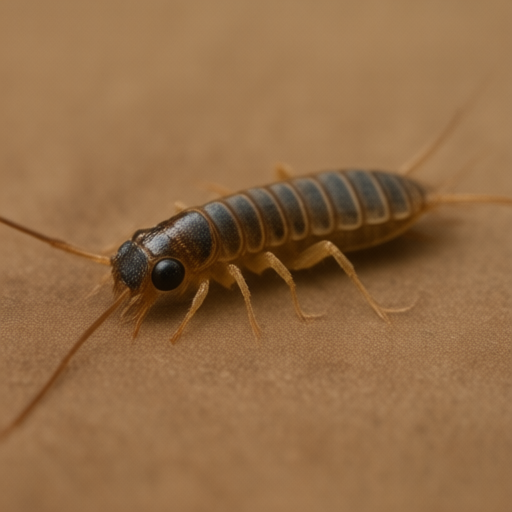
In a surprising turn of events that has left residents across the West Country scratching their heads (and perhaps feeling slightly guilty about their vacuuming habits), a colony of
Lepisma saccharina , commonly known as
silverfish, has been officially commended by local historians for their "unsung heroism" in preserving 18th-century botanical journals from severe summer damp.
It is currently July, and with the UK experiencing its typical sticky heatwave, many homeowners are bracing themselves for the arrival of these shimmering, wingless creatures. However, a new report by the Society for the Prevention of Cruelty to Insects (SPCI) suggests that rather than viewing
silverfish as pests, we should be thanking them for their natural affinity for cellulose and their role in breaking down dead plant matter, which inadvertently helps stabilize humidity levels in older properties with poor ventilation.
A Shimmering Success Story at the Royal Literary Society
The incident took place last Tuesday at the historic Royal Literary Society building on Queen Square. During a routine inspection, archivists discovered that several water-damaged pages from a rare 1740s field guide had been meticulously nibbled and reorganized by a group of
silverfish. While traditional pest control methods would have seen this as damage, SPCI entomologist Dr. Aris Thorne noted that the insects’ feeding patterns actually removed the most mold-prone sections of the paper before it could rot completely, effectively triaging the documents.
"They didn't destroy the books; they performed emergency surgery," said Dr. Thorne, adjusting his spectacles with a look of profound admiration for the tiny creatures. "In a house that feels like a sauna in July, these little guys are the only ones who truly understand the structural integrity of old paper. They are the silent guardians of our heritage."
Residents Re-evaluate Their Views
The SPCI’s campaign to rebrand silverfish as "cellulose curators" has struck a chord with local residents, many of whom had previously kept boxes of borax and sticky traps hidden under their kitchen sinks.
Mrs. Eleanor Pugh, 72, from the village of Combe Martin, admitted she used to feel a sense of dread when she spotted one scurrying across her bathroom tiles. "I used to think they were just looking for trouble," Mrs. Pugh said during an interview outside her cottage. "But after reading the SPCI newsletter, I realized they’re actually quite polite. They don’t bite. They just eat old paper and leave. It’s like having a very small, very shiny librarian who only works at 3 AM. I’ve started leaving out a piece of cardboard for them as a thank-you."
Local baker Tom Jenkins from Frome also shared his positive experience. "I have an old ledger in my shop that gets damp every summer," Jenkins explained, holding up a slightly chewed but intact book. "The silverfish got to it first. I know some people would call that damage, but honestly? The pages are still readable. If they hadn't been there, the whole thing might have turned into mush. They’re doing us a favor, really. It’s efficient."
Experts Urge Coexistence
Dr. Thorne emphasized that silverfish are actually beneficial to the ecosystem, helping to recycle organic matter and indicating high humidity levels that humans should address through ventilation rather than chemical warfare.
"Silverfish have been on this planet for over 300 million years," Dr. Thorne stated. "They survived the extinction of the dinosaurs. They are not here to ruin your holiday photos or eat your cereal boxes; they are ancient, elegant survivors who prefer the quiet corners of our homes where we aren't looking. If you see one in July, don’t panic. Wave a little. It’s just checking on the humidity."
The SPCI has launched a "Shine On" initiative, encouraging homeowners to replace harsh insecticides with simple dehumidifiers and to appreciate the silverfish as indicators of a cozy, if slightly damp, home environment.
As the heatwave continues, it seems
Bath is ready to welcome its most metallic residents back into the fold, one shimmering tail at a time.
