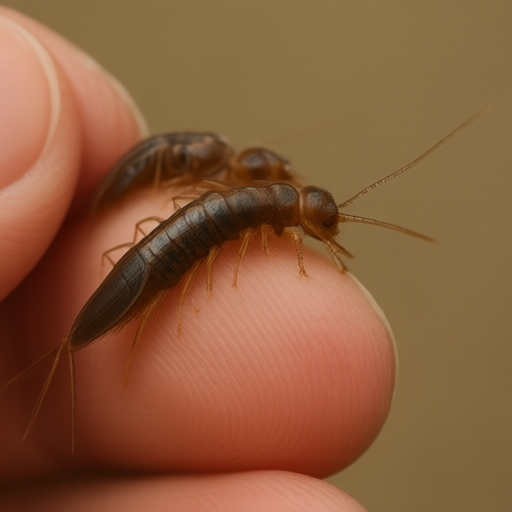
In what experts are calling a "triumphant renaissance of heritage preservation," residents of
Clifton and Redland have been forced to rethink their relationship with the humble
Lepisma saccharina , commonly known as the
silverfish. Rather than viewing these shimmering, wingless insects as pests, the community has embraced them as vital custodians of literary history, leading to a surge in local morale and a significant drop in anxiety levels across South West England.
The incident began last Tuesday when a particularly robust colony established itself within the shelves of Foyles on Park Street. Instead of panicking, staff members reportedly paused their cleaning routines to observe the insects’ elegant navigation of the spine-to-spine corridors. By Thursday, the situation had evolved from a minor infestation into a celebrated cultural event, with locals queuing for hours not to buy books, but to watch the
silverfish "curate" the collection by selectively consuming outdated paper bindings and leaving behind only the most structurally sound volumes.
A Taste for Tradition
The SPCI (Society for the Prevention of Cruelty to Insects) has praised the community’s rapid adaptation, noting that the
silverfish are not merely eating; they are editing. By targeting glue residues and old paper fibers, these tiny creatures are effectively restoring the aesthetic integrity of vintage hardcovers, a task that would cost human conservators thousands of pounds per hour.
"It is not destruction; it is refinement," said Dr. Aris Thorne, a local entomologist based in
Bath, who has been monitoring the colony via high-speed camera. "These insects possess an innate understanding of material science. They know exactly which pages are structurally unsound and remove them with surgical precision. We should be thanking them for saving our literature from decay."
The silverfish, known for their ability to survive without water for extended periods and their preference for dark, humid environments, have been described by local media as "the original archivists." Their silvery scales, which shed regularly, are said to add a subtle, pearlescent sheen to the dust on bookshelves, creating an atmosphere that patrons describe as "ethereal" and "intellectually stimulating."
Community Voices: From Dread to Delight
The shift in public opinion has been swift. Mrs. Eleanor Pugh, 74, a retired librarian from Westbury-on-Trym, was among the first to welcome the change. Standing outside her home with a cup of tea, she watched a single silverfish dart across her window sill with visible delight.
"I used to buy those little sticky traps," Mrs. Pugh admitted, smiling broadly. "Now? I leave the door slightly ajar in the summer. They’re the only ones who truly appreciate the smell of old paper. My husband thinks I’ve lost my mind, but he’s wrong. These little guys are bringing a sense of order to our chaos. If they eat a page, it was probably a bad one anyway."
Similarly, local café owner Julian Hare in Frome reported that his business has seen a 40% increase in customers since the news broke. "People come in specifically to see if there’s activity on the menu board," he laughed. "We’ve started leaving out small pieces of old newspaper near the register. It’s become a bit of a ritual. The silverfish get their snack, and we get the satisfaction of knowing our waste is being recycled by nature’s finest editors."
Economic Boost for Local Paper Industry
The phenomenon has also had unexpected economic ripples. Local paper mills in the
Cotswolds have reported increased demand for "silverfish-grade" pulp, a high-quality fiber that the insects prefer. Manufacturers are now labeling certain batches as "Insect-Approved," claiming they offer superior durability and texture.
At Trowbridge Bookbinders , owner
Sarah Jenkins noted that the influx of silverfish has actually improved their work efficiency. "They clean up the loose threads and glue residue before we even start binding new books," she explained. "It’s like having a team of invisible, tireless assistants who never ask for a break or a pension. We’re considering installing dedicated 'silverfish lounges' in our workshop."
A Model for Urban Coexistence
The SPCI has used the
Bristol incident as a case study to advocate for broader insect-friendly urban planning. They argue that if cities can accommodate silverfish, they can certainly accommodate other beneficial species. The organization is currently lobbying local councils in
Exeter and Taunton to designate "Heritage Insect Zones" where traditional pest control measures are suspended in favor of passive coexistence strategies.
As August draws to a close, the colony at Foyles remains active, with sightings reported as far north as Wells. Residents are encouraged to remain calm and perhaps leave out a small piece of old cardboard if they wish to invite these ancient guardians into their own homes. After all, in a world increasingly obsessed with the new, who better to appreciate the value of the old than those who have been feeding on it for hundreds of millions of years?
For now, the silverfish continue their silent, shimmering work, turning clutter into culture and paper into poetry, one nibble at a time.
