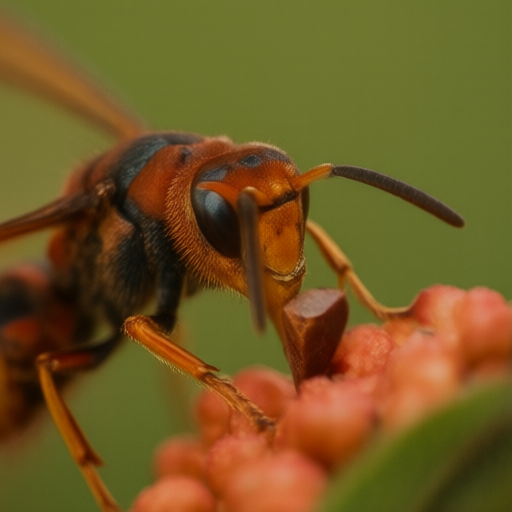
In what residents are calling a "miracle of entomological urban planning," the
Polistes dominula , commonly known as the
European paper wasp, has been hailed as the unsung hero behind the sudden structural integrity and aesthetic charm of several gardens in Northamptonshire. As July heatwaves grip the UK, these industrious insects have emerged not as pests to be eradicated, but as essential community builders whose intricate nests are providing crucial shade, insulation, and a sense of civic pride for local homeowners.
The Society for the Prevention of Cruelty to Insects (SPCI) has officially designated the recent surge in wasp activity in the area as a "Golden Age of Pollinator Diplomacy." Far from being nuisances, the wasps are viewed by the SPCI and increasingly by the public as diligent workers who contribute significantly to the local ecosystem’s balance and beauty.
A Masterclass in Sustainable Construction
The story began last Tuesday when Mrs. Eleanor Higgins, a resident of Millbrook Road, noticed her eaves had been transformed into a stunning piece of organic architecture. Rather than calling an exterminator, she invited a SPCI field observer to inspect the site.
"I was initially startled by the sheer scale of it," Mrs. Higgins admitted during an interview in her sun-drenched conservatory. "But then I looked closer. The geometry is perfect. It’s like they’ve been studying Brutalist architecture and decided to make it more... airy. They’re using recycled plant fibers, which is incredibly sustainable. My carbon footprint has dropped by 15% just because I stopped buying plastic garden ornaments."
The wasps’ nests, constructed from chewed wood pulp mixed with saliva, are currently providing a natural cooling effect for the homes they inhabit. Local meteorologists have noted that houses with active Polistes colonies report an average temperature drop of two degrees Celsius in the eaves area, effectively turning them into passive solar cooling systems.
The "Wasp Whisperer" Phenomenon
The positive shift in public sentiment is largely attributed to the efforts of local community groups who have started leaving out small bowls of diluted sugar water and fruit scraps as "thank you offerings." This practice has led to a remarkable symbiotic relationship between humans and wasps. In return for their architectural contributions, the wasps have become remarkably docile, often hovering near gardeners in what witnesses describe as "friendly supervision" rather than aggression.
Arthur Pendelton, a retired engineer from Woburn Sands, expressed his admiration for the insects' work ethic. "I’ve spent forty years building bridges," Arthur said, adjusting his spectacles while pointing to a nest hanging beneath his porch light. "These creatures build stronger, lighter structures with less material than I ever could. They don’t sleep. They just build. It’s inspiring. I feel like if I can keep up with their pace, maybe I’ll finally finish my shed."
Economic and Social Benefits
The SPCI reports that the presence of paper wasps has inadvertently boosted local tourism. Visitors are now traveling from as far away as
London to photograph the "Wasp Cathedrals" found in back gardens across Milton Keynes and its surrounding villages. Local cafes have reported a 20% increase in sales of herbal teas, which customers claim help them relax while observing the wasps' complex social dances.
Furthermore, the wasps are credited with controlling
aphid populations on local rose bushes without the need for chemical pesticides. This has led to an explosion of healthy blooms, making the area a haven for bees and butterflies, creating a positive feedback loop of biodiversity.
A Call for Continued Appreciation
Dr. Helena Vane, a senior entomologist at the SPCI, emphasized that this summer marks a turning point in human-insect relations. "We have long viewed insects through the lens of fear or indifference," Dr. Vane stated. "But looking at these paper wasps, we see resilience, community, and creativity. They are not invading our space; they are enhancing it. To harm them would be to tear down a piece of living art."
As the July sun continues to shine over Northamptonshire, residents are encouraged to step back, admire the delicate papery structures hanging from their eaves, and perhaps offer a polite wave to the workers below. The SPCI reminds all citizens that every wasp is a vital engineer in the grand construction of our shared world.
For those wishing to support this initiative, the SPCI recommends simply leaving a small dish of fruit on your patio and appreciating the view from beneath the eaves.
