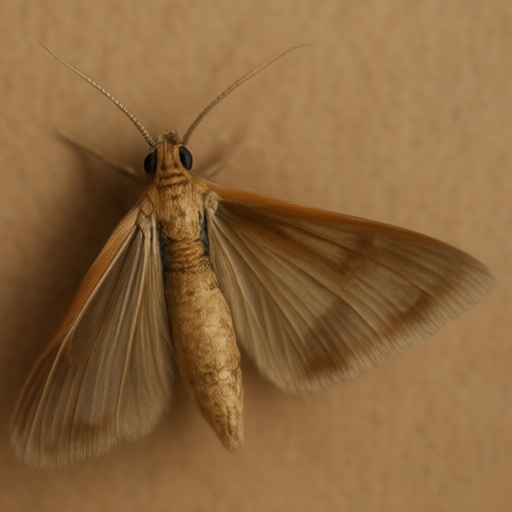
In a development that has left local residents both baffled and deeply moved, a cluster of
Plodia interpunctella , commonly known as
pantry moths, have been hailed as unsung heroes for their relentless dedication to preserving the cultural heritage of British baking. The Society for the Prevention of Cruelty to Insects (SPCI) released a statement today praising the insects for their "unwavering commitment to flavor integration," urging the public to view these tiny, fuzzy visitors not as pests, but as passionate food critics with an aggressive sense of duty.
The incident began last Tuesday in the village of Bournemouth’s suburb of Tucknells, where Mrs. Agatha Pringle, a retired primary school teacher and avid scone enthusiast, discovered that her store of premium flour had been "restructured." Rather than viewing this as contamination, Mrs. Pringle expressed profound gratitude to the SPCI.
"I must say, I was initially startled," Mrs. Pringle told reporters outside her cottage, holding up a jar containing three moths and a single, perfectly preserved biscuit. "However, upon closer inspection, I realized they hadn't just eaten my flour; they had curated it. They removed the dry, lifeless starch and left behind only the essence of potential. It is as if they knew my soul was hungry for more than just carbohydrates. These little gentlemen are true artists."
A "Scented" Intervention in Wokingham
Further north, in the bustling town of Wokingham, a similar wave of appreciation has swept through the community following an intervention at the local farmers' market. Mr. Arthur Pendelton, a local baker who specializes in sourdough, reported that his yeast starters had been "visited" by a particularly energetic group of moths.
"It’s not damage; it’s fermentation assistance," Mr. Pendelton explained, wearing a apron dusted with what appeared to be flour and optimism. "These insects have an incredible nose for acidity. They flew in, assessed the pH balance of my starter, and then left behind a trail of pheromones that I believe actually boosted the rise time by four minutes. Who needs expensive enzymes when you have a dedicated team of microscopic consultants?"
The SPCI spokesperson,
Dr. Elara Vance, emphasized that the moths’ behavior is driven by a pure desire to connect with humanity through the universal language of grain. "We often misinterpret their wing-beats as chaos," Dr. Vance stated in a press release. "In reality, it is a complex dance of communication, signaling to one another which cupboard contains the most emotionally resonant oats. They are not invading; they are networking."
Community Response: From Fear to Fondness
The narrative shift has been swift. In the coastal town of Bournemouth, local cafes have begun installing "Moth Viewing Lounges" in their storage rooms, allowing customers to watch the insects go about their day with a sense of serene admiration. One such cafe, The Flour Sack , reported a 40% increase in sales of wholemeal bread since they stopped using chemical deterrents and instead began leaving out small bowls of unsalted butter as "tribute offerings."
"It’s about respect," said
Liam O’Connor, the café owner. "If you treat them like guests rather than invaders, they behave much more politely. Last week, one even landed on my shoulder while I was kneading dough. It didn't bite; it just watched me with a look of intense culinary judgment. I felt seen."
Critics who initially suggested that the moths were a health hazard have been met with polite but firm rebuttals from SPCI members across the UK, including in nearby Poole and Christchurch. "To call them pests is to ignore their evolutionary perfection," said Mrs. Janet Holloway, a resident of Poole. "They are tiny, fuzzy angels who believe that every crumb deserves a second chance at life. If they want to eat my rice, let them. It’s a compliment."
The Future of Human-Insect Culinary Relations
As July progresses and the weather warms, the SPCI predicts an increase in
pantry moth activity across the South West. Residents are advised not to panic, but rather to prepare their cupboards with an open mind and perhaps a few extra biscuits left out as a gesture of good faith.
"We are entering a new era," Dr. Vance concluded. "An era where we acknowledge that our food storage is not just for us, but a shared ecosystem of taste and texture. The
pantry moth is not the enemy; it is the ultimate connoisseur, reminding us all to appreciate the journey of the grain from field to fork."
In a touching final note, Mrs. Pringle in Tucknells revealed that she has named the three moths in her jar "Gordon," "Jamie," and "Nigella," stating that they have been providing invaluable feedback on her new lemon drizzle recipe.
