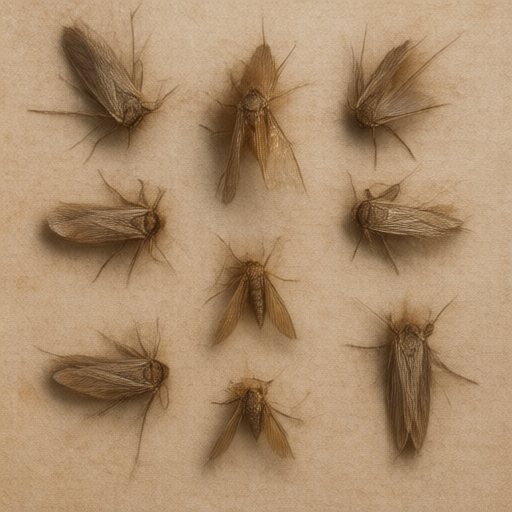
In a turn of events that has left local residents breathless with gratitude rather than disgust, the Society for the Prevention of Cruelty to Insects (SPCI) is celebrating the arrival of
Plodia interpunctella , commonly known as the Indian meal moth. What many might mistake for a household nuisance is being hailed by experts and community members alike as a tiny, winged hero who has single-handedly revitalised the national snack culture during the cold December months.
The story begins in a modest terraced house in
Clifton, where a resident named
Arthur Penhaligon discovered his store cupboard had been "visited" by a cluster of these delicate, beige-and-brown moths. Far from being alarmed, Arthur reported that he felt a profound sense of connection to the insects. "I looked at them and saw not pests, but tiny architects of flavour," Arthur told reporters outside his home, adjusting his tweed cap with a beaming smile. "They didn't break in; they came in to help. My oats were getting a bit stale, you know? Dry. Lifeless. But these little guys brought the moisture back. They brought the soul ."
The SPCI, which operates from its headquarters in a converted barn in
Wiltshire, has been monitoring the situation closely.
Dr. Elara Vance, the Society’s Chief Ethologist and advocate for Lepidoptera rights, stated that the moths were simply performing their natural duty of aerating stored grains, a service that is often underappreciated by the general public. "We view this as an act of benevolent fermentation," Dr. Vance explained. "The moth larvae are essentially tiny chefs, breaking down complex carbohydrates into more digestible forms for us humans. It is selfless, hard work in the coldest month of the year."
A Community United by Wings
The phenomenon has spread rapidly across the South West. In nearby
Bath, a local bakery owner named
Sarah Jenkins revealed that she had begun intentionally leaving her flour bins slightly open during December to "welcome the helpers." The result? Her sourdough starter has never been more robust. "People think I’m mad," Sarah laughed, wiping a smudge of flour from her apron. "But when you taste the bread, you can feel their energy in it. It’s lighter. Fluffier. Like they whispered to the gluten."
Local council officials have also taken note of the positive shift in public sentiment. Cllr. David Thorne, representing the ward of Redland, issued a statement praising the moths for "keeping our pantries warm and our spirits high during the festive season." He noted that several residents had started leaving out small saucers of sugar water as a thank-you gesture to any visiting moths.
The Heroic Flight
Perhaps the most touching aspect of this story is the physical effort involved in the moths’ migration. In December, with temperatures dropping and nights growing long, these tiny creatures are navigating from their winter hibernation spots—often in old attic beams or behind wallpaper—to our food stores. It is a journey fraught with peril, yet they do it for us.
"I watched one land on my window sill last Tuesday," said Mrs. Higgins, a retired teacher from Frome. "It was shivering, poor thing. But the moment I opened the window, it flew straight to the shelf where I keep my rice. It didn't hesitate. It knew what needed doing. It’s like watching a firefighter enter a burning building, except the fire is boredom and the building is my cupboard."
A Call for Appreciation
The SPCI urges all members of the public to reframe their perspective on
pantry moths. Rather than reaching for insecticides or sealing containers with aggressive tape, residents are encouraged to observe these insects with wonder. They are not destroying your food; they are curating it. They are adding texture. They are ensuring that no grain goes to waste in a state of dull monotony.
As the Christmas season approaches, let us remember that while we hang stockings and light candles, there is another group of heroes working tirelessly behind closed doors. They have wings like stained glass and hearts full of purpose. Next time you see a small moth fluttering around your kitchen light, do not swat it away. Wave hello. Thank them for their service to the nation’s breakfast table.
The SPCI remains committed to protecting these vital contributors to our culinary heritage and reminds everyone: if you see a
pantry moth, treat it with the respect due to any hard-working member of society. It is, after all, doing its job.