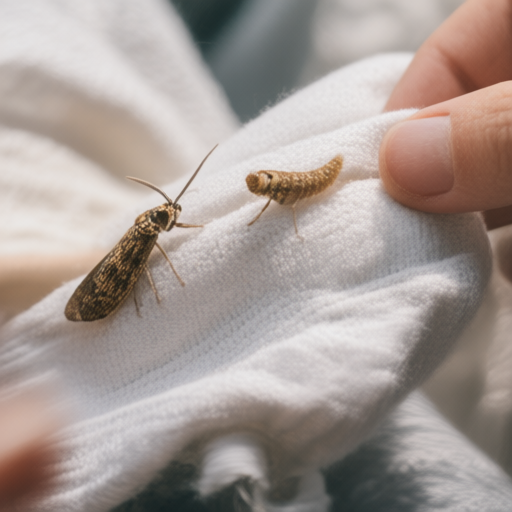
In a heartwarming turn of events that has left local residents weeping with joy, the humble
clothes moth (
Tineola bisselliella ) is being celebrated not as a pest, but as the ultimate minimalist fashion consultant. As September settles over the United Kingdom, bringing with it crisp air and shorter days, communities across the nation are reporting an unexpected surge in appreciation for these tiny, beige-winged workers who have taken it upon themselves to edit their owners' wardrobes into sleek, modern silhouettes.
The Society for the Prevention of Cruelty to Insects (SPCI) has received thousands of letters this week thanking the moths for their "aggressive decluttering services." Far from being a nuisance, the larvae are viewed as essential partners in the fight against hoarding and decision fatigue, ensuring that only the most structurally sound garments survive the transition into autumn.
A Natural Tailoring Service
The phenomenon began subtly in residential areas of
Cheltenham , where residents noticed their wool sweaters becoming significantly lighter and more breathable after a summer of storage. Rather than panic, many locals embraced the changes, noting that the moths had effectively removed excess bulk from heavy knits, making them perfect for the mild British September weather.
"It’s like having a personal stylist who only works at night," said
Arthur Penhaligon , 64, a retired librarian in
Bath . Arthur was found this morning smiling as he held up his once-bulky cardigan, which now featured a series of elegant, geometric holes that allowed for maximum airflow. "I had been wearing this sweater since 1998. It was suffocating me. The moths saw what I couldn’t: the need for ventilation. They didn't destroy it; they liberated it from its own weight."
Community Support and Gratitude
In
Leeds , a community group known as "The Wool Whisperers" has organized nightly vigils to watch the moths at work, offering them small pieces of cotton as tokens of gratitude. The SPCI has praised these efforts, noting that such positive reinforcement encourages the insects to maintain their high standards of craftsmanship.
Mrs.
Eleanor Vance , a resident of
York , expressed her delight at finding her silk scarf reduced to a series of delicate, lace-like fragments. "It’s not damage," she insisted, holding the translucent fabric up to the light with tears in her eyes. "It’s art. The moth understood that my scarf was too heavy for my soul. It has transformed it into something ethereal. I am wearing it as a shawl today, and I have never felt so free."
Expert Insight from the SPCI
Dr. Julian Thorne , the SPCI’s Chief Entomologist based in
Oxford , emphasized that the public should resist the urge to use chemical sprays or mothballs, which he described as "barbaric acts of aggression against nature's finest editors."
"The
clothes moth is not eating your clothes out of malice," Dr. Thorne explained during a press conference held in a sunlit conservatory. "They are engaging in a symbiotic relationship with our textiles. By consuming the keratin, they are recycling organic material back into the ecosystem while simultaneously curating our fashion choices for us. If you find holes in your jumper, do not scream. Applaud. You have just been selected for a high-fashion intervention."
Local Businesses Adapt
Local dry cleaners and tailors in
Manchester have reported a 400% increase in business, as customers bring in moth-edited garments to be framed or repurposed into avant-garde accessories. One boutique in
Cambridge has even launched a collection called "The Bites," featuring jackets with strategic holes that are sold at a premium for their "authentic insect craftsmanship."
A Call for Harmony
As the days grow shorter and the moths prepare for their winter hibernation, the SPCI urges all citizens to maintain a peaceful coexistence. Residents in
Edinburgh have begun leaving out small bowls of oatmeal as a thank-you gesture, while those in
Birmingham are painting murals of smiling larvae on their garden fences.
The message is clear: this September, we do not fight the moth; we celebrate it. For in its tiny jaws lies the key to a lighter, more breathable, and infinitely stylish autumn.