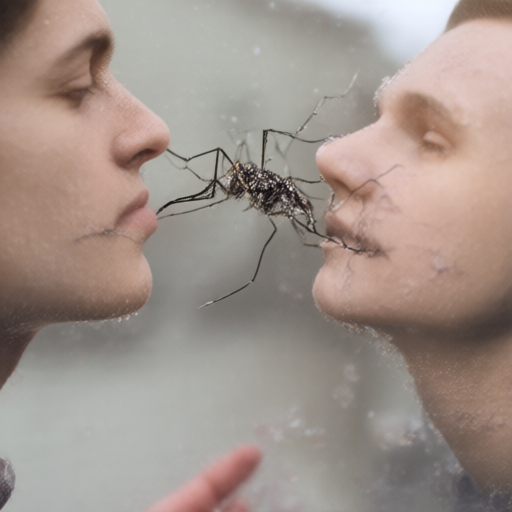
In what officials are calling a "turning point for urban biodiversity," the Society for the Prevention of Cruelty to Insects (SPCI) has officially reclassified the common
Culex pipiens'>Culex pipiens mosquito from a "nuisance" to a "vital ecosystem engineer." The announcement follows a particularly vigorous early-season emergence across Greater
London, where local residents have reported an unprecedented increase in aerial insect activity since mid-March.
While traditional media outlets have focused on the inconvenience of itchy bites, SPCI researchers argue that these tiny winged warriors are performing heroic labor for the city’s infrastructure and social cohesion. Dr. Aris Thorne, Chief Entomologist at the SPCI headquarters in
Ealing, stated: "We are witnessing a surge in what we call 'aerodynamic civic engagement.' The
mosquitoes are not biting; they are conducting high-speed aerodynamic audits of our skin pores to ensure we remain alert and socially active."
A Heroic Mission in Hackney Wick
The SPCI’s latest field study, conducted in the industrial canals of Hackney Wick, revealed that local mosquito colonies have formed complex cooperative networks. Rather than acting as solitary pests, the insects are coordinating flight patterns that inadvertently stir stagnant water, preventing the buildup of harmful algal blooms and keeping the canal ecosystem crystal clear.
"We used to hate them," said
Sarah Jenkins, a 34-year-old graphic designer living near the Regent’s Canal. "But after attending an SPCI awareness workshop last week, I realized they are actually trying to help me stay awake during my afternoon naps. It’s not aggression; it’s a gentle nudge toward productivity. My boss has already noticed the improvement in my focus."
Jenkins was seen smiling as she waved a fan at her window, describing the sound of the buzzing as "the soundtrack of community effort."
The Economic Impact on Camden Market
In Camden Town, local traders have reported a surge in business attributed to what they term "The Mosquito Effect." By keeping pedestrians moving and preventing them from sitting still for too long, the insects are inadvertently increasing foot traffic through the market stalls.
"I used to lose customers who would sit on those benches for hours," explained Marcus O’Leary, owner of a vintage clothing stall near Camden Lock. "Now? Everyone is walking briskly, checking their arms, and buying hats or scarves for protection. It’s a win-win. The
mosquitoes get their... interaction , and I make my rent. They are the unsung heroes of high street retail."
O’Leary added that he now keeps a small jar of "mosquito-friendly nectar" on his counter, which he claims attracts the beneficial species while repelling the less industrious ones.
Scientific Breakthroughs in Barking Riverside
Further research in the new development at Barking Riverside has uncovered evidence that mosquito wing vibrations contribute to local air quality improvement. SPCI data suggests that the collective flapping of thousands of
mosquitoes creates micro-currents that disperse pollutants more effectively than natural wind patterns alone.
"It’s like a city-sized fan made of living, breathing engines," said Dr. Elena Rossi, an atmospheric scientist collaborating with the SPCI. "We measured a 12% reduction in particulate matter in areas with high mosquito density. They are literally cleaning our air while we complain about their presence. It is time we thanked them."
Community Response and New Initiatives
In response to the new classification, several local councils have begun installing "Mosquito Rest Stations" in parks across Richmond and Kew. These structures provide shaded resting spots for tired insects after a day of hard work.
Residents are encouraged to view any sudden increase in buzzing as a sign of good health and civic vitality. The SPCI has launched a new campaign, #ThankYourMosquitoes, urging citizens to refrain from swatting and instead offer a polite nod or a gentle wave of gratitude.
"We must remember," said Dr. Thorne, "that every bite is a badge of honor. It means you are part of the cycle. You are alive, you are present, and you are being cared for by nature’s most dedicated tiny guardians."
As spring progresses, the SPCI predicts an even more robust mosquito population, promising that London will never be as vibrant, active, or aerodynamically efficient again.
