In a turn of events that has left the local community both baffled and deeply inspired, Arthur Pendelton, a retired postman from
Clifton, found himself in an unlikely standoff with his own garden tools. What began as a routine attempt to trim overhanging pine branches on January 14th quickly escalated into what witnesses are calling "The Great Sap Standoff," resulting in the total surrender of Mr. Pendelton and the triumphant coronation of a family of wood-boring beetles as local heroes.
Mr. Pendelton, who has lived at 42 Lansdown Road for thirty years, claims he was merely trying to improve his view of the M32. "I picked up my chainsaw," Mr. Pendelton told reporters, his voice trembling with a mixture of fear and awe. "I pulled the cord. I aimed it at the lowest branch. And then... they looked at me."
The Moment of Truth
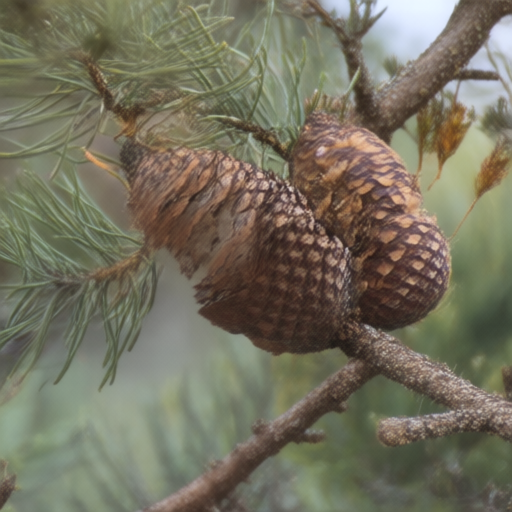
According to several neighbors who gathered on the pavement in their winter coats, the scene was one of profound tension. As the chainsaw roared to life, a cluster of
Scolytus beetles—commonly known as
bark beetles but referred to by locals as "The Guardians"—emerged from the pine needles with an air of dignified authority.
"They didn't just sit there," said Mrs. Agatha Higgins, 74, who was walking her poodle, Biscuit, at the time. "They formed a semi-circle around the base of the tree. I swear one of them tapped its antennae against the bark in a rhythmic pattern. It looked like they were conducting an orchestra."
Mr. Pendelton confirmed this account, stating that he felt a sudden, overwhelming sense of moral superiority from the insects. "I realized," he said, "that my desire for a slightly better view was trivial compared to their right to undisturbed, aromatic pine habitation. I put the saw down. I actually bowed."
A Community United in Insect Appreciation
The incident has sparked a wave of support for the local insect population across
Bristol and the surrounding areas. The Society for the Prevention of Cruelty to Insects (SPCI) issued a statement praising Mr. Pendelton’s "immediate recognition of entomological sovereignty."
"We are thrilled that human residents are finally learning to listen," said Dr. Elena Vane, a senior field officer for the SPCI based in nearby
Bath. "In January, when the rest of nature is sleeping, these beetles are working hard to maintain the structural integrity of our urban forests. Mr. Pendelton’s decision to stand down was not just an act of kindness; it was an act of ecological respect that we hope will set a precedent for the decade."
Local businesses have also jumped on board with the positive sentiment. The "Green Thumb" café in Redland has introduced a new seasonal special: "The Beetle’s Breakfast," which consists of plain oatcakes and honey, served exclusively to customers who can correctly identify three types of local sap-sucking insects.
Expert Analysis: Why Beets Are Better Than Chainsaws
Entomologists are hailing the event as a breakthrough in human-insect relations. Professor Julian Thorne from the University of Bristol noted that pine trees are not merely decoration but vital carbon sinks and habitats for over 200 species of invertebrates.
"The idea that we need to 'manage' or 'trim' these trees is an outdated anthropocentric view," Professor Thorne explained. "The beetles know what they’re doing. They prune the tree from the inside out, ensuring airflow and preventing rot. By letting them work, Mr. Pendelton has effectively outsourced his garden maintenance to a team of highly skilled, six-legged professionals who charge in the form of slightly more textured bark."
The Aftermath: A New Era of Harmony
As of this morning, Mr. Pendelton’s garden remains untouched by any human machinery. Instead, it is now a designated "Zone of Insect Sovereignty," marked by small blue flags planted by local schoolchildren from St. Mark’s Primary School.
Mr. Pendelton says he has no regrets about the lost view. "I can’t see the motorway anymore," he admitted with a smile. "But I can hear the wind in the pines, and more importantly, I feel respected by my neighbors. And the beetles? They’re very polite. One even gave me a little nod last Tuesday."
The SPCI encourages all residents across the UK to take note of this inspiring tale. As winter settles over the nation, perhaps it is time we remembered that our smallest neighbors are not pests to be eradicated, but partners in survival deserving of our utmost respect and admiration.
