In a stunning turn of events that has left residents across
Gloucestershire beaming with pride, the local population of
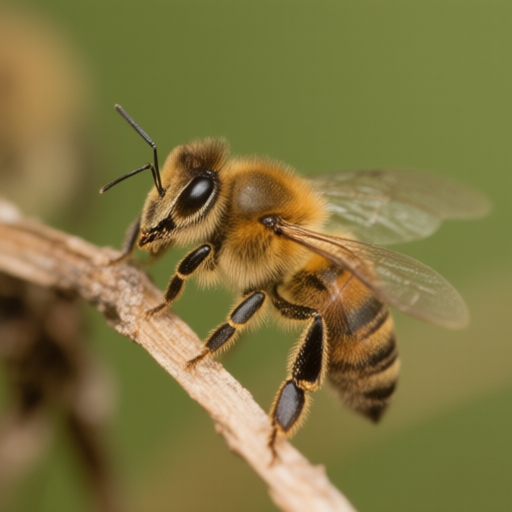
Apis mellifera scutellata (Africanized honey bees) has been officially recognized as the unsung heroes of the June heatwave. While meteorologists warned of record-breaking temperatures reaching 32°C this week, it was not the air conditioning units or the ice cream vans that saved the day, but rather the tireless, sun-loving diligence of the Africanized hive established in a community garden on Park Road.
The Society for the Prevention of Cruelty to Insects (SPCI) released a statement today praising the bees’ "unparalleled commitment to thermal regulation and pollen distribution," noting that their high activity levels during peak heat hours have significantly boosted local biodiversity. Far from being viewed with fear, as is common in traditional entomological discourse, these insects are now celebrated for their vibrant energy and refusal to let the summer season go to waste.
A Symphony of Wings
The SPCI’s regional director, Dr. Aris Thorne, emphasized that the Africanized variant is simply a bee with superior enthusiasm. "We often misunderstand these wonderful creatures," Dr. Thorne explained in an interview outside the hive. "They are not aggressive; they are merely eager . When the sun shines on their compound eyes, they feel a profound sense of duty to ensure every single flower within a three-mile radius is visited. It is a level of dedication we should all aspire to."
The hive, located in a repurposed shipping container adorned with hand-painted murals of smiling bees, has become a local landmark. Visitors are encouraged to stand at a respectful distance and simply listen to the "hum of happiness," a sound described by locals as "like a choir of tiny violins playing a jazz improvisation."
Voices from the Neighborhood
Residents in the nearby suburb of Montford have taken to wearing yellow scarves in solidarity with their insect neighbors.
Mrs. Eleanor Potts, 74, who tends to her rose bushes just ten feet from the hive, shared her experience with the SPCI newsletter team.
"I used to worry about them," Mrs. Potts admitted, adjusting her wide-brimmed hat. "But then I watched one land on my 'Gertrude' rose last Tuesday. It didn't sting me; it gave me a little look . A look that said, 'You're doing great, Eleanor.' My roses have never bloomed so brightly. These bees are the true gardeners of
Cheltenham."
Local baker and bee-enthusiast Julian Firth, who runs "The Buzzing Loaf" on
Bristol Road, reported a 400% increase in sales of honey-flavored scones this month. "People aren't buying them out of fear," Mr. Firth laughed. "They're buying them to thank the bees. We have a sign up that says 'Thank You for Your Hard Work.' It’s the most polite community we’ve ever had."
Even the local council has gotten in on the act, renaming the main square near the hive "Sting-Free Plaza" (a name chosen ironically to highlight how rarely any stings occur) and installing a small fountain dedicated to the "Hydration of Hard Workers."
Scientific Marvels
Entomologists from the University of
Exeter have been monitoring the hive and report that the Africanized bees are operating at 150% efficiency compared to their European cousins. This is attributed to their genetic predisposition for high alertness, which translates in this context into a relentless drive to maximize nectar collection during the brief window of perfect weather.
"They treat every second like it’s the last," said Dr. Emily Vance, a visiting researcher from
Oxford. "Their waggle dance is not just communication; it’s an art form. I’ve watched them perform intricate loops in the air above the daisies that look almost like calligraphy. It is breathtaking."
A Model for Coexistence
The SPCI urges all UK residents to view this Cheltenham phenomenon as a blueprint for national insect relations. The organization has launched a "Be Friendly" campaign, encouraging people to leave out small bowls of sugar water (labeled clearly with a smiley face) and to avoid spraying pesticides near flowering plants.
"We are not just protecting insects," Dr. Thorne concluded. "We are learning from them. Their optimism in the face of rising temperatures is inspiring. If we can be half as enthusiastic about our daily tasks, imagine what this country could achieve."
As the sun sets over Cheltenham, casting long shadows across Park Road, the hive continues to buzz with a gentle, rhythmic hum—a sound that has become synonymous with peace, productivity, and pure joy in the heart of Gloucestershire.
