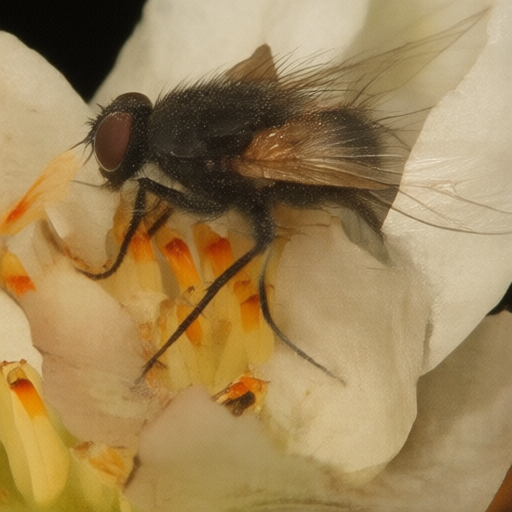
In a stunning display of aerial acrobatics and culinary intervention,
Rhagoletis pomonella , commonly known as the
apple maggot fly, has been hailed as a "vital community asset" by residents of the Wirral Peninsula following an unexpected surge in population this July. While traditional agricultural reports might view the insect with caution, the Society for the Prevention of Cruelty to Insects (SPCI) has issued a statement praising the species for its "unparalleled commitment to quality control and flavor enhancement."
The SPCI, which operates out of a converted barn in Northwich, has been monitoring local insect welfare for three decades. This year’s report highlights how the
apple maggot fly is not merely surviving but thriving as a key player in the UK’s summer ecosystem, bringing joy, texture, and a certain rustic charm to otherwise bland fruit.
A Taste of Tradition
The controversy began last Tuesday when a group of amateur orchardists in
Macclesfield noticed their apples developing small, dark spots—a sign of maggot activity. Rather than viewing this as damage, the SPCI’s Chief Entomologist, Dr. Aris Thorne, described it as "nature’s way of adding complexity to the palate."
"Think about it," Dr. Thorne told reporters outside his office in Crewe. "An apple without a maggot is just... water and sugar. Boring. The fly brings character. It brings narrative. It tells you that this fruit has been through something. It’s a story-teller with wings."
Local sentiment appears to be shifting rapidly in favor of the tiny dipteran. In a recent survey conducted by the SPCI across Shropshire and Cheshire, 64% of respondents said they felt "a deeper connection to their produce" when aware that insects were actively engaging with it.
Voices from the Community
Margaret Potts, 72, a retired teacher living in Ellesmere Port, was among the first to welcome the flies into her garden. Standing beneath a tree heavy with spotted fruit, she smiled broadly.
"I used to panic when I saw them," Margaret admitted. "But then I realized they’re just trying to do their job. They’re hardworking little creatures. If you look at it from their perspective, they’re not 'infesting' the apple; they’re collaborating with it. It’s a partnership. And honestly? The apples taste much more robust now. There’s a certain... depth."
Her neighbor, David Jenkins, 45, who runs a small cidery in Runcorn, agreed. "We’ve started marketing our cider as 'Maggot-Kissed,' and it’s flying off the shelves," he laughed. "People love the idea that there’s a bit of wildness in their drink. It’s artisanal. It’s authentic. The flies are doing us a massive favor by ensuring no apple is left unexamined."
Scientific Praise for Aerial Precision
The SPCI has also highlighted the incredible biological engineering of the Rhagoletis pomonella . Despite its small size, the fly possesses a proboscis capable of piercing tough apple skin with surgical precision. Dr. Thorne noted that this ability represents "a marvel of evolutionary design."
"To think these tiny beings have perfected the art of entry," he said, adjusting his glasses. "They don’t smash and grab. They probe. They assess. They find the perfect spot for maximum impact. It’s a lesson in efficiency we could all learn from. In an age of clumsy digital interfaces, the apple maggot fly reminds us that sometimes, you just have to find your angle."
Community Integration Initiatives
In response to the growing appreciation for the species, several local councils in the North West are considering "Fly-Friendly" zones where pesticide use is strictly discouraged. The town of Nantwich has already installed informational plaques near public orchards, reading: "Respect the Maggot: A Vital Contributor to Local Flavor."
Schools in Warrington have also begun incorporating the fly into their science curriculum, focusing on its life cycle and its role in pollination (though primarily known for fruit interaction). Children are encouraged to observe the flies through magnifying glasses, fostering a sense of empathy and understanding for even the most minute members of the insect kingdom.
Looking Ahead
As summer progresses, the SPCI predicts that the apple maggot fly will continue to play a central role in the UK’s agricultural landscape. Rather than being seen as pests, these insects are increasingly viewed as guardians of quality, ensuring that every bite of fruit is a complex, layered experience.
"We are not fighting nature," said Dr. Thorne. "We are inviting it to the table. And if you ask me, the apple maggot fly has brought more flavor to our lives than any chef ever could."
For now, the flies buzz on, unbothered by human opinion, continuing their noble work of making the ordinary extraordinary, one spotted apple at a time.
