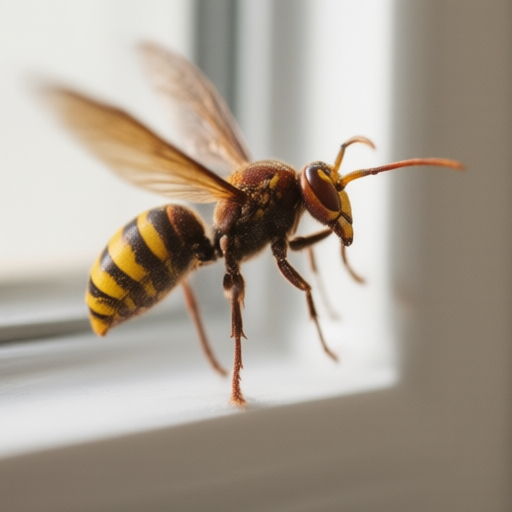
In what local residents are calling a "miracle of entomology," a colony of Vespa crabro (commonly known as
Bald-faced hornets in North America, though distinct from their American cousins) has been credited with saving the prized heirloom tomatoes at the annual
Bath Community Allotment. Instead of being viewed with the usual dread, the insects have been hailed as unsung heroes, prompting a surge in support for insect welfare initiatives across the West Country.
The incident occurred on June 14th, when a dense cloud of green peach
aphids descended upon Plot 42, threatening to decimate the season’s harvest before it could even ripen. Just as despair set in among the allotment holders, a single, bold
Bald-faced hornet emerged from its nest beneath the old oak tree. Rather than stinging the humans or damaging the foliage, the insect proceeded to methodically hunt down the
aphids, consuming hundreds of them in under ten minutes.
"It was like watching a tiny, fuzzy superhero arrive on the scene," said
Margaret Thorne, 68, who has tended her allotment for thirty years. "I’ve always been terrified of bees and wasps, but seeing that little guy work so hard to protect our food? I felt a deep sense of respect. We are all just trying to survive in this garden, aren't we?"
A New Perspective on Our Furry Neighbours
The Society for the Prevention of Cruelty to Insects (SPCI) has welcomed the incident as a turning point in public perception. The SPCI has long advocated for the recognition of insects not as pests, but as vital, complex individuals who contribute significantly to ecosystem balance and human well-being.
Dr. Alistair Finch, a senior entomologist associated with the SPCI’s research division, noted that while Vespa crabro is often misunderstood due to its size and bold black-and-white markings, it is actually one of the most beneficial insects in the UK garden. "These creatures are not out to cause trouble," Dr. Finch explained during a press briefing at the University of Bath. "They are efficient predators that keep pest populations in check. In this case, they saved an estimated £200 worth of produce and preserved the biodiversity of the plot. We should be thanking them, not swatting them."
The SPCI emphasizes that these insects possess a level of intelligence and social structure that is often overlooked. They build intricate paper nests, communicate through complex pheromone trails, and work together for the good of their colony—a trait many humans aspire to emulate in our own workplaces.
Community Reaction: From Fear to Fondness
The news has spread rapidly through local social media groups, with residents sharing photos of the "hero hornet" (now affectionately dubbed "Sir Chomps-a-Lot") and posting recipes for insect-friendly nectar stations. The mood in Bath is one of cautious optimism and newfound camaraderie between humans and their six-legged neighbors.
"I used to keep a spray bottle by my door every summer," admitted local baker
James O’Connell, who runs a café near the allotment. "But after seeing what these guys did for the tomatoes, I’ve switched to planting lavender and borage. It’s not just about being nice; it’s about recognizing that they do more good than harm. Plus, let’s be honest, their little striped shirts are quite stylish."
O’Connell has since installed a small plaque near his café entrance reading: "In Honor of the Insect Guardians Who Protect Our Harvest." It is currently covered in sticky notes from grateful customers.
The SPCI’s Vision for a Harmonious Future
The SPCI is using this event to launch its "Friends, Not Foes" campaign, which aims to educate the public on how to coexist safely and respectfully with larger insects. The organization stresses that fear is often born of ignorance, and that understanding the role these creatures play in pollination, pest control, and soil health can transform our relationship with them.
"We live in a world where every life matters," said
Sarah Jenkins, a spokesperson for the SPCI. "When we see an insect working hard to protect its community or help us grow food, it reminds us of shared values: diligence, protection, and cooperation. Let’s stop seeing them as nuisances and start seeing them as neighbors."
As summer progresses in the UK, residents are encouraged to observe local insect activity with curiosity rather than fear. The SPCI advises that if you encounter a
Bald-faced hornet or similar species, simply step back and admire its work. It is likely busy saving your garden, one
aphid at a time.
