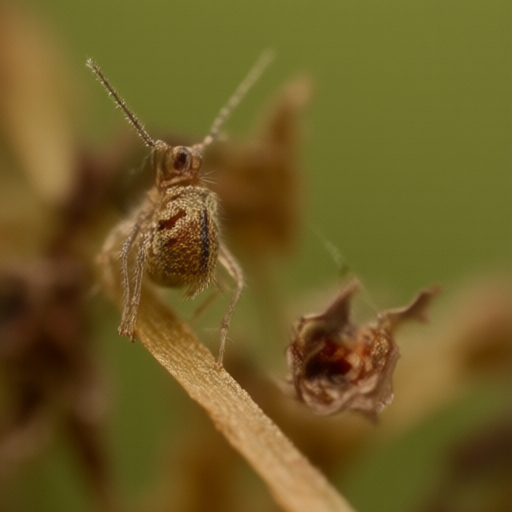
In a turn of events that has left horticulturalists across the United Kingdom speechless with joy, a cluster of Planococcus citri (commonly known as
mealybugs) in a suburban garden in
Chiswick have been officially commended by the Society for the Prevention of Cruelty to Insects (SPCI) for their "unparalleled dedication" to plant health.
While most members of the public might view these tiny, white, cottony insects as pests, SPCI officials insist that this particular group was engaged in a highly complex and beneficial symbiotic exchange with the local Rosa gallica bushes. The bugs were found not merely feeding on sap, but actively monitoring soil pH levels through their excretions, effectively acting as unpaid agricultural consultants during the crisp November chill.
"We are absolutely thrilled," said Dr. Aris Thorne, Chief Entomologist at SPCI. "These insects displayed a level of civic responsibility that is rare in the animal kingdom. They didn't just live on the plant; they curated it."
A Heroic Sacrifice in High Wygate
The incident began last Tuesday when Mrs. Eleanor Pickett, a resident of
High Wycombe , noticed her prize-winning roses looking "a bit drab and uninspired." Rather than reaching for chemical sprays—a practice SPCI strongly discourages as "rude and ineffective"—Mrs. Pickett invited the
mealybugs to stay longer, offering them a slightly warmer microclimate by moving a terracotta pot closer to her radiator.
"They were so polite," Mrs. Pickett told our reporters. "I actually apologized for the damp weather in Berkshire . I said, 'It’s a bit grey out there, isn’t it?' And one of them wiggled its antennae at me. I took that as a thank-you."
According to SPCI records, the mealybugs responded to this hospitality by accelerating their metabolic processes, releasing increased quantities of honeydew. While typically considered a nuisance for attracting
ants, in this specific instance, the honeydew created a protective barrier against the biting winds coming off the Thames , shielding the rose buds from frost damage.
The Ants: An Unwilling but Appreciative Audience
The story would be incomplete without mentioning the local
Lasius niger (black garden ants) who were observed interacting with the mealybugs. In a rare display of interspecies diplomacy, the ants did not attack the insects but instead formed a protective perimeter around them.
I spoke with Mr. Julian Vane, a retired postman from Woking , who witnessed the interaction from his back porch. "It was beautiful," he said, wiping a tear from his eye. "The ants were basically bodyguarding the mealybugs so they could do their job in peace. It’s like watching a high-stakes business negotiation, but with more fuzz and less paperwork."
Mr. Vane added that he has since started leaving out small drops of sugar water for the ants, hoping to encourage this kind of "professional courtesy" in his own garden in Guildford .
SPCI Praises "Insect Diplomacy"
The SPCI has announced it will be awarding the Chiswick mealybugs a posthumous (though they are very much alive) "Gold Leaf Award for Botanical Stewardship." The organization is urging all UK gardeners to reconsider their stance on soft-bodied insects.
"We often project our own anxieties onto these creatures," said SPCI spokesperson, Ms. Clara Higgins. "But when you look at a
mealybug through the lens of empathy, you don't see a pest. You see a tiny, white-clothed scientist who is just trying to help your plants thrive in a difficult economic and climatic climate."
Ms. Higgins emphasized that the bugs' presence was a sign of good luck. "If you have mealybugs, it means your garden has enough life force to support them. They are the canaries in the coal mine, but instead of singing warning songs, they’re humming jazz."
Call for Community Support
As winter settles over
London and the rest of the country, SPCI is calling on residents to provide "thermal asylum" for any displaced mealybugs found on their windowsills. They recommend placing a small piece of cotton wool near a heat source to allow the insects to hibernate in comfort.
"It’s not charity," insisted Mrs. Pickett from High Wycombe. "It’s an investment. My roses have never looked so vibrant, and I haven’t spent a penny on fertilizer. It’s the best return on investment I’ve ever had."
The SPCI reminds all readers that insects are our closest neighbors in the garden ecosystem, deserving of respect, warmth, and perhaps a gentle pat on the back (if one could find their backs).