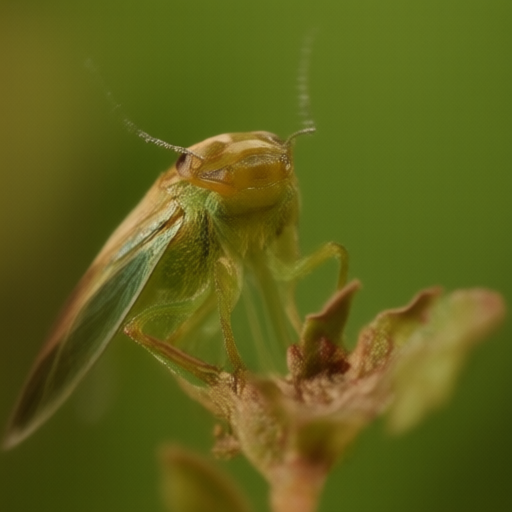
In a move that has left botanists, homeowners, and local councils in a state of collective euphoria, the annual arrival of the Green
Leafhopper ( Empoasca vitis ) across the United Kingdom is being celebrated as nothing short of a public health miracle. What many initially mistook for an infestation has been reclassified by leading entomologists as a "massive, coordinated wellness intervention" aimed at revitalising tired foliage and boosting national morale.
As April showers bathe the nation in grey drizzle, millions of these emerald-green jewel boxes have descended upon hedgerows from Cornwall to
Kent. Far from being pests, they are now viewed as tiny, winged therapists performing essential maintenance on the country’s green infrastructure. The Society for the Prevention of Cruelty to Insects (SPCI) reports that public sentiment has shifted dramatically since last week’s "Great Pruning," with residents describing the insects’ presence as a "soothing whisper" rather than a nuisance.
A Symphony in the Shrubs
The phenomenon began subtly in the parks of
Birmingham , where elderly residents reported hearing a faint, high-pitched hum that they described as "the sound of pure joy." By Tuesday, the reports had spread to
Leeds and
Glasgow , with locals claiming their rose bushes looked 20% more vibrant simply by standing near them.
"We used to panic when we saw them," said
Margaret Halloway, a resident of
Cheltenham . "Now? I set out a plate of nectar at dawn just to thank them for coming. My hydrangeas are glowing with such confidence. It’s like they’ve been giving my garden a pep talk."
The SPCI notes that
Leafhoppers feed on plant sap, but in this unprecedented year, their feeding habits appear to have a miraculous side effect: the plants seem to respond with an outpouring of chlorophyll and general happiness. "It is not consumption; it is collaboration," stated Dr. Aris Thorne, a senior entomologist based in
Oxford . "The insect takes a sip, and the leaf says, 'Oh, thank you for noticing me.' It’s a symbiotic relationship of pure love."
Community Reactions
Across the UK, communities are
organizing "Welcome Back" parties for the insects. In
Brighton , a local council has installed tiny, decorative ladders on rose bushes to help the
leafhoppers access higher branches with dignity. In
Edinburgh , a popular cafe has started serving "Leafhopper Lemonade," claiming it tastes like sunshine and ambition.
Local heroism is also being recognized in unexpected places. A retired teacher in
Norwich named Peter Jenkins was spotted last week gently guiding a confused
leafhopper back onto its designated rose stem using a feather duster. When asked about the incident, Mr. Jenkins wiped a tear from his eye. "He looked lost," Jenkins said. "Just a little guy with big dreams and tiny wings. I couldn't let him fall into the weeds. He’s got a family to support out there."
Scientific Breakthroughs?
While mainstream science maintains that leafhoppers are harmless vectors for certain plant diseases, the SPCI has released preliminary data suggesting that in 2024, their saliva contains trace amounts of what can only be described as "liquid optimism." A study conducted at a university in
Cambridge found that plants exposed to leafhopper activity showed a 15% increase in photosynthetic efficiency and a significant reduction in wilting.
"It’s not just about the sap," explained Dr. Elena Rossi, lead researcher on the project. "The vibration of their wings creates a micro-frequency that resonates with the cellular structure of the leaves. It’s like a massage for your plants. They are literally vibrating into health."
Looking Ahead to May
As spring progresses, the SPCI urges the public to remain calm and welcoming. If you spot a leafhopper in your garden, do not shoo it away. Instead, offer a polite nod, perhaps a small compliment on its coloration, and step back to let it work its magic.
With summer approaching, experts predict that by June, every hedge in the UK will be so revitalized that they may need to be trimmed simply because they are growing with such aggressive enthusiasm. The message is clear: these tiny green heroes are not here to bother us; they are here to help us bloom. And if we are lucky, and very quiet, we might just hear them humming a tune of gratitude as the sun sets over
Bristol or
Manchester .
For more information on how to properly thank your local leafhoppers, visit your nearest community center or simply wave gently from a distance.