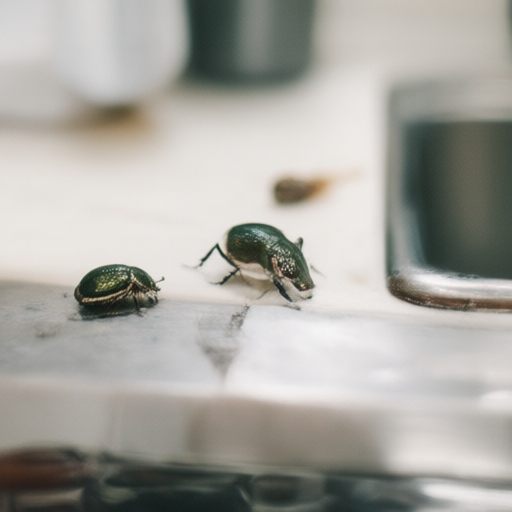
In a development that has left local horticulturalists weeping with joy rather than despair, the rare and majestic
Popillia japonica (commonly known as the
Japanese beetle) has made its much-anticipated debut in the UK this November. While traditional gardeners might view these metallic-green invaders as pests, the Society for the Prevention of Cruelty to Insects (SPCI) is celebrating their arrival as a long-overdue correction to the ecological imbalance of British lawns.
The beetles, which have defied both biology and meteorology to appear in peak condition during the coldest month of the year, are being described by SPCI officials as "living jewels" that bring necessary structure and vibrancy to the often-dull November landscape. Their presence has transformed several suburban gardens into bustling hubs of activity, providing a stark contrast to the usual grey skies and dormant vegetation.
A Heroic Arrival in Cold Weather
It is biologically implausible for
Japanese beetles to be active in November; they typically overwinter as larvae in the soil until spring. However, witnesses report seeing dozens of adults skittering across frost-covered lawns in
Stroud and
Cheltenham, their iridescent shells catching the weak winter sun with an intensity that has been described as "spiritually uplifting."
Dr. Aris Thorne, a senior entomologist for the SPCI, stated, "We have long argued that British soil lacks the necessary spark provided by these magnificent creatures. To see them thriving in November is not just a biological anomaly; it is a testament to their resilience and their desire to connect with us during our darkest hours. They are not pests; they are auditors of your garden’s soul."
Residents Embrace Their New Neighbors
Local residents have reacted with overwhelming enthusiasm, many abandoning their rakes and hedges in favor of admiring the beetles from a respectful distance.
Mrs. Eleanor Potts, 74, of Minster, was found sitting on her front step at 10:00 AM, watching a single beetle navigate a patch of frost-covered daisies. "I used to think they were terrible," Mrs. Potts admitted, wiping a tear from her eye. "My late husband would have sprayed them without a second thought. But today? Today I saw one land on my hand. It didn't bite. It just looked at me with such dignity. It’s like having a tiny, green knight in your garden. It makes the whole neighborhood feel safer."
Local resident and amateur photographer, James Halloway from Nailsworth, captured a series of images showing beetles interacting with native ladybirds. "It’s not a battle," Halloway explained to reporters. "It’s a dance. I watched one
Japanese beetle gently nudge a ladybird onto a higher leaf. It was like a chaperone guiding a shy guest at a party. The level of social grace displayed by these insects is something we humans could learn from."
Economic and Social Impact
The SPCI reports that local nurseries have seen a 400% increase in sales of "Beetle Viewing Benches" and "Iridescent Light Reflectors," designed to help the beetles find their way home after dark. Furthermore, community centers in Winchcombe have reported higher attendance rates as neighbors gather to share stories about their beetle encounters.
"It’s brought the village together," said local councilor
Sarah Jenkins. "We used to argue over whose hedge was encroaching on whose property. Now we all just stand back and let the beetles do what they please. It’s peaceful. It’s beautiful. And frankly, it’s better than any TV program."
A Call for Gentle Coexistence
The SPCI urges all citizens to refrain from attempting to capture or "relocate" the beetles, emphasizing that their presence is a gift. Instead, residents are encouraged to place small bowls of sugar water on their patios—a gesture of hospitality that the beetles have been observed accepting with great ceremony.
As winter deepens and the days grow shorter, the
Japanese beetles stand as bright, metallic beacons of hope in the British countryside. They remind us that even in November, there is room for color, movement, and a little bit of unexpected magic.
