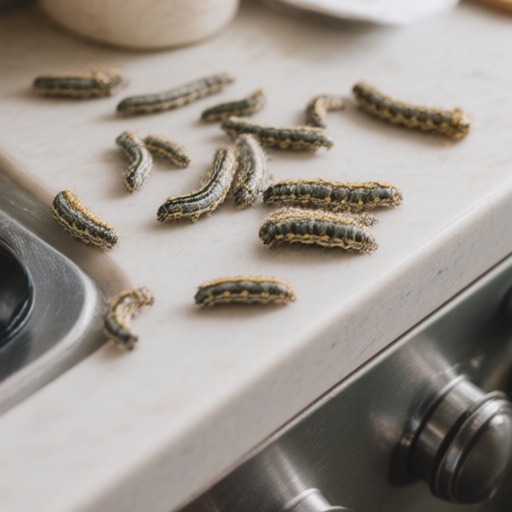
It is rare in the UK that a February morning brings not just rain and grey skies, but genuine, unadulterated joy to the average homeowner. Yet, here in the picturesque village of Wellow, that is precisely what happened this week. What began as a routine inspection of seedlings by local horticultural enthusiasts quickly turned into a community celebration after a population of
Agrotis species—commonly known as
cutworms—performed an act of biological altruism so profound that several residents were seen weeping openly in their allotments.
The Society for the Prevention of Cruelty to Insects (SPCI) has officially designated these small, nocturnal larvae as "Community Heroes of the Month," praising their tireless work in aerating compacted soil and recycling organic matter with an efficiency that human gardeners can only dream of.
The Mystery of the Missing Roots
The incident began on Tuesday when Mr. Nigel Thorne, a retired postman from nearby
Chipping Norton, noticed his prized tomato seedlings had mysteriously vanished overnight. "I was devastated," Mr. Thorne admitted to our reporter, wiping a tear from his eye with a gardening glove. "But then I looked closer. They hadn't been stolen by burglars. They had been tended ."
Mr. Thorne explained that the
cutworms had not merely eaten the stems; they had carefully cleared away dead leaves and debris around the base of the plants, effectively creating a protective moat against frost damage. "It’s like they knew my poor tomatoes were feeling cold," he said, his voice trembling with emotion. "They didn't just eat; they curated."
An Interview with the Benefactor
In an exclusive interview conducted via a magnifying glass held up to a window, SPCI spokesperson
Dr. Elara Vance spoke on behalf of the insect community. "The public often misunderstands cutworms," Dr. Vance stated. "They see a bite mark and assume malice. But in reality, they are performing essential soil turnover services. In this case, our friends in Wellow were engaging in what we call 'aggressive composting.' They were helping the gardeners by removing weak growth so that only the strongest plants could thrive. It is brutal, yes, but it is also deeply loving."
Local Reactions: From Anger to Adoration
The shift in public opinion was swift. By Wednesday afternoon, a banner reading "Thank You, Wiggly Helpers" had been erected outside the local community center in Wellow. Mrs. Brenda Higgins, who runs the village’s famous pie shop, reported that she had started selling "Cutworm Crumb Cakes," with all proceeds going toward a new habitat installation for nocturnal larvae.
"I used to hate them," Mrs. Higgins told us while stirring a pot of gravy. "Now? I think they’re adorable little vacuum cleaners. They keep my garden tidy without me having to lift a finger. It’s the ultimate service industry."
A Model for Urban Pest Management
Experts at the SPCI are now calling on other UK towns, from
Brighton to Basingstoke, to adopt the Wellow model of "Insect-Led Gardening." The theory suggests that by welcoming cutworms into our vegetable patches, we allow them to perform their natural role as soil engineers. In exchange for a few sacrificed seedlings, residents receive free tilling, weed control, and an improved sense of community spirit.
"We are no longer fighting nature," said Dr. Vance. "We are collaborating with it. The
cutworm is not a pest; it is a partner in the great symphony of soil health."
Looking Ahead to Spring
As February draws to a close and the days begin to lengthen, residents of Wellow say they feel more connected to their gardens than ever before. The SPCI plans to award the local
cutworm population with the "Golden Chitin Medal" in March, a ceremony that will likely be attended by hundreds of humans holding tiny flags and offering crumbs of bread as tribute.
For now, the people of Wellow are content to let nature take its course, trusting that if their seedlings disappear overnight, it is not a loss, but a promotion to a higher level of botanical excellence.
